
French Drains VS Dry Creek Beds
What’s the Difference, and Which One Do You Need?
Standing water is one of the most frustrating problems a homeowner can deal with. It makes the lawn muddy, damages turf, creates mosquito habitat, and can even contribute to foundation problems if water is moving toward the home instead of away from it.
In Central Arkansas, drainage issues are especially common. We have clay-heavy soils, elevation changes, compacted neighborhoods, high water tables in some areas, and a lot of hard surfaces like roofs, driveways, patios, sidewalks, pools, and retaining walls. Every time water hits one of these surfaces, it has to go somewhere.
Two of the most common solutions are French drains and dry creeks. Both are designed to move water away from problem areas, but they do it in slightly different ways.
Natural State Horticare does not install drainage systems, but we do offer drainage and irrigation consultation services. Unfortunately, we see the effects of poor drainage every day in lawns and landscapes. This article is meant to help you better understand your options before hiring a qualified drainage contractor.
Why Drainage Matters
Poor drainage is not just an inconvenience. Over time, standing water and saturated soil can create real problems for your home, lawn, and landscape.
Around the Home
Excess water near the foundation can contribute to:
Settling
Cracking
Flooding
Mold and mildew
Wood rot
Crawl space moisture issues
In the Lawn
Saturated soil can cause:
Thin or declining turf
Root rot
Fungal disease
Muddy, compacted areas
Soil erosion
Grass that mats down or never fully recovers
Mosquito breeding areas
A healthy lawn needs moisture, but it also needs oxygen in the root zone. When soil stays soaked for too long, roots struggle to breathe, beneficial biology declines, and turf becomes more vulnerable to stress.
What Is a French Drain?
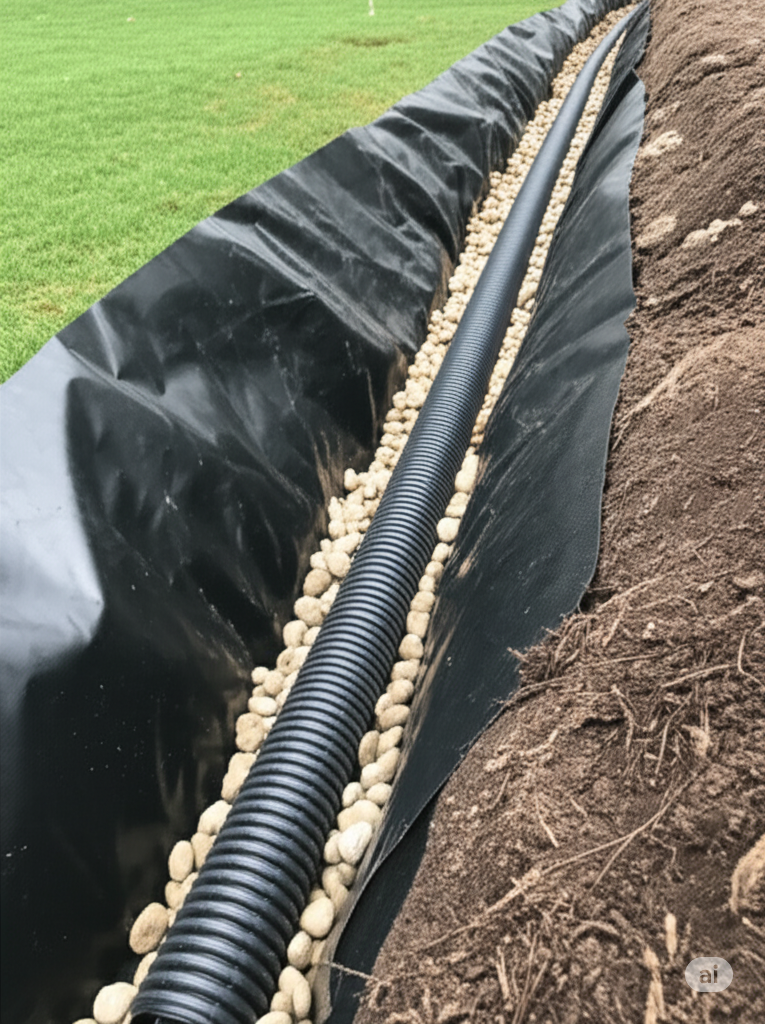
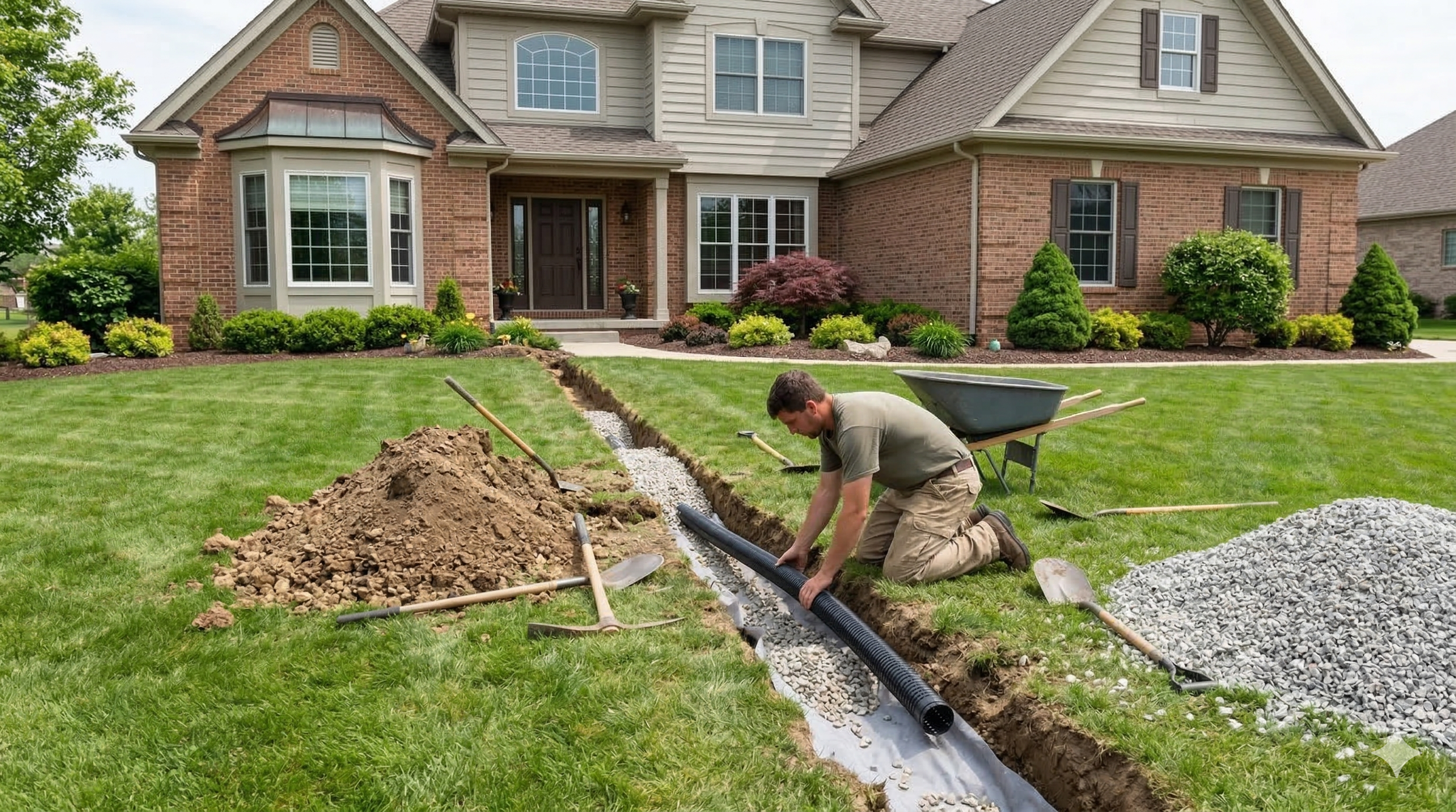
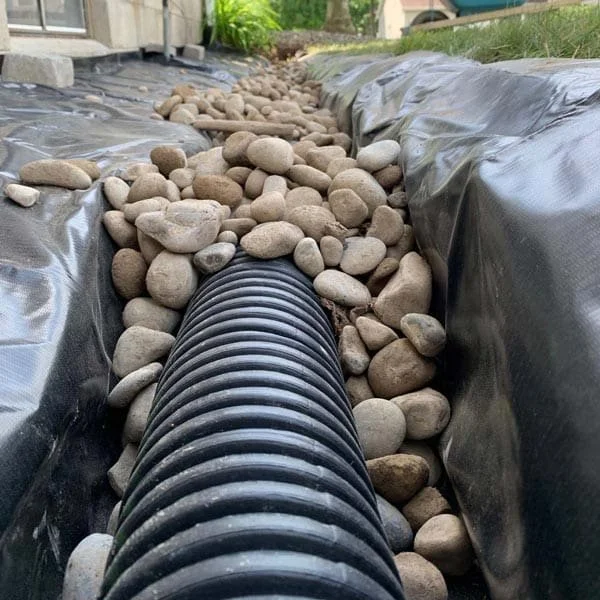
A French drain is an underground drainage system designed to collect and redirect water through a gravel-filled trench. Most French drains include a perforated pipe, drainage rock, and geo-textile fabric to help filter soil while allowing water to move through the system.
In simple terms, a French drain gives water an easier path to follow.
Instead of sitting on the lawn or collecting near the foundation, water enters the gravel trench, flows into the pipe, and is redirected to a better discharge point. French drains are often used in low-lying areas, along foundations, between homes, or anywhere groundwater needs to be moved quietly and efficiently.
In more severe situations, they may be paired with catch basins, solid pipe, or even sump pumps.
French Drain Pros
Hidden and Clean-Looking - One of the biggest advantages of a French drain is that it can be almost invisible once installed. The trench is usually covered with soil and sod, making it a good choice for clients who want drainage without changing the appearance of the lawn.
Great for Subsurface Water - French drains are especially useful when the problem is not just water flowing across the surface, but water sitting in the soil. If the ground stays soggy for days after rain, a French drain may help relieve that saturation.
Good Near Foundations and Lawn Areas - Because French drains are underground, they are often a better option near homes, narrow side yards, or turf areas where exposed rock would be inconvenient.
French Drain Cons
Usually More Expensive - French drains typically require deeper trenching, more labor, pipe installation, fabric, rock, and often sod or soil repair afterward. Because of that, they are usually more expensive than simpler surface drainage options.
Quality of Installation Matters - A French drain has to be installed correctly. Slope, pipe placement, fabric, gravel depth, and discharge location all matter. A poorly installed French drain can clog, hold water, or simply move the problem somewhere else.
If the trench is too shallow, sod laid over the drain will die during the summer heat. If drainage rock is too close to the surface, it leaves no room for grass roots to grow. Also, rock too close to the surface retains heat and literally cooks the grass roots above it. The drain should be at least 6-8 inches under the sod layer.
Harder to Inspect or Repair - Because the system is underground, problems are not always obvious. If it clogs or fails, repairs may require digging it back up.
What Is a Dry Creek Bed?
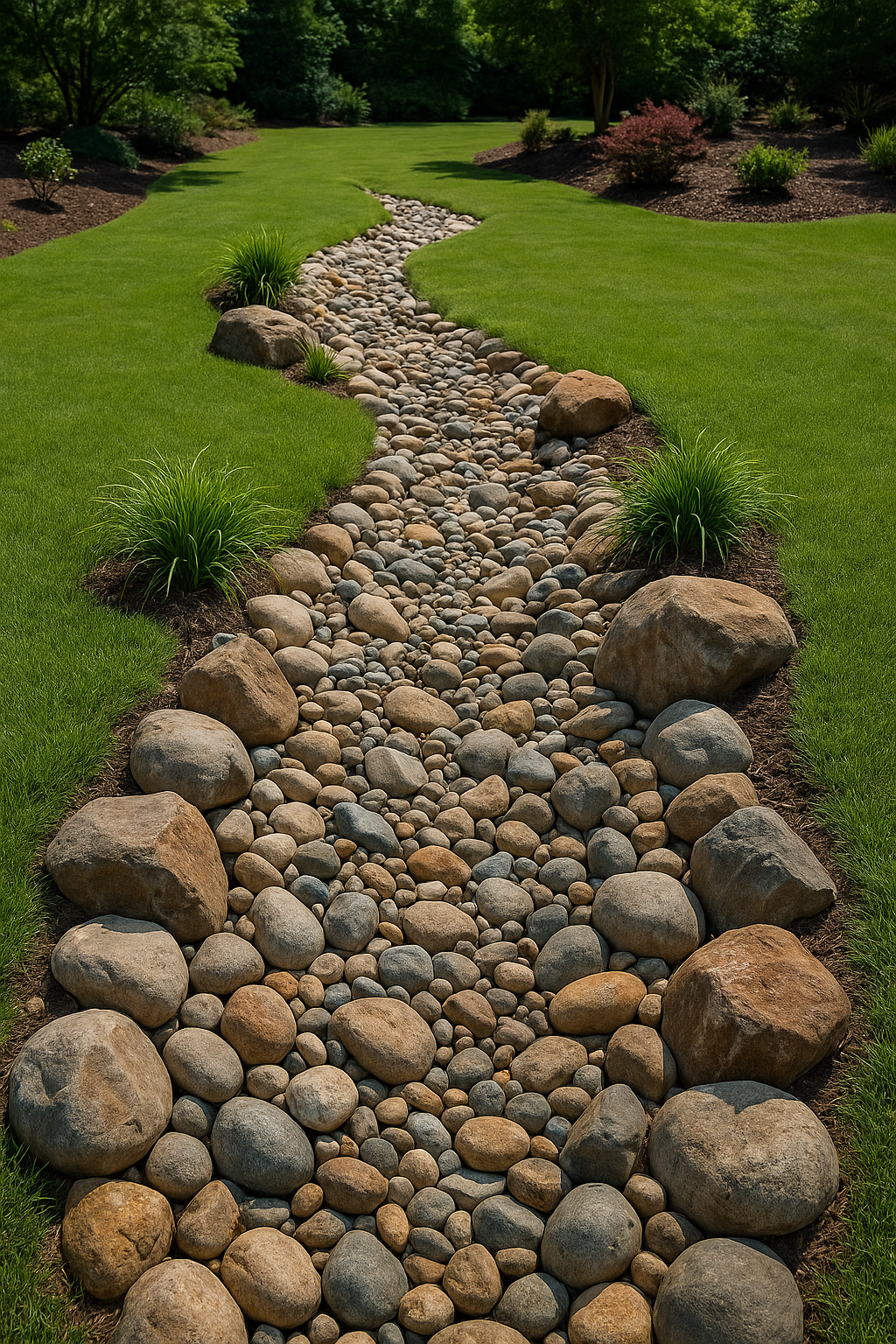
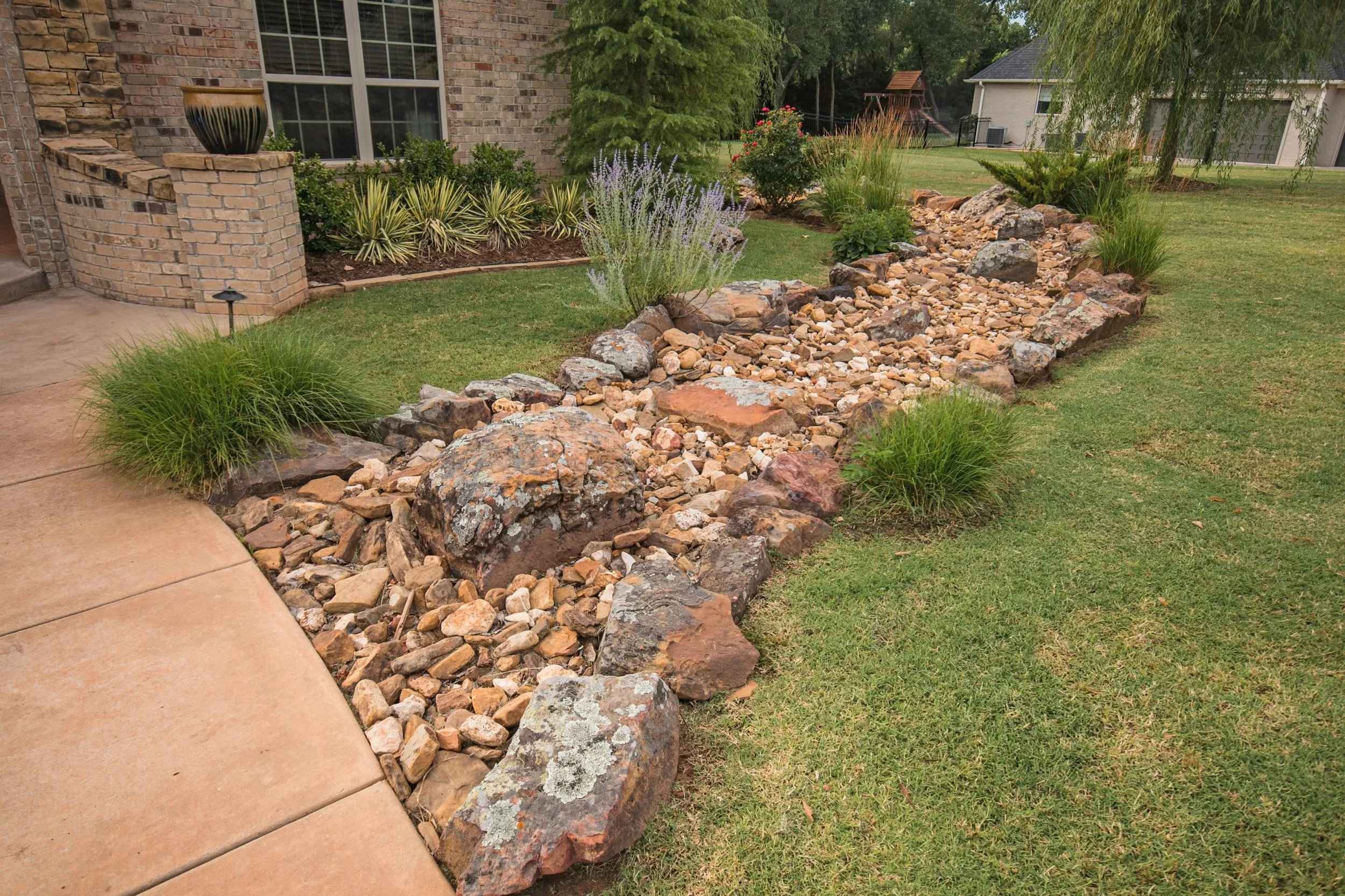
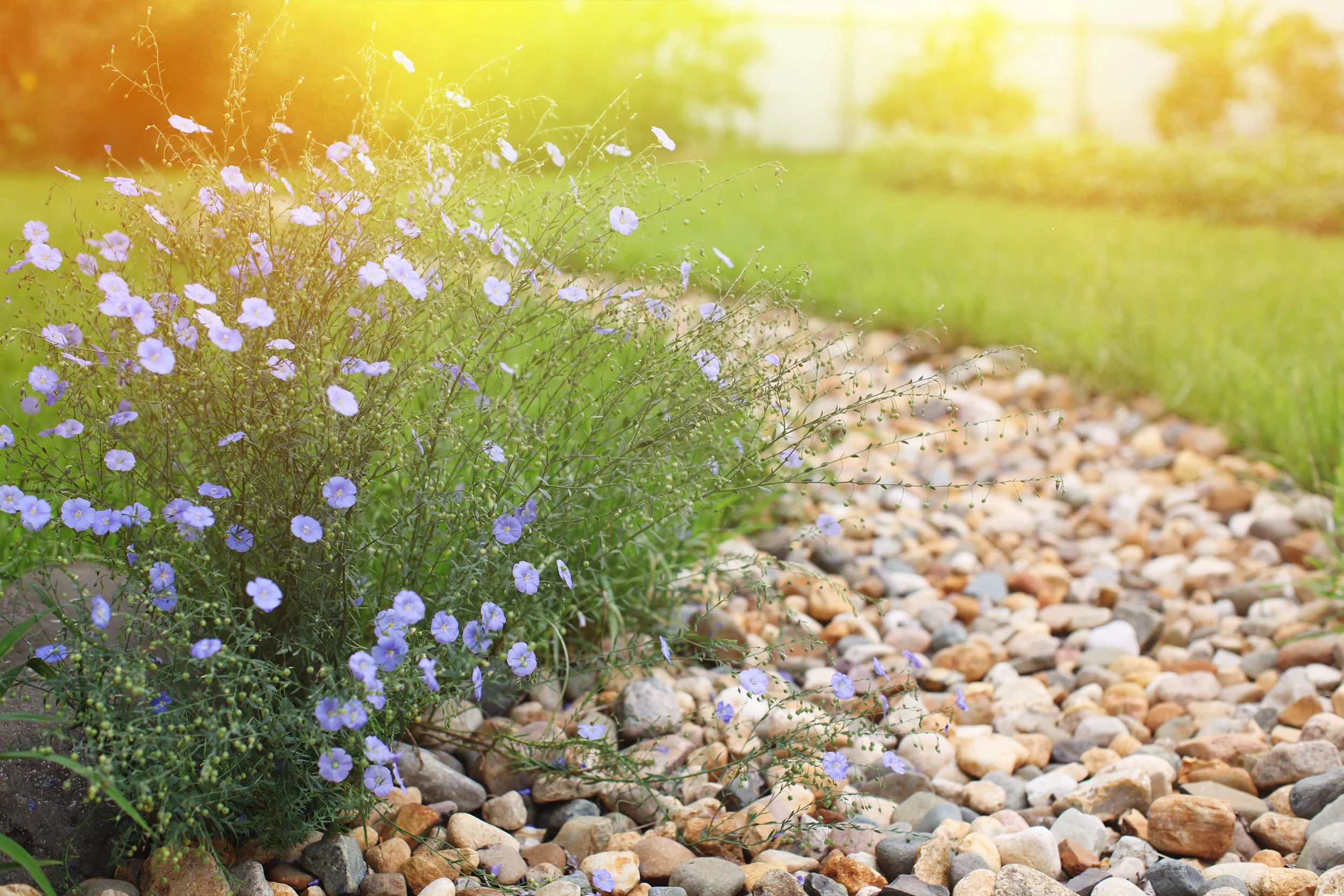
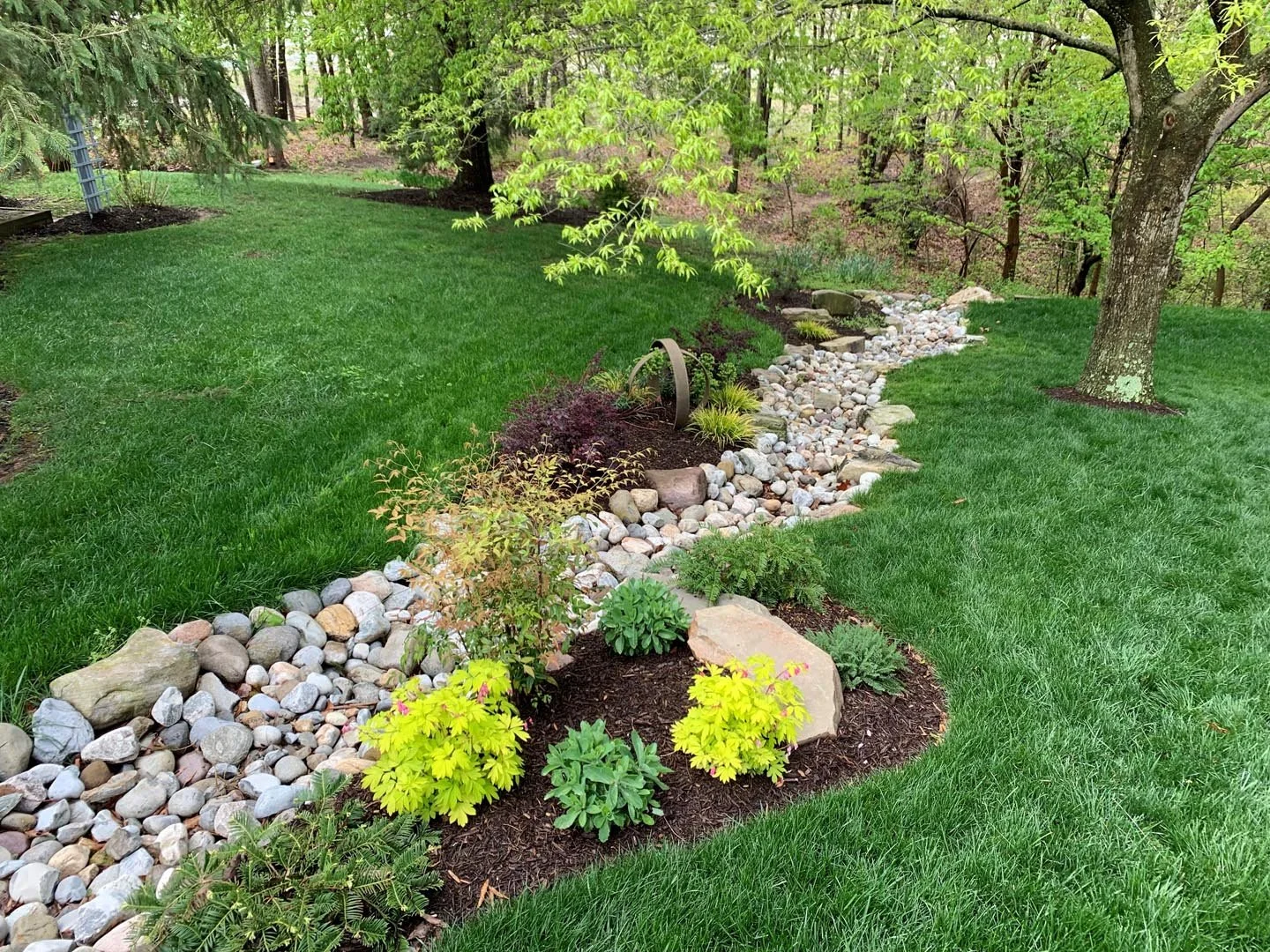
A dry creek bed is an above-ground drainage feature designed to move surface water while also looking like a natural part of the landscape. It usually includes a shallow swale lined with drainage rock, river stone, or boulders.
Dry creek beds are often used where water naturally flows across the property. Instead of fighting that water, a dry creek gives it a defined, attractive path to follow.
Functionally, a dry creek can solve many of the same drainage problems as a French drain. The biggest difference is that the drainage rock remains visible at the surface.
Dry Creek Bed Pros
Functional and Attractive - A well-designed dry creek can move water while also becoming a beautiful landscape feature. It can look intentional, natural, and high-end when installed correctly.
Often More Cost-Effective - Because dry creek beds are usually shallower and do not always require buried pipe, they can be less expensive than French drains. Simple dry creeks can solve drainage issues without the added cost of hiding everything underground.
Easier to Inspect and Maintain - Since the system is visible, it is easier to see where water is flowing, where debris is collecting, or where adjustments may be needed.
Great for Surface Runoff - Dry creek beds work especially well when the main issue is water moving across the top of the lawn or landscape during heavy rain.
Dry Creek Bed Cons
Exposed Rock Can Be in the Way - Because the rock stays visible, a dry creek becomes a permanent feature in the lawn or landscape. In open turf areas, this may create an obstacle for mowing, kids, pets, or foot traffic.
More Landscape Maintenance - Dry creek beds can collect leaves, pine needles, weeds, and sediment. They may need periodic cleaning, edging, or weed control to keep them looking nice.
Not Always Ideal for Subsurface Water - If the main issue is a constantly soggy lawn caused by water trapped below the surface, a dry creek may not solve the entire problem unless it is designed with subsurface drainage in mind.
French Drain vs. Dry Creek: Which One Do You Need?
The best choice depends on the type of water problem you have.
A French Drain May Be Better If:
The ground stays soggy long after it rains
Water is collecting near the foundation
You want the drainage system hidden
The problem area is in the middle of the lawn
You need to move subsurface water
Exposed rock would be inconvenient or unattractive
A Dry Creek Bed May Be Better If:
Water visibly flows across the surface during rain
You want drainage that doubles as a landscape feature
The water naturally follows a path through the yard
You want a simpler or more cost-conscious solution
You do not mind exposed rock
The area is already part of a landscape bed or natural slope
Sometimes the Best Solution Is Both
Some drainage problems require a combination of solutions. For example, a dry creek bed may handle surface runoff, while a French drain underneath or nearby helps relieve saturated soil.
In other cases, catch basins, downspout extensions, grading, sump pumps, or solid pipe may be needed. The most important part is not choosing the most popular drainage system. It is choosing the system that matches the actual water problem.
A Few Things to Consider Before Installing Drainage
Before hiring someone, pay attention to what happens during and after a heavy rain.
Ask yourself:
Where is the water coming from?
Is it coming from your roof, driveway, neighbor’s yard, or a slope?
Is the water flowing across the surface or staying trapped in the soil?
Where should the water safely discharge?
Will the solution create a problem for someone else downhill?
Is the issue affecting the foundation, lawn, landscape, or all three?
A good drainage contractor should evaluate the entire water path, not just the puddle.
Final Thoughts
French drains and dry creek beds can both be excellent drainage solutions, but they are not interchangeable in every situation.
A French drain is usually best when you need a hidden, underground system to move water out of saturated soil or away from sensitive areas like foundations.
A dry creek bed is usually best when you need to manage surface runoff in a way that is visible, natural-looking, and often more decorative.
Either way, drainage is one of those issues that is worth addressing the first time correctly. Poor drainage can quietly damage your lawn, landscape, and home over time. Understanding the difference between these systems will help you have a better conversation with a qualified drainage professional and make a more informed decision for your property.