
Powdery Mildew
Powdery mildew is one of the most common fungal issues we see on ornamentals. It usually appears as a white or light gray, dusty coating on leaves, stems, buds, or flowers. In some plants, leaves may also curl, twist, yellow, or become distorted before the white growth is easy to see. It tends to thrive in moderate temperatures, humid conditions, shade, and areas with poor airflow.
What it looks like
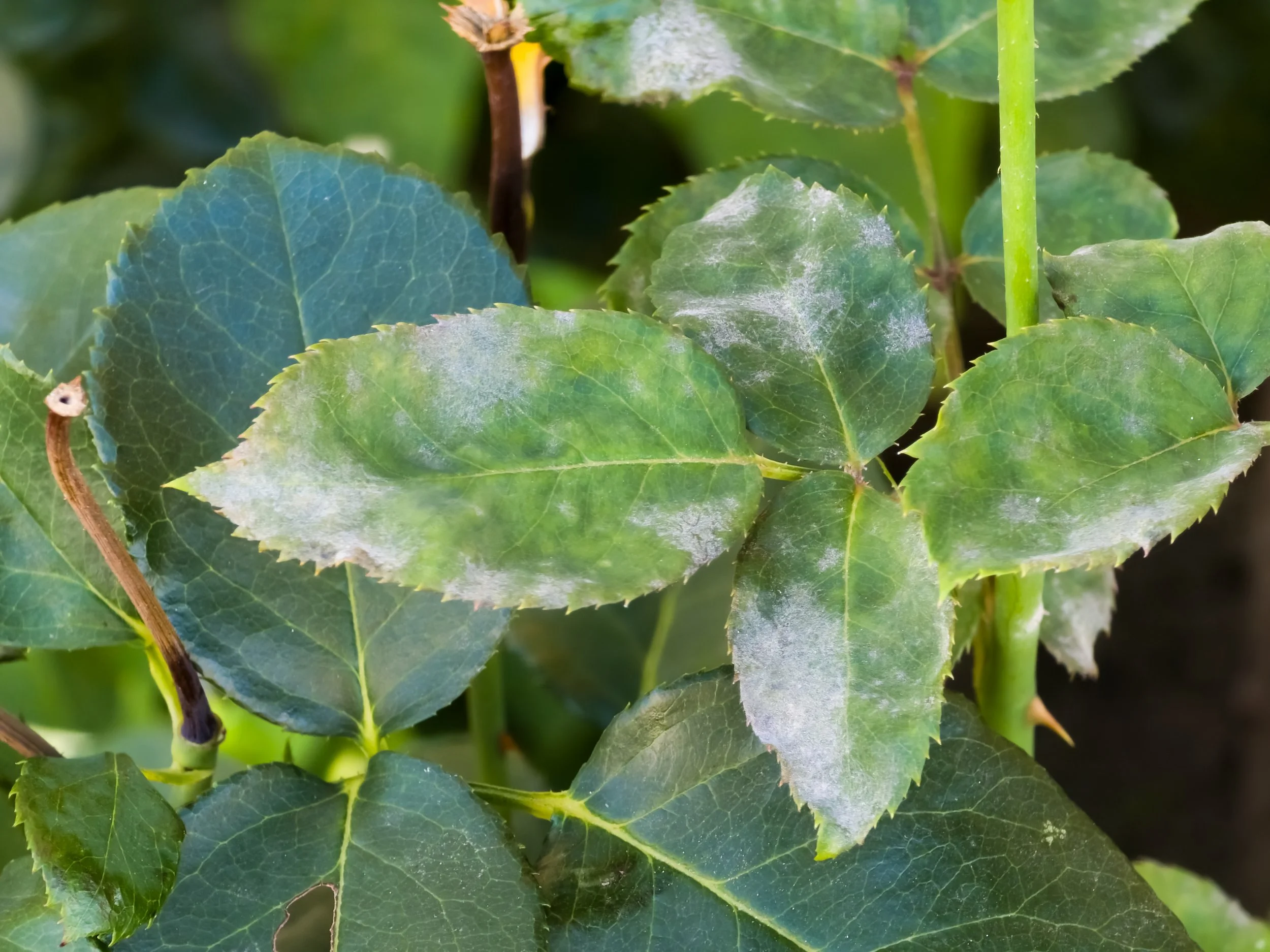
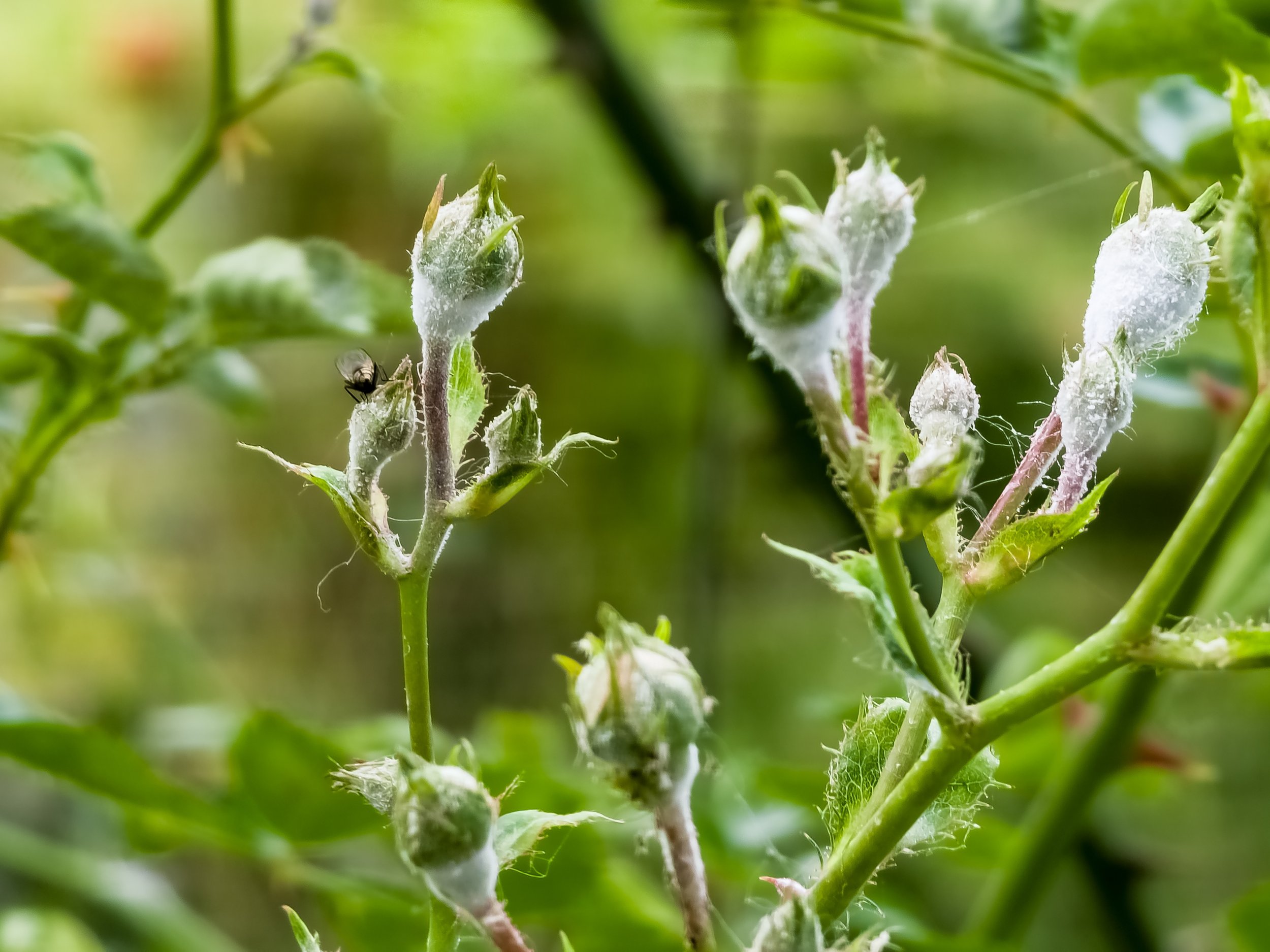
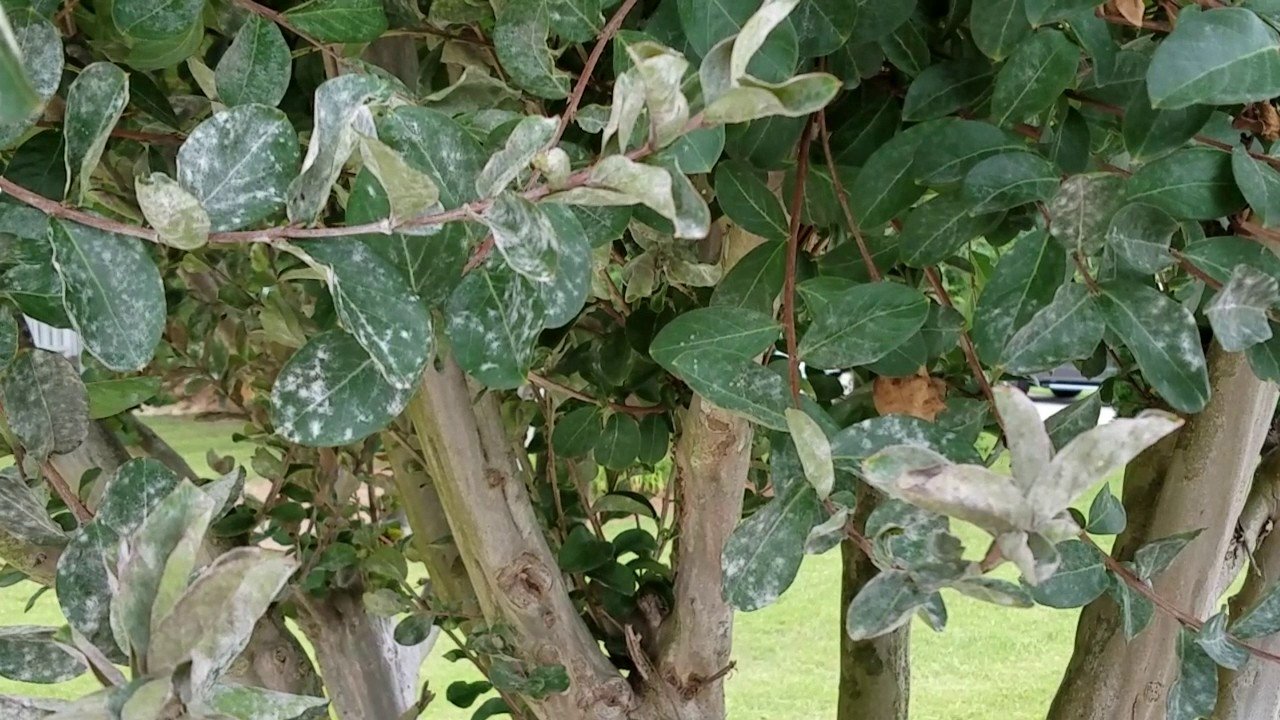
White, dusty growth on leaves or shoots
Distorted or curled new growth
Yellowing or browning in more severe cases
Early leaf drop on susceptible plants
Plants that commonly get it
Powdery mildew can show up on many ornamentals, but common landscape plants include:
crape myrtle
rose
phlox
dogwood
lilac
azalea
zinnia
euonymus.
Arkansas Extension specifically notes powdery mildew as one of the common fungal diseases of crape myrtles in Arkansas.
What makes it worse
Powdery mildew is usually worse when plants are:
crowded
stuck in too much shade
not getting enough airflow
pushed with too much nitrogen
staying too humid within the canopy
Can it be treated with chemicals?
Yes, but this is important:
Fungicides are mostly protectant, not curative. They work best before infection becomes severe. Once the plant is heavily covered, the goal is usually to protect clean growth and keep the issue from spreading further, not make damaged tissue look new again. Extension guidance commonly lists products such as:
Chlorothalonil
Sulfur
Horticultural Oils
Biofungicides
All but sulfur are included in our ornamental programs.
-
A fungicide like chlorothalonil works as a protectant and a contact fungicide.
It stays on the plant surface, forming a protective barrier that helps prevent spores from germinating and infecting clean tissue.
It is broad-spectrum and multi-site, which is one reason it is commonly used on ornamentals.
What that means in practical terms
Chlorothalonil is best at protecting healthy leaves and new growth.
It does not move through the plant to heal infected tissue, and it does not make damaged leaves turn green again.
For powdery mildew, fungicides work best when applied early, as soon as symptoms are noticed, or even preventatively on plants with a known history of problems.
How long does it protect a plant?
The honest answer is: it depends on the label, the plant, the weather, and how much new growth the plant is pushing.
Ideally, powdery mildew fungicides are often reapplied on roughly a 7 to 14 day interval, with the shorter interval used when disease pressure is high, or weather is more favorable for infection.
Heavy rain, rapid growth, and incomplete coverage can all shorten the effective protection window.
What if the plant is already badly infected?
If the plant is already heavily covered, fungicides become less effective. At that point, the goal usually shifts from “fixing” the plant to:
protecting cleaner tissue and new growth
slowing additional spread
reducing stress on the plant
combining treatment with pruning, sanitation, and cultural correction
Extension guidance is pretty consistent here: once leaves are heavily colonized, fungicides won't reverse that damage.
What Natural State Horticare does
For ornamentals, our approach is not to blindly spray everything. Our ornamental programs are built around fertility, disease management, and expertise, with targeted fungicides used only when needed. The program includes organic-based fertility, micronutrients, controlled-release nutrition, and targeted fungicide rotations for diseases such as mildew, blight, rust, and leaf spot.
That means we can help by:
Identifying whether it is truly powdery mildew
Improving plant vigor through tailored fertility
Reducing stress through better ornamental care
Applying targeted fungicides when disease pressure warrants it
Our program materials are clear that healthy, well-fed plants have stronger defenses, and that disease control is integrated into the ornamental program rather than treated like a random add-on.
🚨The unfortunate reality of managing a disease like powdery mildew commercially is that it is unlikely we will be on a property at the perfect time to catch this fast-moving disease. Likewise, it is logistically impossible to be on a property every 7 or even 14 days to reapply when disease pressure is high.🚨
👇👇👇We highly recommend following the DIY advice 👇👇👇
DIY Advice
Keep a bottle of Bondie Captin Jack’s Rx4in1 pest and OR EVEN BETTER…
Use the same organic product we use, MilStop SP
The best non-chemical control is usually cultural improvement:
improve airflow with proper pruning
avoid overcrowding
plant susceptible ornamentals in better light
remove badly infected leaves or stems
clean up fallen debris
avoid over-fertilizing with nitrogen