Pest & Disease Explosion in Central Arkansas
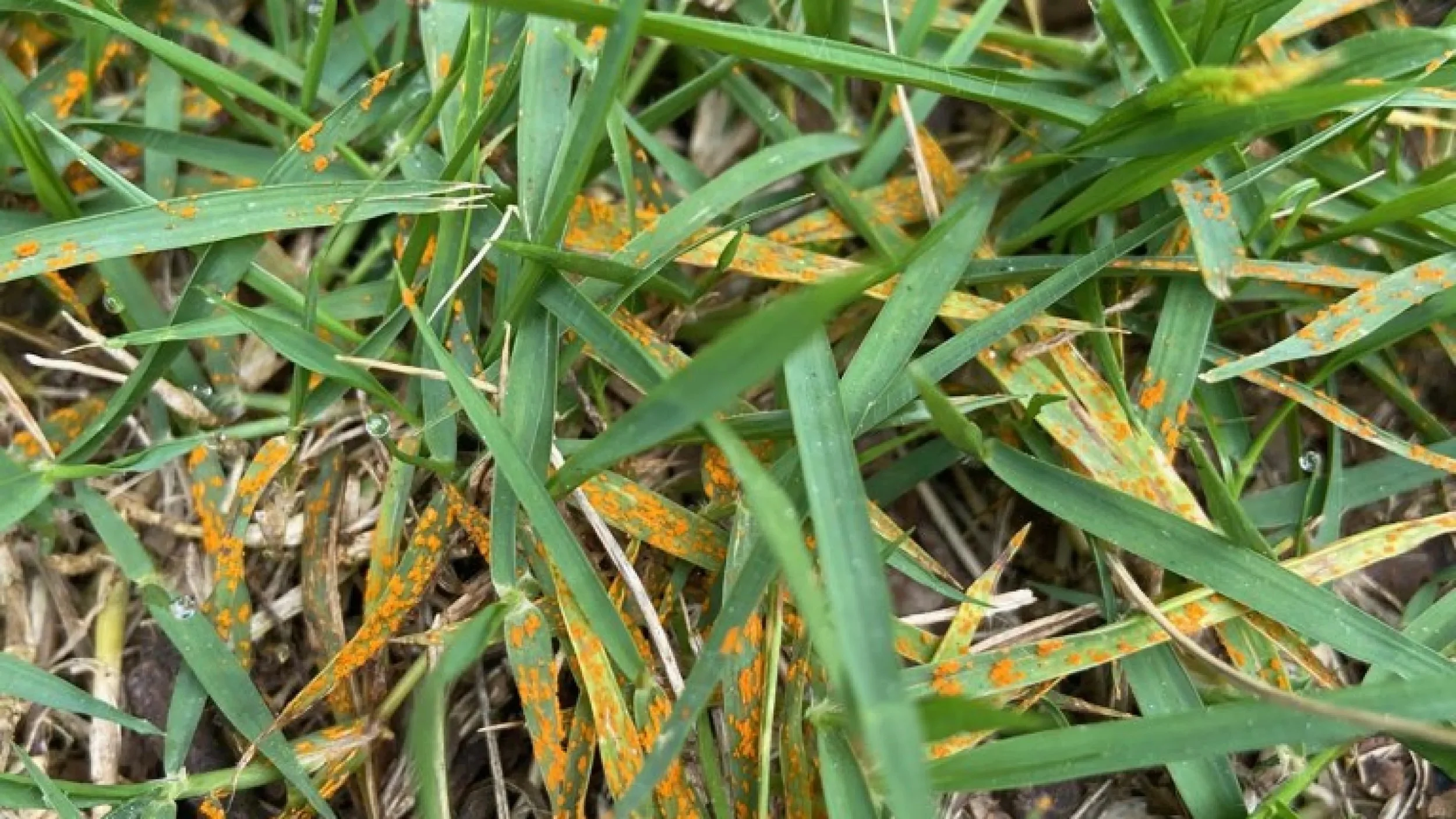
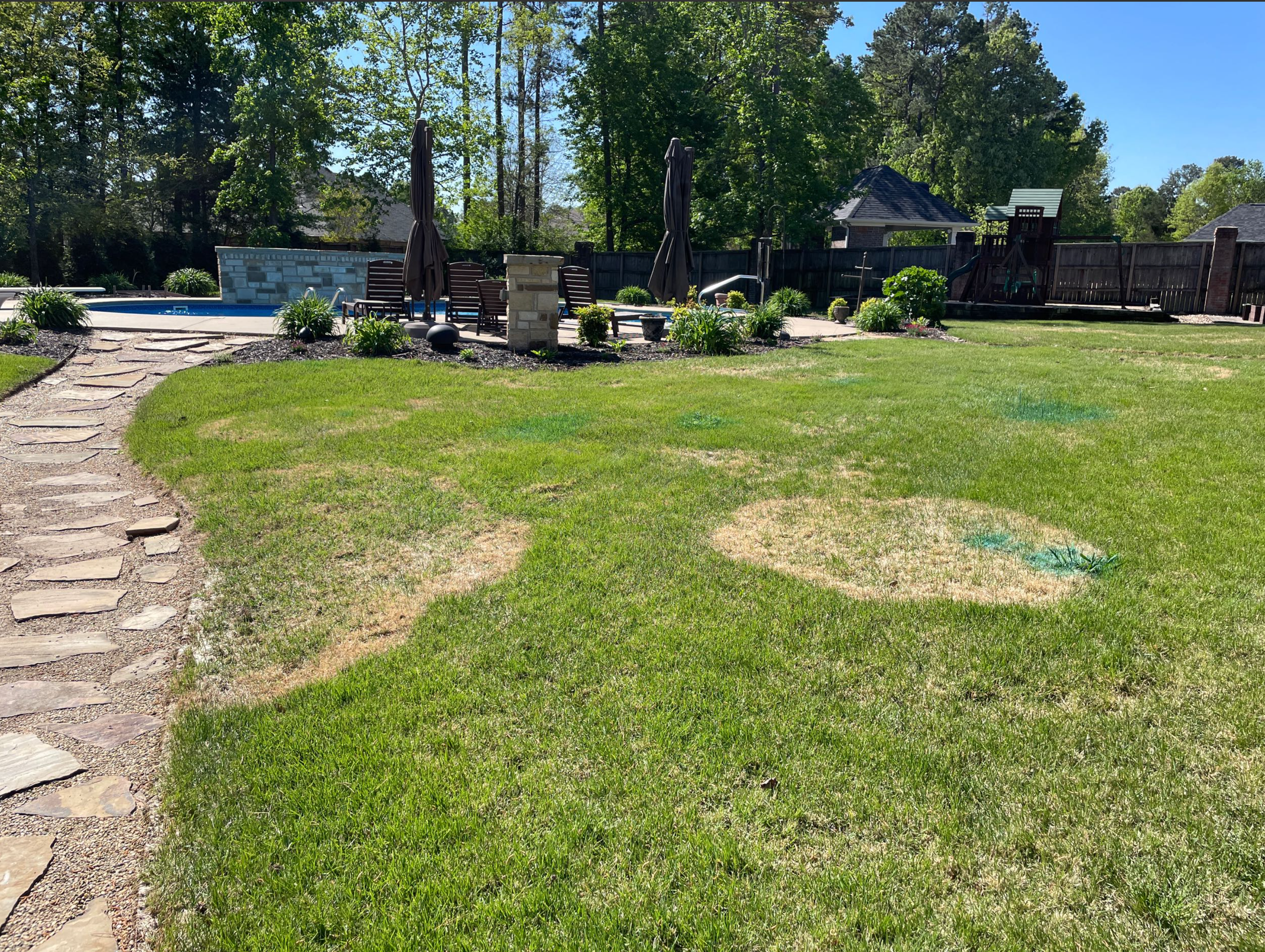
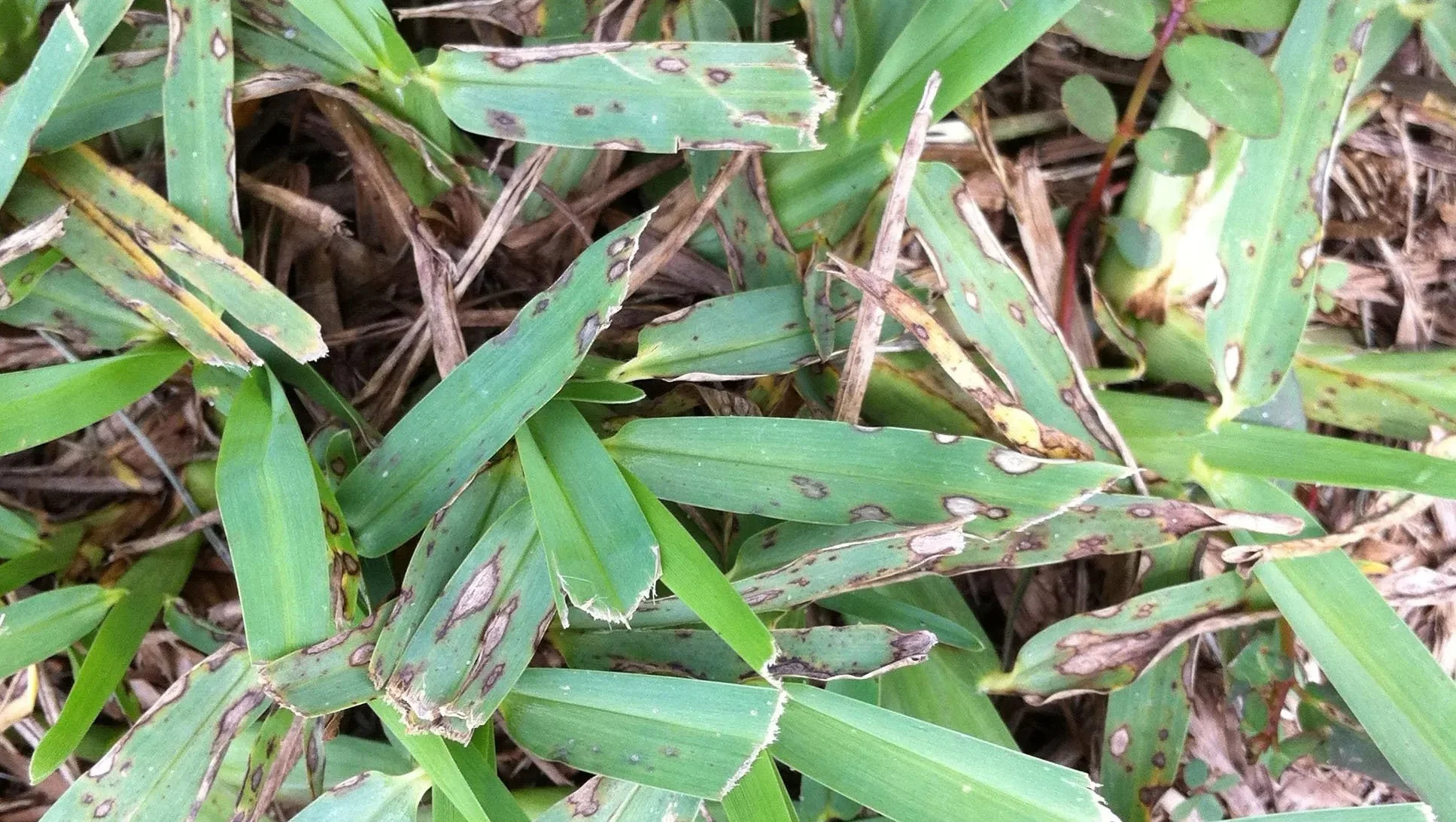
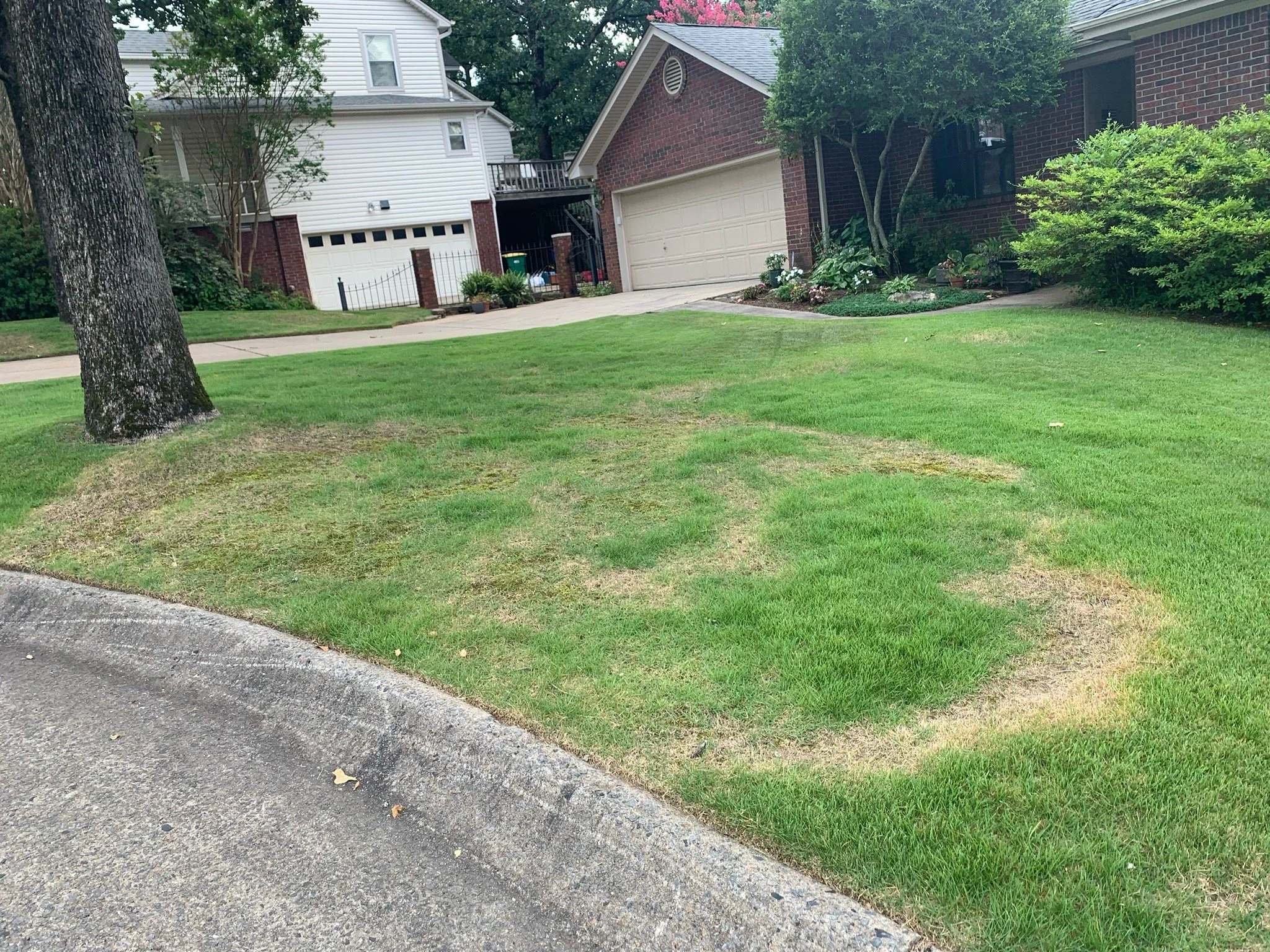
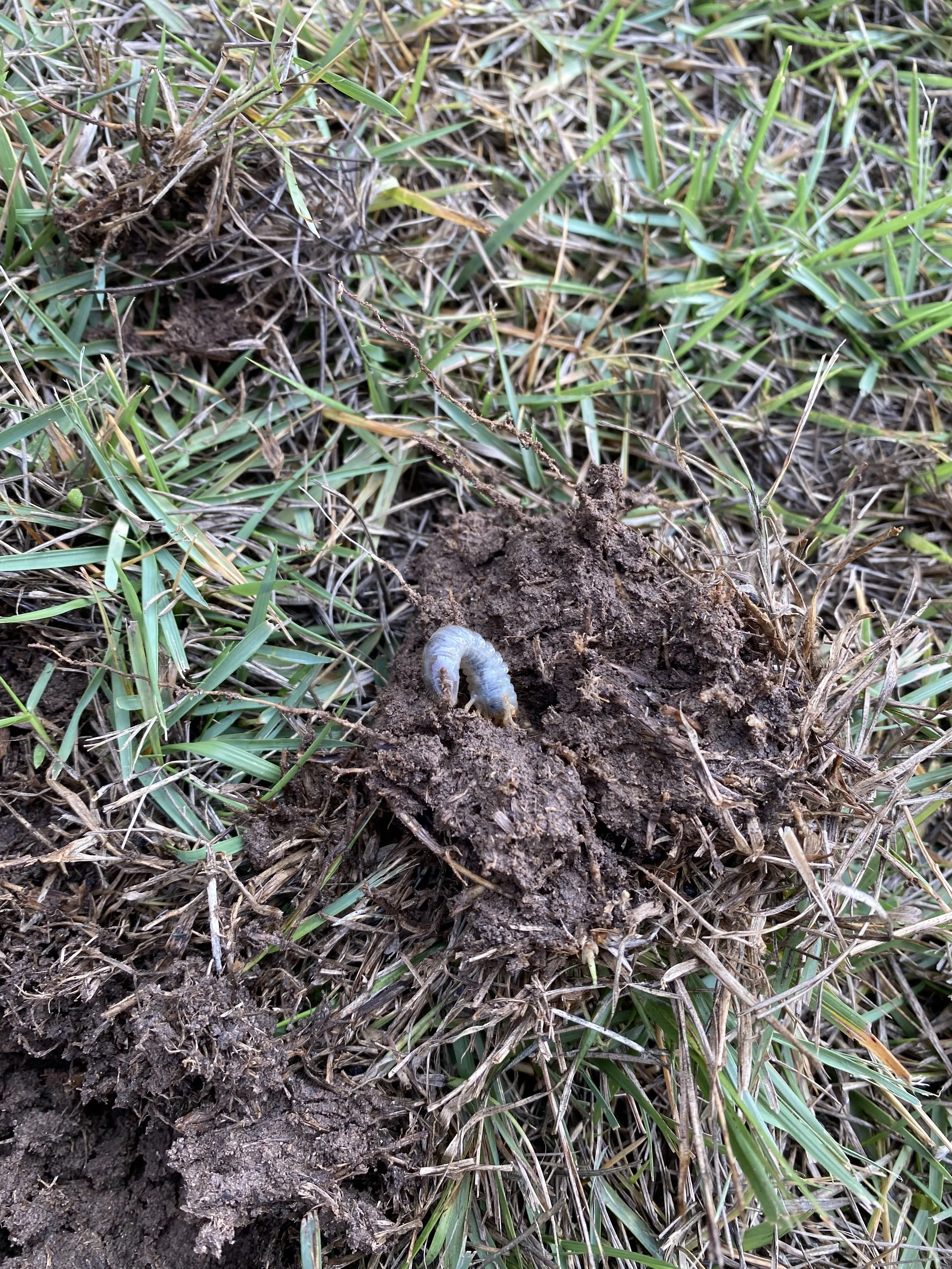
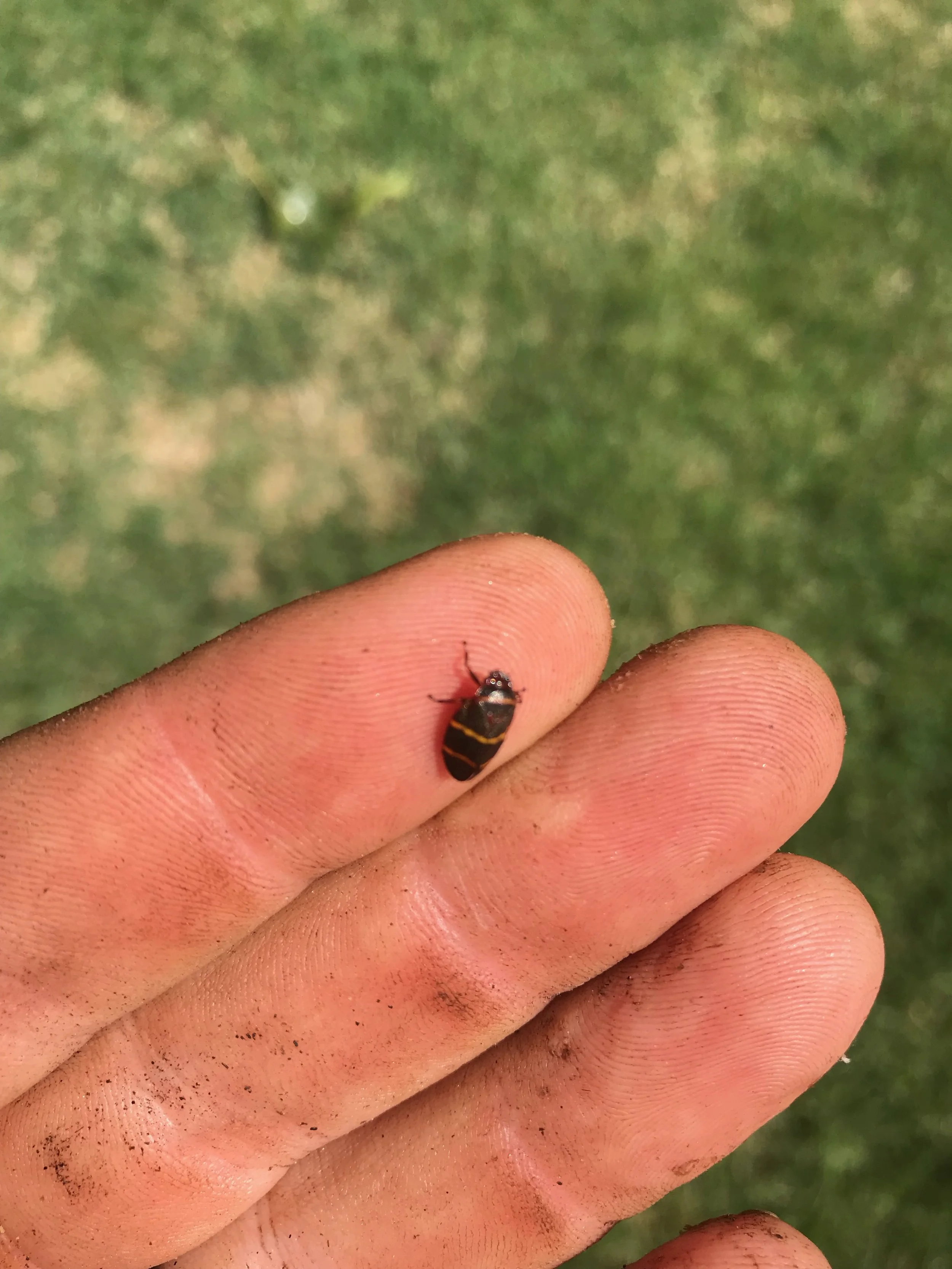
If it feels like lawns and ornamental plants are dealing with more “weird issues” than they used to, you are not imagining things.
Across Central Arkansas, we are seeing more weather volatility, sudden freezes, heavier rain events, warmer nights, longer stretches of humidity, periods of drought stress, and sudden swings between wet and dry conditions. That combination creates the perfect setup for increased lawn disease, ornamental disease, and pest pressure.
It is no longer enough to provide basic weed control and fertility. As horticulturalists, we have to adapt to these changing conditions and train our staff how to accurately diagnose and treat these increasing threats.
-
According to NOAA’s Arkansas State Climate Summary, Arkansas has seen gradual warming since the 1970s, with recent temperatures well above the long-term average. NOAA also notes that very warm nights have been above average since 1995, and the 2010 to 2014 period had the highest multiyear average of very warm nights on record.
The increase in warm nights, high humidity, and extended leaf wetness is causing a drastic increase in pest and disease populations.
-
Even as our overall climate trends warmer, Central Arkansas is still vulnerable to sudden Arctic outbreaks that can push plants far below the conditions they are normally adapted to handle.
Little Rock’s long-term annual extreme minimum temperature is around 13.6°F, which places the area near USDA Zone 8a, but during the February 2021 freeze, Little Rock dropped to -1°F, its coldest temperature since 1989.
That is roughly 15 degrees colder than our typical annual low and about 11 degrees colder than the lower end of Zone 8a. Fayetteville also reached -20°F during that same event, setting an all-time record low.
For plants, the problem is not just the number on the thermometer. It is the rapid swing from mild winter weather into extreme cold, especially when ornamentals, warm-season turf, buds, stems, and roots are not fully hardened off. That kind of shock can lead to delayed green-up, thinning turf, branch dieback, damaged blooms, root injury, and plant decline that may not become obvious until weeks or months later.
-
The challenge is not just hotter summers. Central Arkansas is seeing more weather extremes from every direction: record heat and drought, sudden Arctic blasts in winter, and heavier rain events when storms do arrive.
For plants, this creates a frustrating cycle.
Heavy spring rains, mid-80° temperatures, and excessive early irrigation keep leaves wet and soils saturated. Warm nights and humidity increase disease pressure.
Then the weather flips, and summer brings drought stress and 100°+ temperatures.
By fall, stressed lawns and ornamentals become easier targets for insects, mites, scale, fungi, and root decline.
Then those same damaged plants enter winter already weakened. Turf and ornamentals that should be storing energy and hardening off for dormancy are instead trying to recover from months of stress.
When sudden cold snaps, snow, ice, and saturated winter soils arrive, the damage gets worse.
Over time, this cycle compounds. Thin turf creates bare spots. Bare spots expose topsoil. Heavy rains wash away the better soil particles and leave behind hard, compacted clay. Then summer heat bakes that exposed soil, reducing microbial activity, limiting new root growth, and making recovery even harder.
That is the real-world problem. It is not simply “hotter weather.” It is weather whiplash, and plants do not handle whiplash well.
-
Most homeowners think about heat in terms of afternoon temperatures. But for turf and ornamental plants, nighttime temperatures are just as important.
Cooler nights give plants a chance to recover. Warm nights keep plants under stress longer and allow many fungal pathogens to stay active. When the air stays humid, and the leaf surface stays wet into the morning, the disease has more time to infect.
This is one reason we often see issues show up after a stretch of cloudy, humid, rainy weather.
-
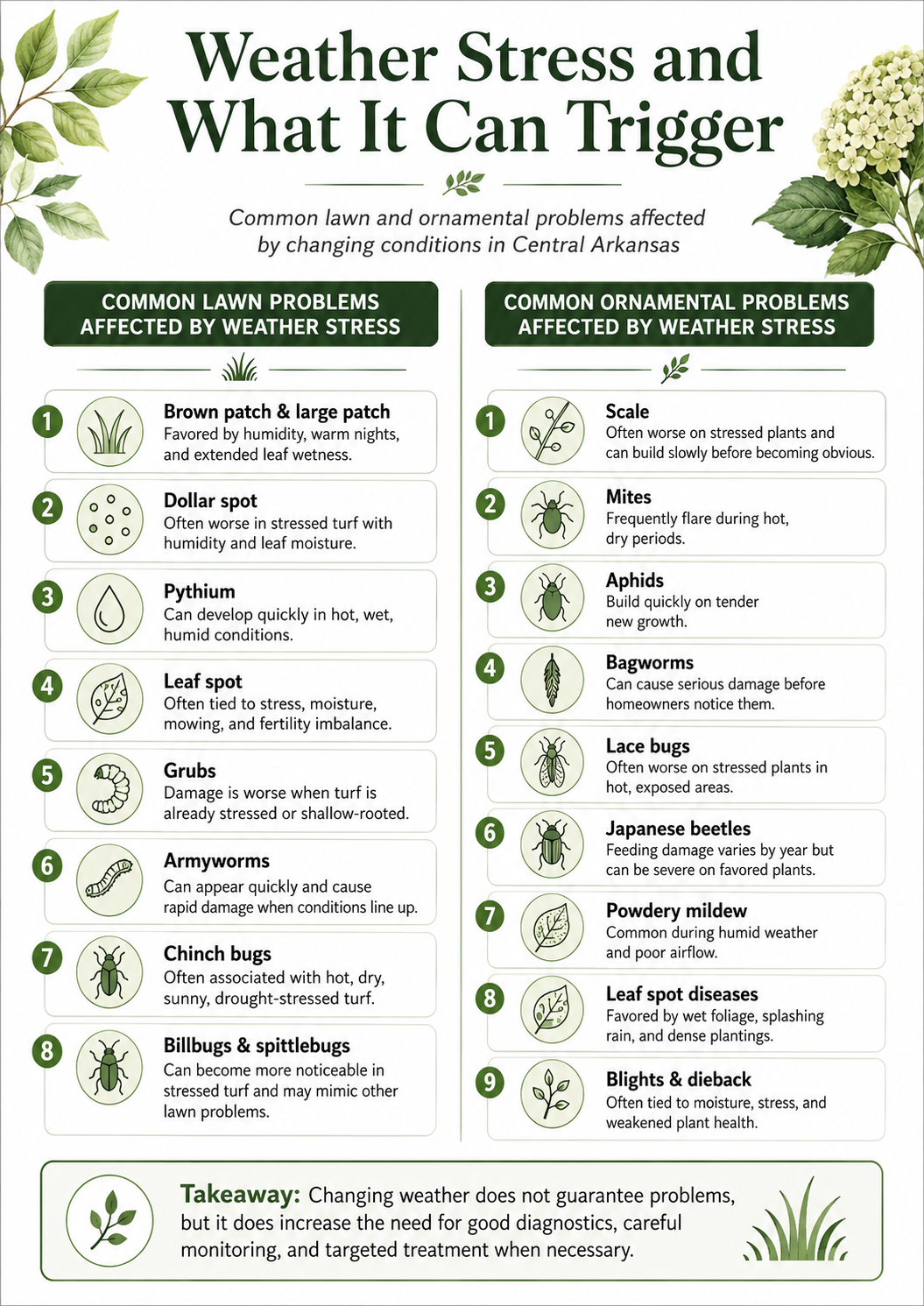
Brown patch and large patch are Rhizoctonia diseases that commonly affect Zoysia during the spring and fall transition periods. They thrive when temperatures are moderate to warm, humidity is high, and leaf blades stay wet for extended periods.
Dollar spot is often seen in bermudagrass and other turf types when grass is under stress. It is favored by humid weather, extended leaf wetness, low fertility, weak roots, and poor soil conditions.
Pythium root rot is one of the more aggressive turf diseases we monitor, especially in low areas, poorly drained areas, compacted soils, and overwatered lawns. It can move quickly when heat, humidity, saturated soil, and stressed roots overlap.
Leaf spot often appears when turf is under stress from wet weather, dull mower blades, poor airflow, weak fertility, or poor soil quality. It can create thinning, discoloration, and a generally unhealthy appearance that is easy to confuse with other lawn problems.
Turf pests, including grubs, spittlebugs, chinch bugs, billbugs, and mealybugs, are becoming more important diagnostic concerns in Central Arkansas. We do not have perfect local population data for every pest, but warmer winters, longer growing seasons, wetter springs, stressed turf, and the movement of plant material can all create more favorable conditions for these insects to survive, reproduce, and cause noticeable damage.
-
Scale insects are a familiar pest problem on crape myrtles, hollies, euonymus, magnolias, and many other ornamentals. Scale can build slowly, then suddenly become obvious once plants are already under stress. Heavy infestations can lead to yellowing leaves, branch dieback, sticky honeydew, and sooty mold.
Mites are flaring more often on stressed plants, especially during hot, dry stretches. Damage often appears as dull, bronzed, speckled, or stippled foliage, and it can be mistaken for drought stress or general decline.
Aphids thrive on tender new growth, especially during favorable spring and early summer weather. Like scale, aphids produce honeydew, which can lead to black sooty mold on leaves, stems, patios, outdoor furniture, and anything beneath the plant.
Bagworms are especially damaging because they are easy to miss when young, then seem to appear all at once. Once active, they can defoliate arborvitae, juniper, cedar, cypress, and other evergreens quickly, sometimes causing permanent damage before homeowners realize what is happening.
Japanese beetles can cause heavy feeding damage on roses, crape myrtles, Japanese maples, and many other ornamentals. Their activity varies from year to year, but warm conditions, stressed plants, and susceptible plant material can make damage more noticeable.
Powdery mildew is common on crape myrtles, roses, dogwoods, and other ornamentals during extended periods of humidity, especially where airflow is limited or plants are crowded.
Leaf spot diseases are favored by wet foliage, splashing rain, high humidity, dense plantings, and shaded areas with poor airflow. These diseases can cause spotting, yellowing, premature leaf drop, and an overall decline in plant appearance.
Blights and dieback often show up when wet, humid conditions increase disease pressure, while heat and drought reduce the plant’s ability to defend itself. The result can be thinning canopies, dead branch tips, weak regrowth, and plants that seem to decline even after the weather improves.