
Boxwood Blight
Boxwoods are tough, but in Central Arkansas, they can run into a few problems that all look similar at first. The biggest concern is boxwood blight, but winter injury, drought stress, Volutella blight, and leafminer damage can also cause browning and decline. Arkansas has confirmed boxwood blight, and our warm, humid, rainy stretches can favor disease development.
Boxwood blight looks like…
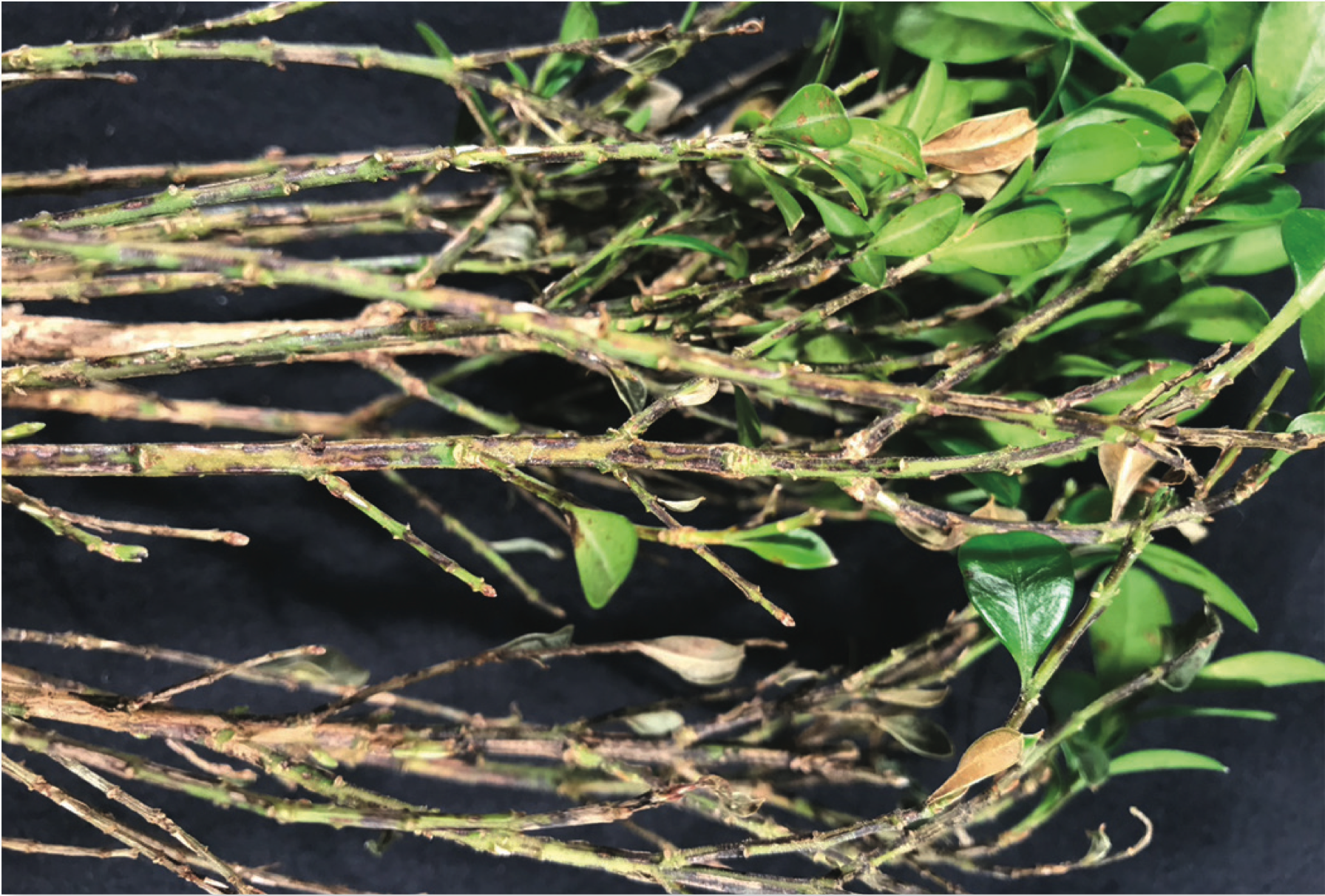
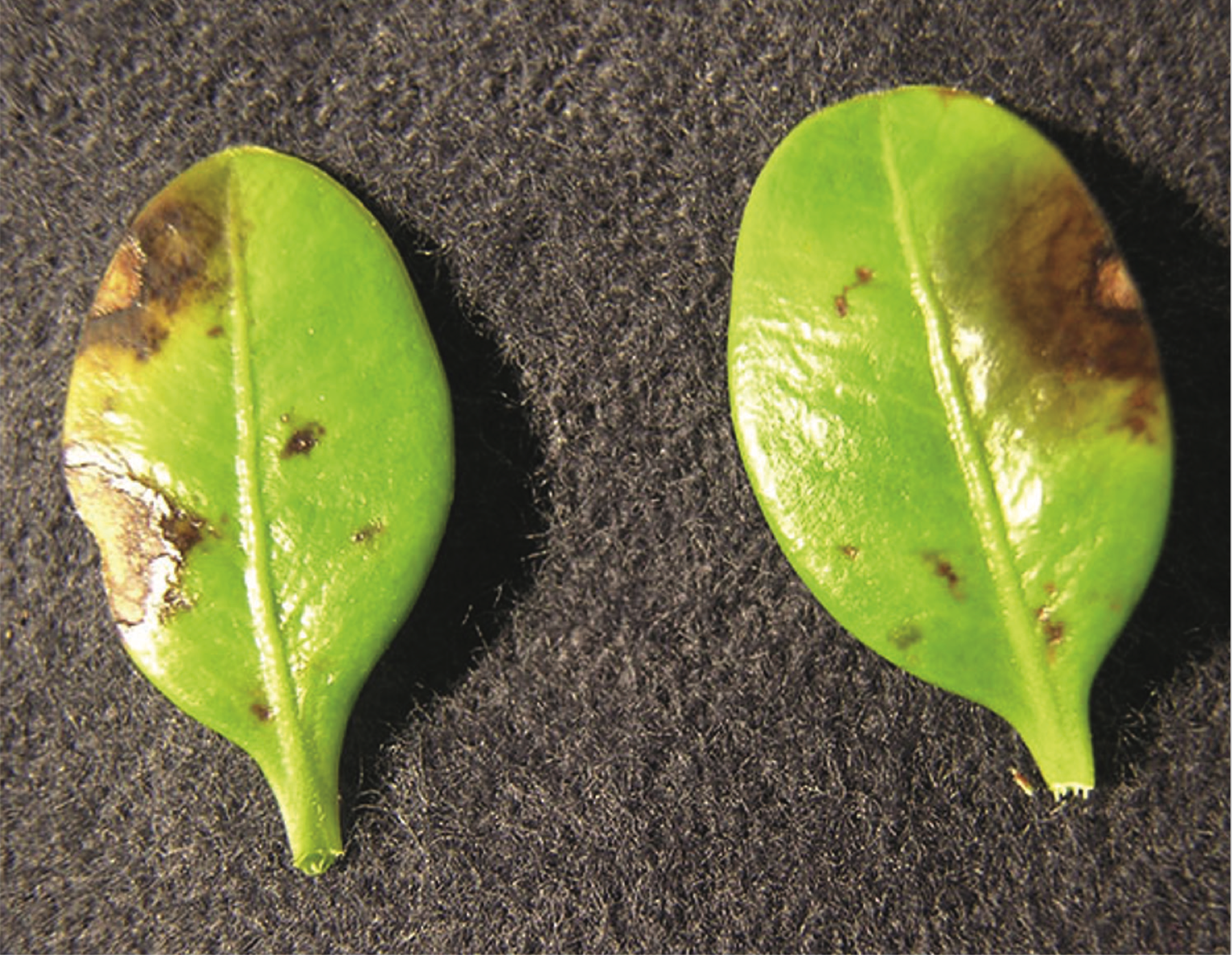
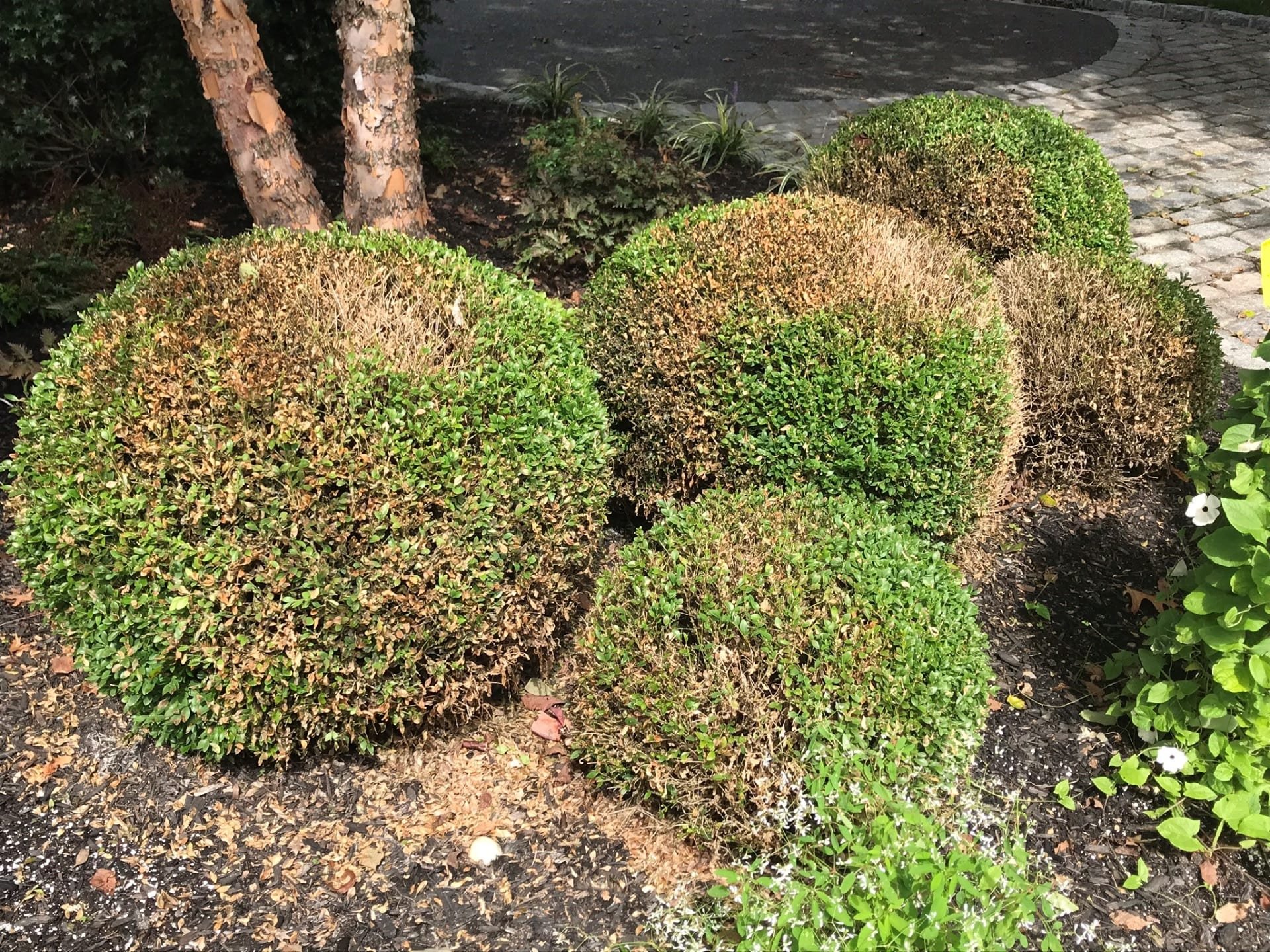
Brown leaf spots
Black streaking on green stems
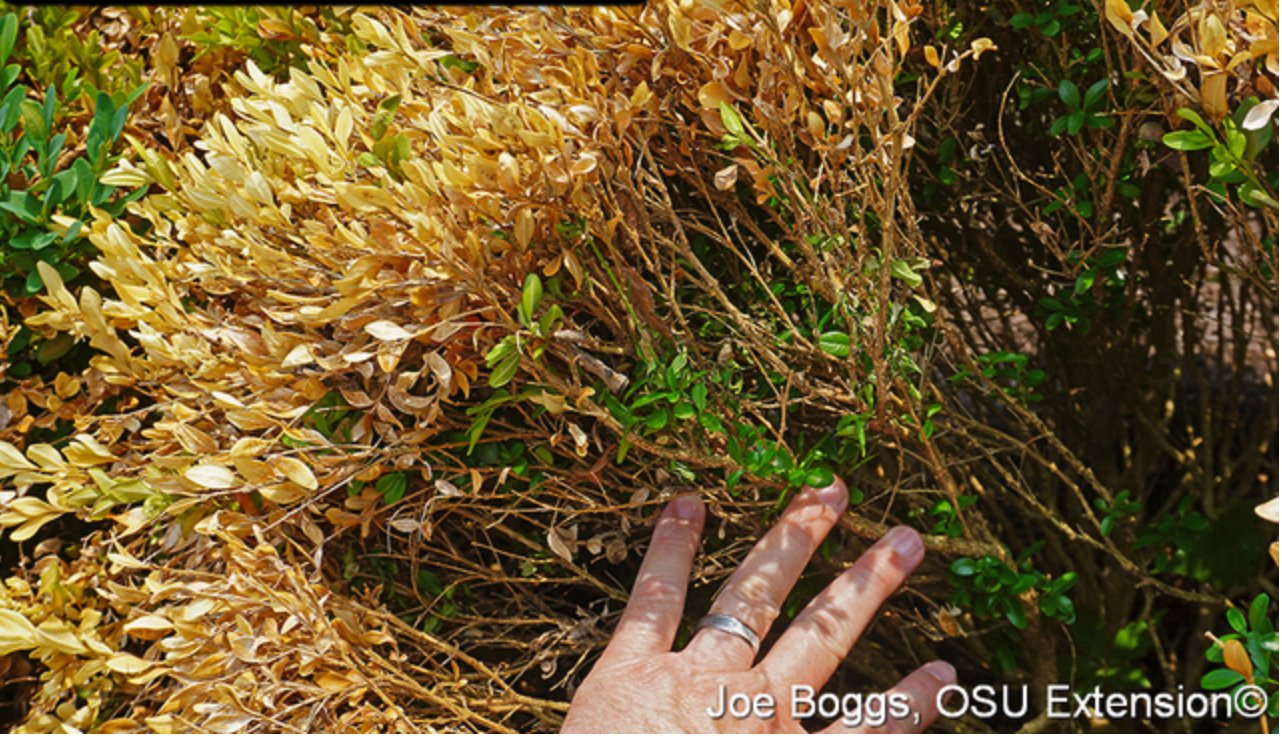
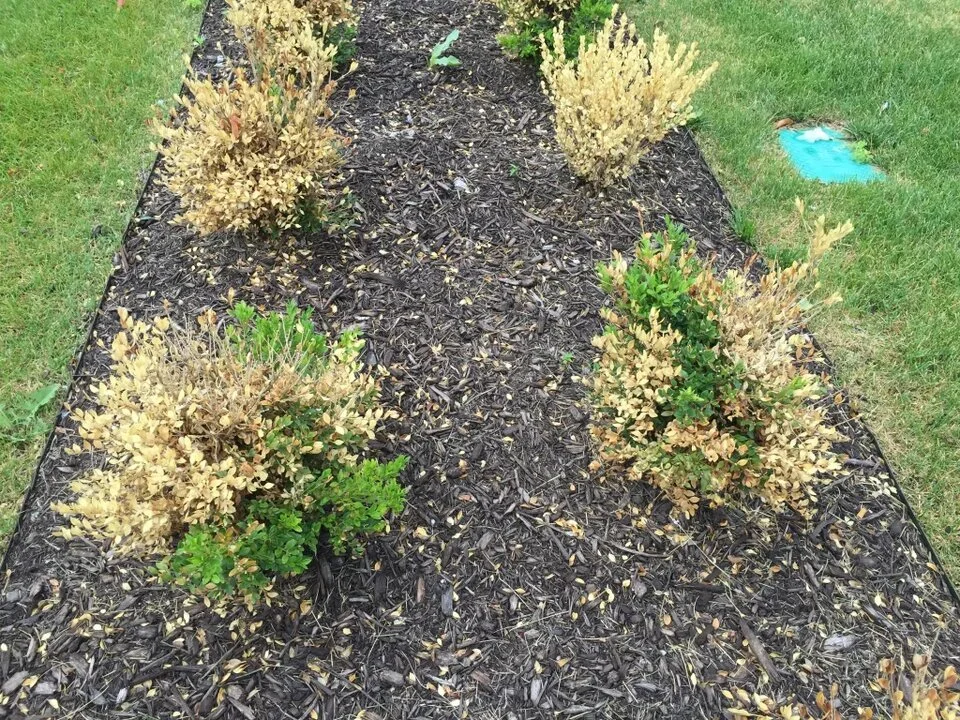
Fast leaf drop
Bare branches after defoliation
Those black stem lesions, along with rapid defoliation, are the biggest clues.
Often confused with…
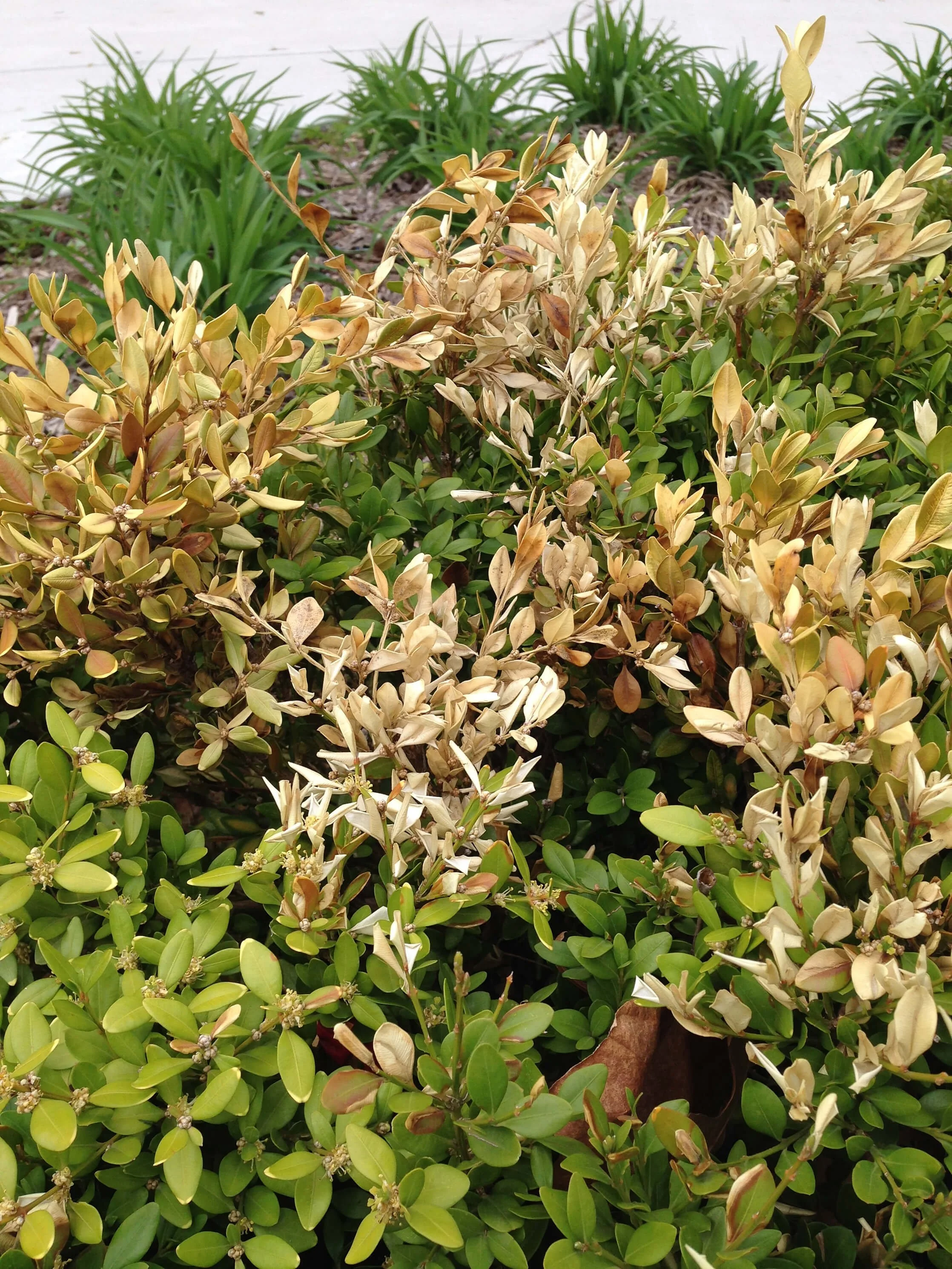
Volutella blight: tan leaves that often stay attached to the stems, usually on stressed plants
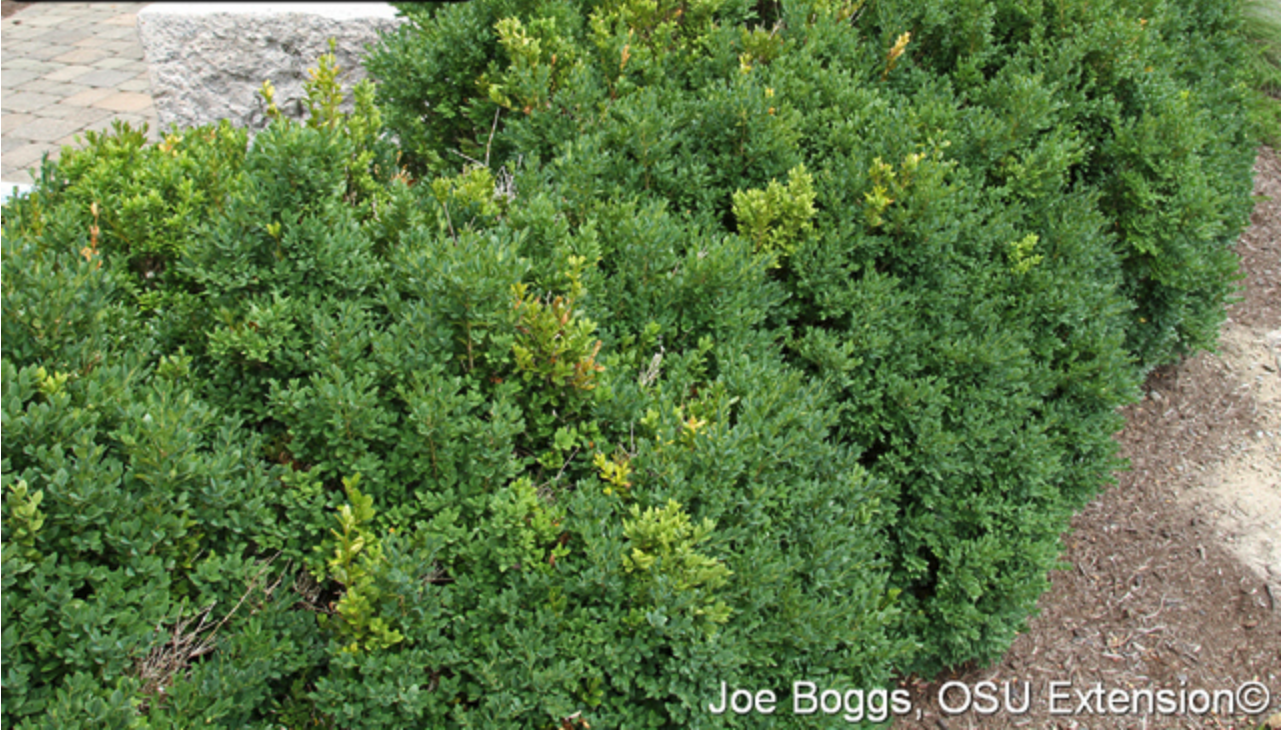
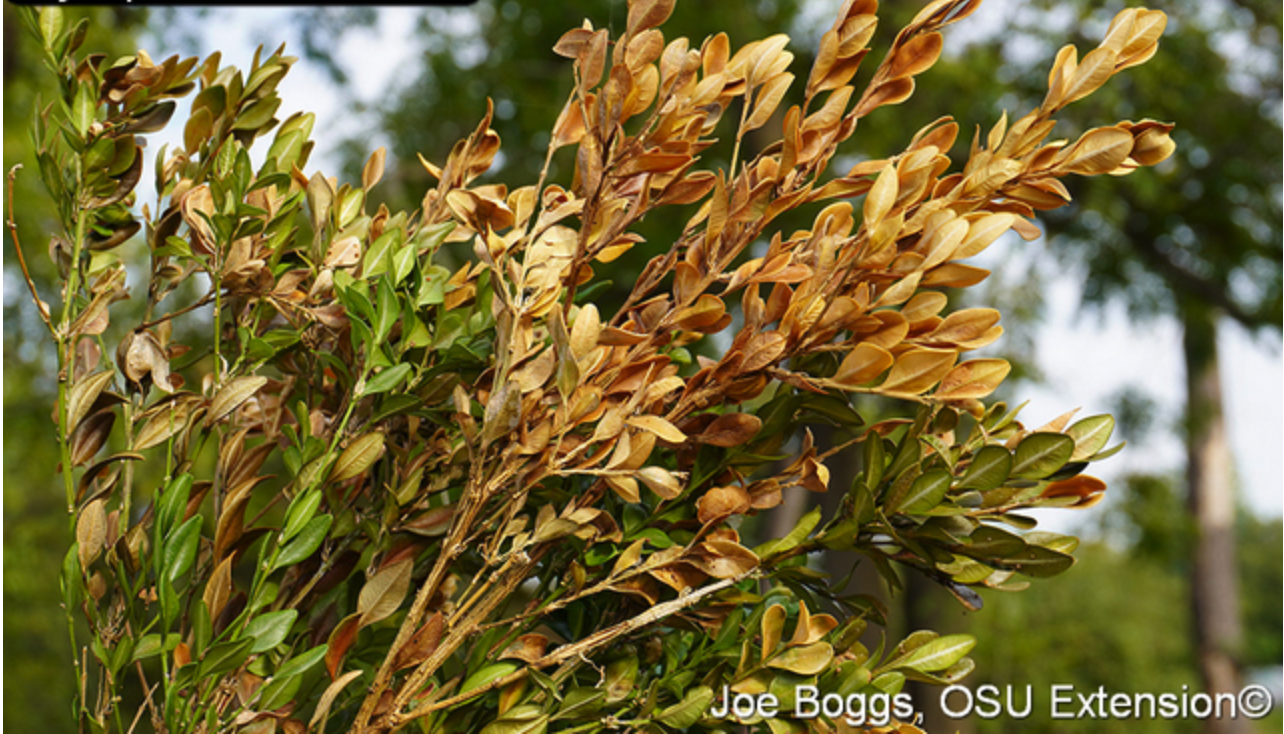
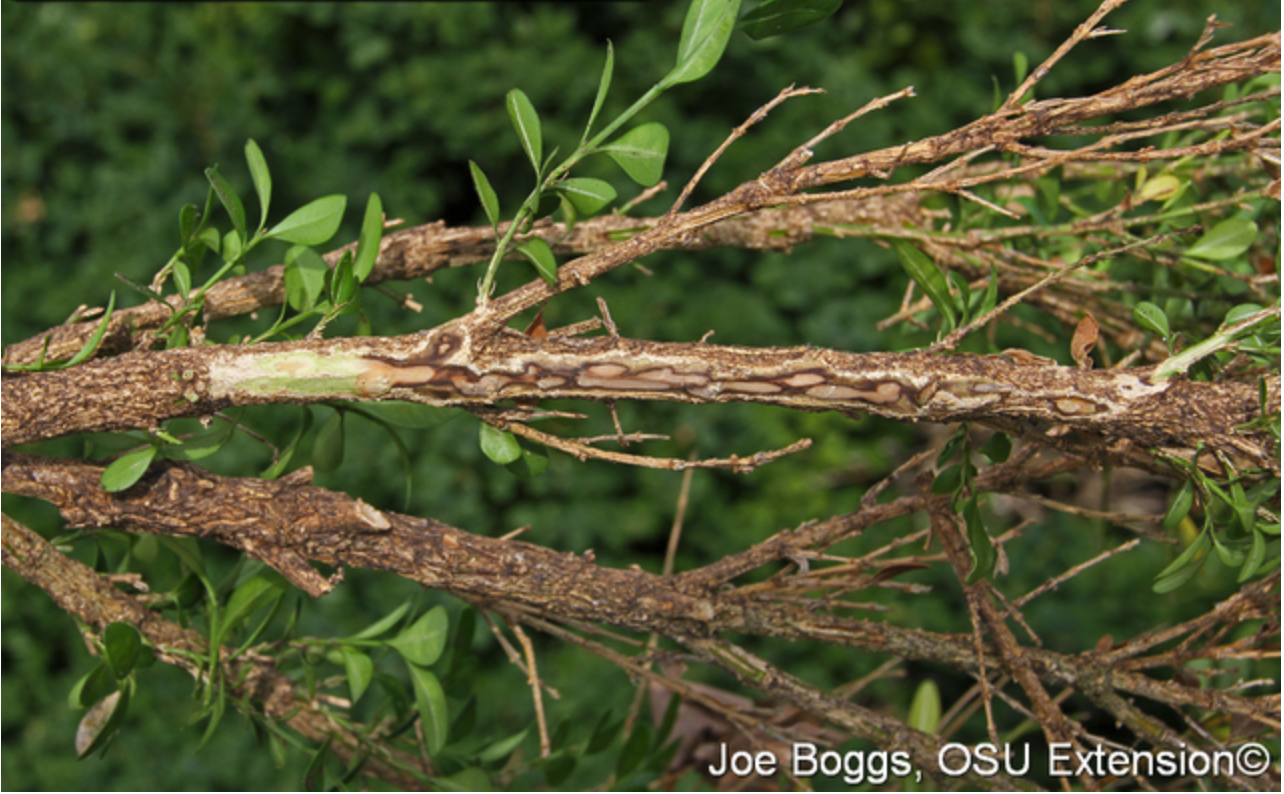
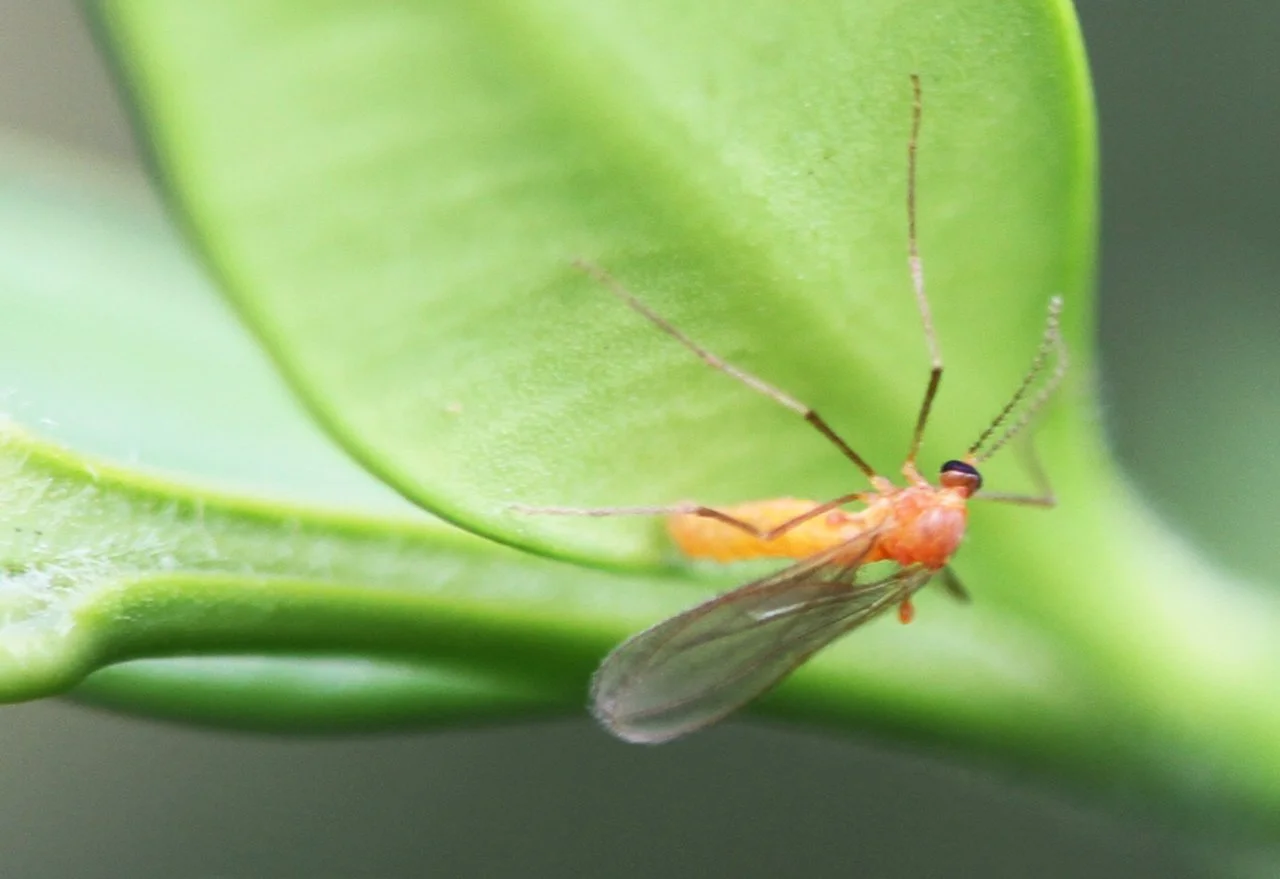
Leafminer: blistered or puckered leaves, not classic blight lesions
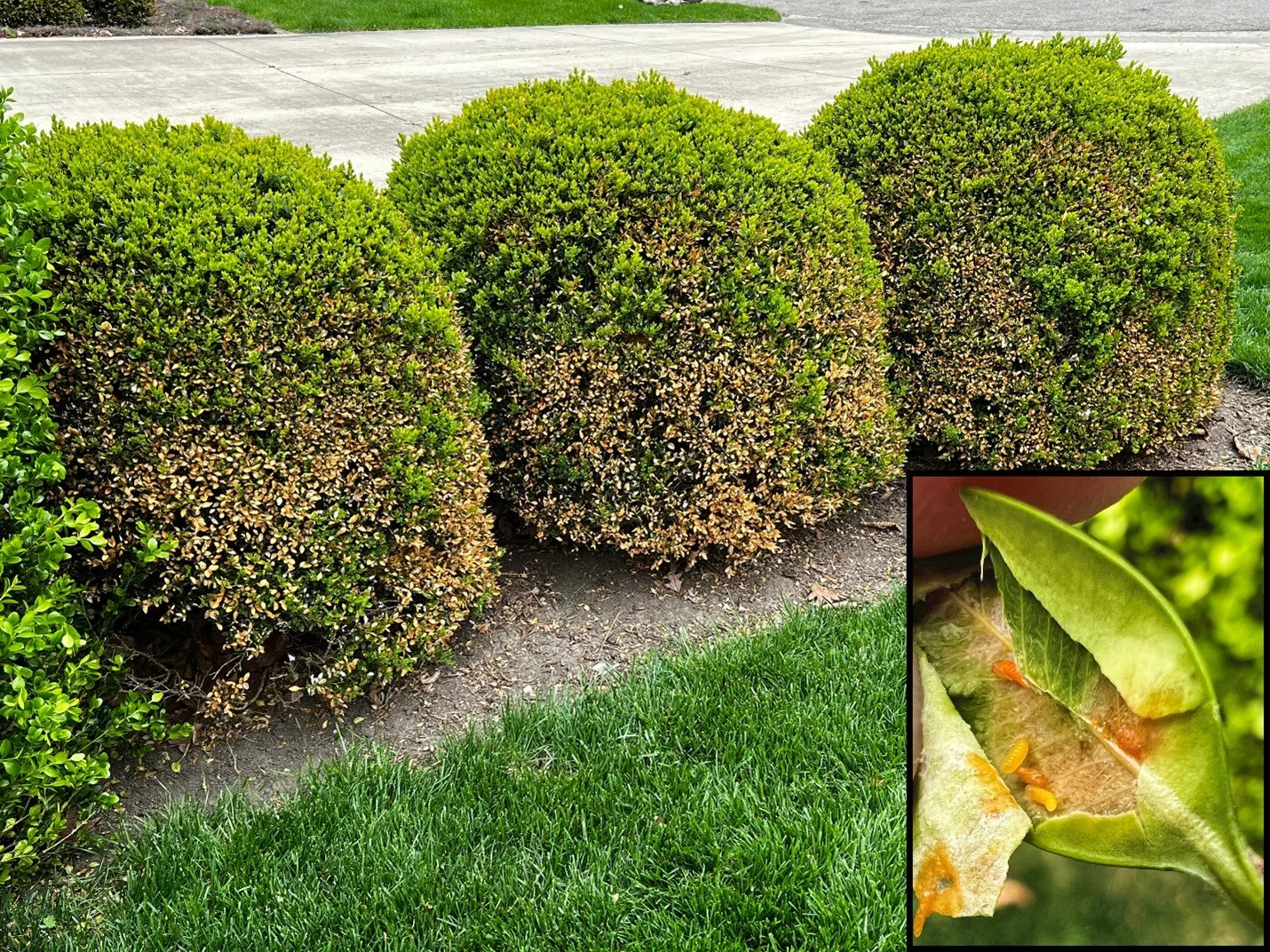
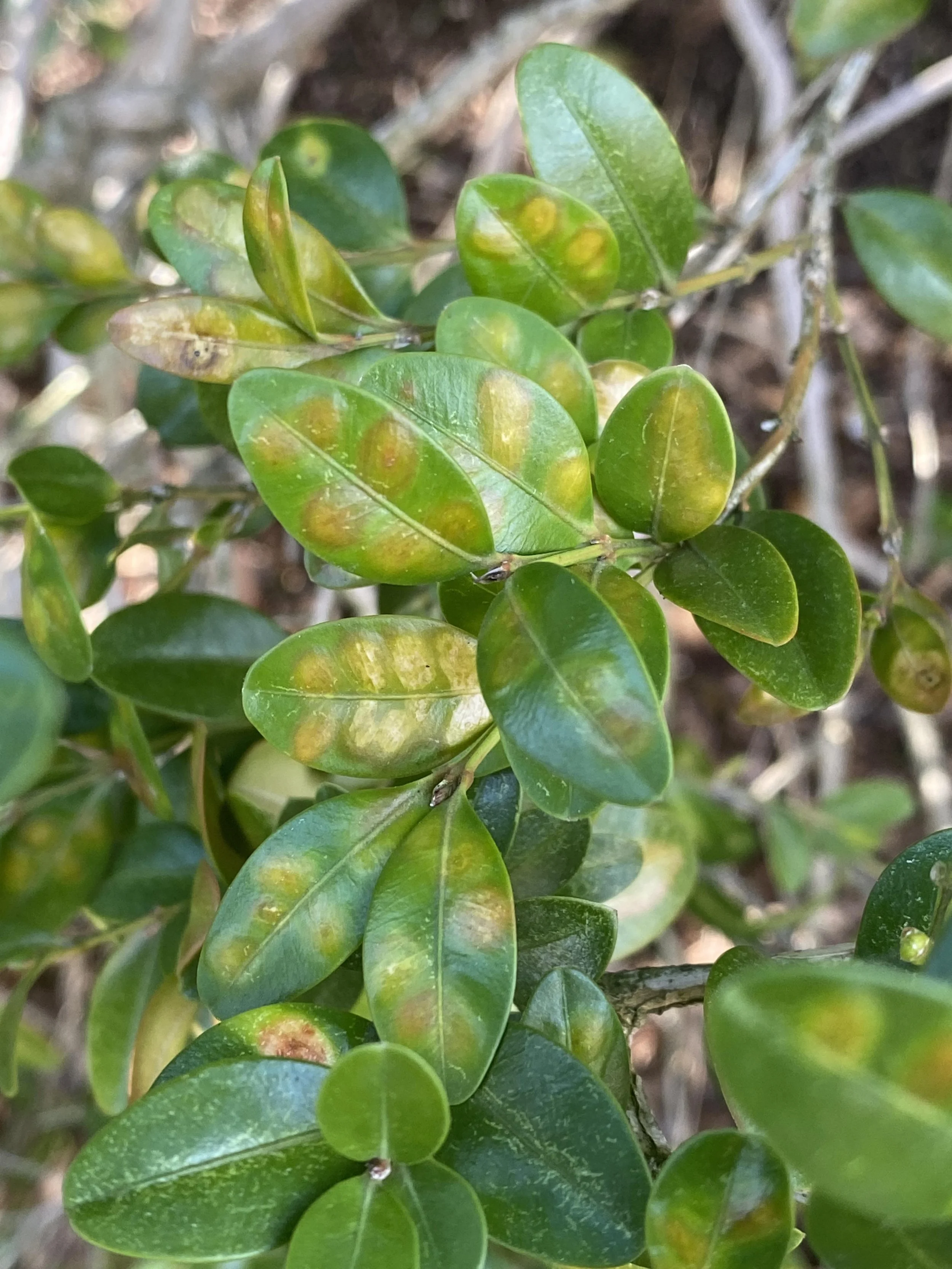
Winter injury: bronzing or bleaching after cold, wind, or dry winter weather
Homeowners can…
Water the root zone, not the foliage
Avoid overhead irrigation; use drip emitter tubing or micro-spray heads. We HIGHLY RECOMMEND utilizing quality parts from a reputable brand such as Rainbird or Hunter.
Prune out dead material
Clean fallen leaves and debris from inside the shrub
Improve airflow by thinning crowded shrubs
Keep boxwoods out of chronically soggy spots
These cultural steps matter whether the issue is real boxwood blight or one of the common look-alikes.
Can it be treated with chemicals?
Yes, but fungicides are mainly protective, not curative. They help protect healthy foliage and reduce new infections. They do not bring dead tissue back. Arkansas Extension lists the following fungicides as tools for managing boxwood blight:
chlorothalonil ✅
This product is included in the secondary tank during Round 2 of our ornamental programs. This product is only applied to affected plants.
fludioxonil
azoxystrobin ✅
This product is included in the secondary tank during 2 consecutive rounds of our ornamental programs towards the end of the season. This product is only applied to affected plants.
trifloxystrobin
tebuconazole ✅
A safer version of this product is included in the secondary tank during 2 consecutive rounds of our ornamental programs towards the end of the season. This product is only applied to affected plants.
thiophanate-methyl
What can Natural State Horticare do?
Natural State Horticare can help in four practical ways:
Diagnosis first, so we do not treat winter injury, drought stress, or Volutella like true boxwood blight
Targeted fungicide applications when disease pressure warrants it
Fertility and root-zone support to improve vigor and recovery potential
We don’t offer pruning services, but we can provide guidance/advice.
Our ornamental program is built around expert monitoring, targeted disease management, and tailored fertility rather than blindly spraying every plant.
Important expectation
If a boxwood is heavily damaged, the goal is to stop further decline and protect surrounding plants, not make dead tissue turn green again. In severe cases, removal may be the best long-term option.