
Grub Control

Understanding Japanese Beetles & Grubs
What Are Grubs?
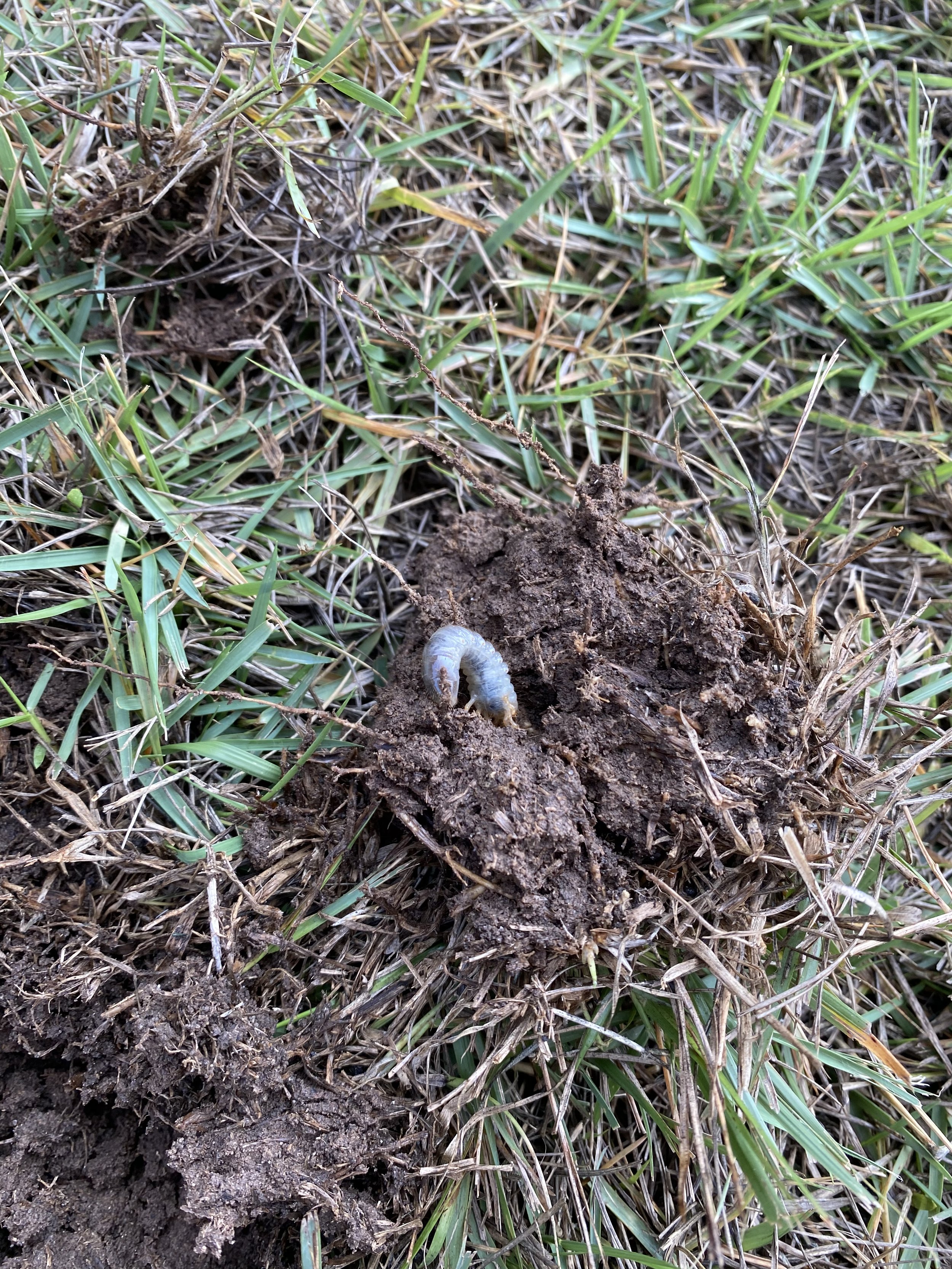
Grubs are the larval stage of beetles, including Japanese beetles, June bugs, and chafer beetles. These C-shaped, white larvae live beneath the soil and feed on grass roots, causing significant lawn damage if left unchecked.
Life Cycle Overview
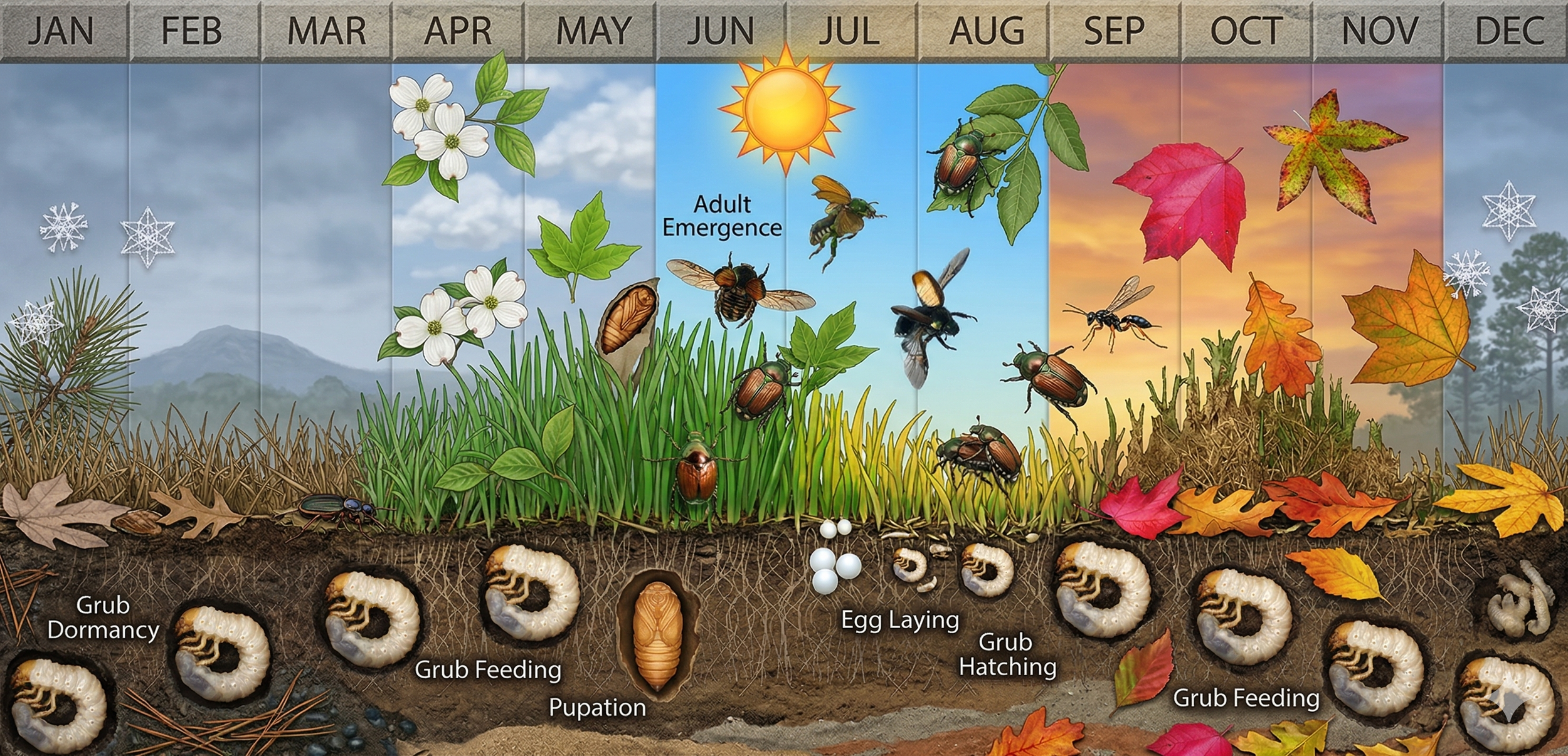
For property owners in Central Arkansas, effective turf management requires a precise understanding of the white grub life cycle. Unlike simplified national models, our regional climate dictates a specific "split-feeding" pattern that impacts treatment timing.
The Spring Transition (March–May) - As soil temperatures rise, overwintered grubs move from deep soil back to the root zone. They feed briefly but intensely on turfgrass roots before entering the pupal stage. While damage is often visible now, these mature grubs are harder to control than younger larvae.
Summer Emergence (June–August) - Adult Japanese beetles typically emerge in late June, with activity peaking in July. During this window, they transition to feeding on ornamental foliage, such as roses and crape myrtles. They simultaneously deposit eggs back into the soil, particularly in well-irrigated turf.
The Primary Feeding Window (August–October) - New larvae hatch in late summer and begin their most destructive feeding phase. This is the critical window for intervention; young grubs are highly susceptible to preventative treatments, and managing them now prevents significant root loss before the lawn goes dormant.
Winter Dormancy (November–February) - As the ground cools, the grubs descend 4–8 inches below the surface to stay beneath the frost line. They remain inactive throughout the winter, meaning surface-level treatments during these months are largely ineffective.
Signs of Grub Infestation
If grubs are damaging your lawn, you’ll notice:
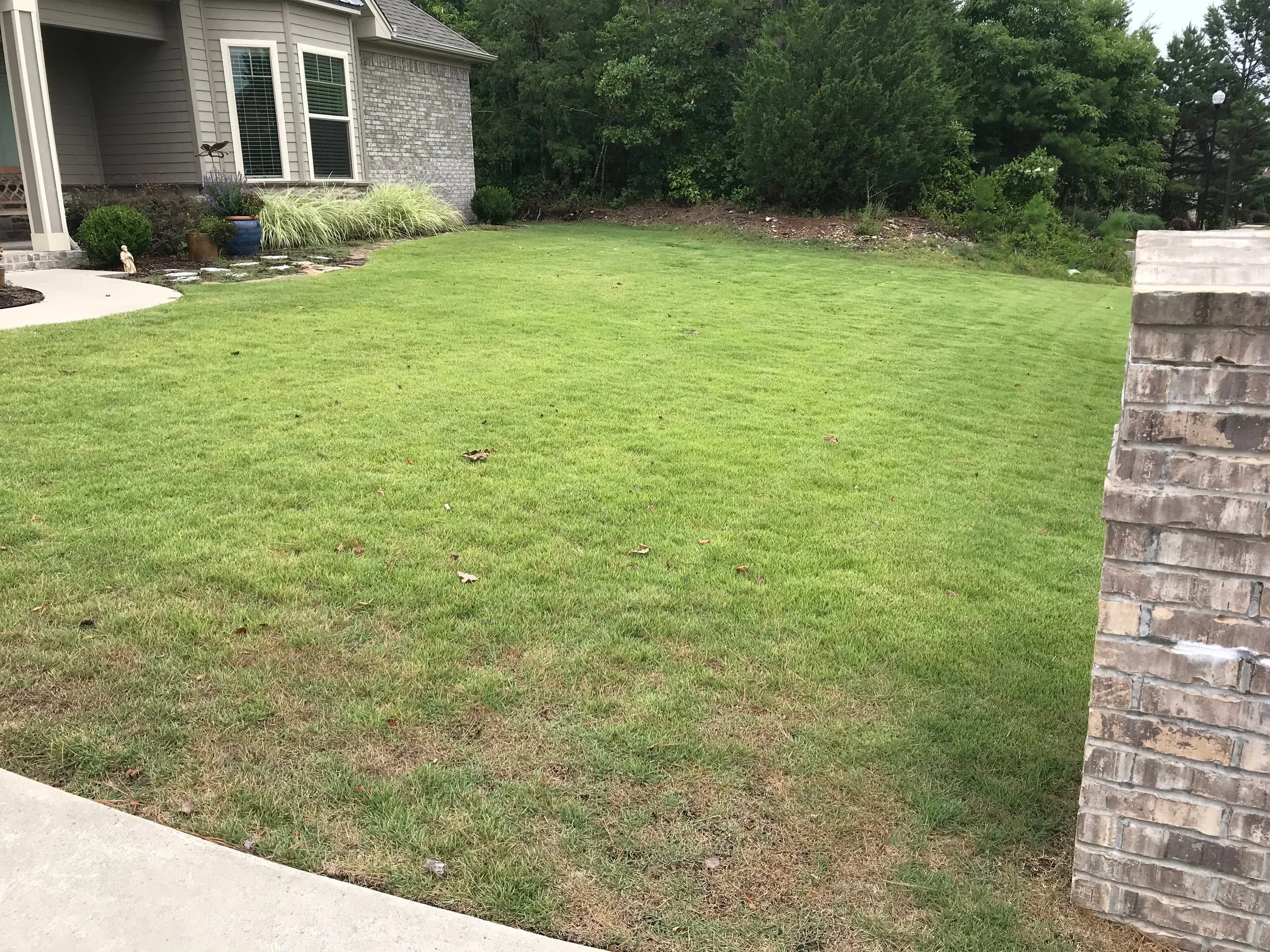
✔ Irregular Brown Patches – Usually starting along lawn edges.
✔ Grass Lifting Easily – Damaged grass pulls up like a loose carpet.
✔ Increased Animal Activity – Birds, skunks, and raccoons dig up grubs.
To check for grubs:
Gently pull back the sod in affected areas. If you find 5 or more grubs per square foot, treatment is recommended. If you see damage but no grubs, they may be deeper in the soil.
Season-Long Turf Pest Prevention (Preventative)
The most effective way to manage lawn pests and diseases is through prevention. Our Season-Long Turf Pest Prevention treatment, applied in April, protects your lawn from grubs and other turf-damaging pests for the entire season.
Program Benefits:
✔ Full-Season Protection – No mid-season surprises.
✔ Automatic Additional Treatments – Clients receiving this service get any necessary grub or covered insect treatments at no additional cost.
✔ Pre-Approval Policy – If you’re not on our full-season plan, read how our policy helps protect your lawn and budget.
The Pre-Approval Policy
This policy is designed with your lawn’s health and your wallet in mind.
✔ Immediate Treatment – Fungal outbreaks and pest infestations threatening your turf will be treated at the time of diagnosis.
✔ Pre-Approval Saves Time & Money – Spot fungal and pest treatments are automatically pre-approved to minimize damage and costs.
✔ Opting Out Increases Cost – If you opt-out, treatment will require approval, delaying application and increasing costs.
💰 Example:
Pre-approved spot treatment: $15
Without pre-approval: $65 (due to additional visits and delays)
To opt-out, contact our office. However, opting out will lead to higher costs and longer recovery times.
Curative Treatments (spot treatments)
Curative pest and disease treatments only stop active damage—meaning the harm has already been done.
Downsides of Curative Methods:
⚠ Damage is Already Present – Recovery time is required.
⚠ More Harmful to Beneficial Biology – Curative insecticides can impact soil health.
⚠ Higher Risk to Humans & Pets – These treatments are not as safe as the preventative.
DIY Control & Prevention
Traps
Japanese beetle traps work, but placement is key. Since traps attract beetles, placing them near valuable plants can increase damage. Instead:
✅ Position traps on the property perimeter to keep beetles away from plants.
✅ Use a community-wide approach – 25–49 traps per square mile for best results.
Natural Control
🐞 Hand Removal – If populations are small, manually removing beetles from foliage is an option.
🦟 Tachinid Fly (Istocheta aldrichi) – A natural predator that parasitizes early-emerging beetles.
🌱 Choose Resistant Plants – Japanese beetles prefer certain plants (e.g., roses). Opt for less attractive species when landscaping.
Lawn Recovery After Grub Damage
✔ Rake away dead grass.
✔ Water the area (some grass may recover if roots are only partially damaged).
✔ Re-sod if necessary.
✔ Boost recovery with an Organic Superfood Jumpstart – This helps speed up root establishment and overall lawn health.
Protect Your Lawn the Right Way!
For optimal protection, season-long prevention is crucial. Our Turf Pest Prevention ensures your lawn stays lush, green, and grub-free all season.