
Spring Dead Spot Fungus
Spring Dead Spot (Ophiosphaerella spp.) is one of the most misleading lawn problems we diagnose because the damage occurs during late fall and dormancy, but you don't see it until spring green-up.
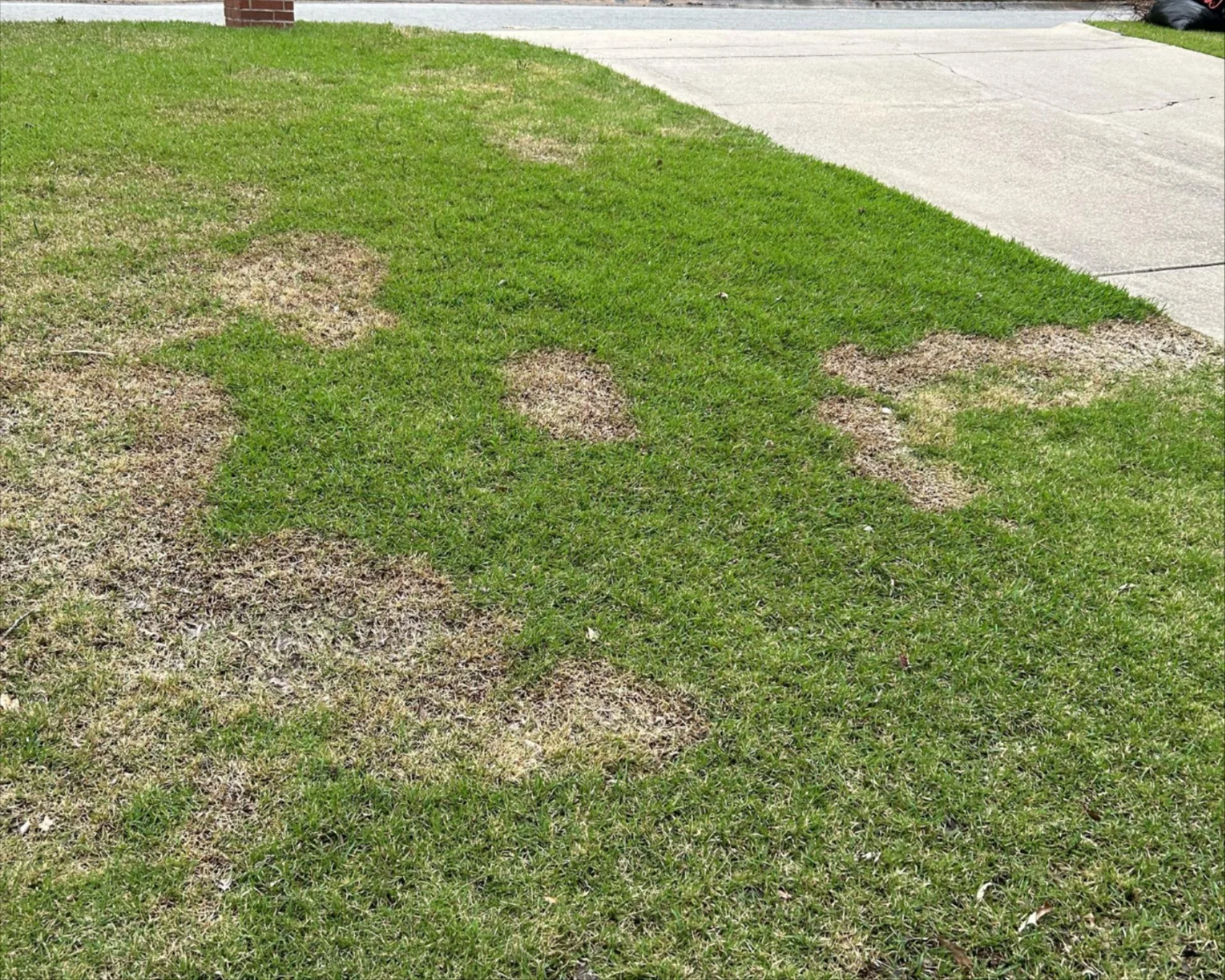
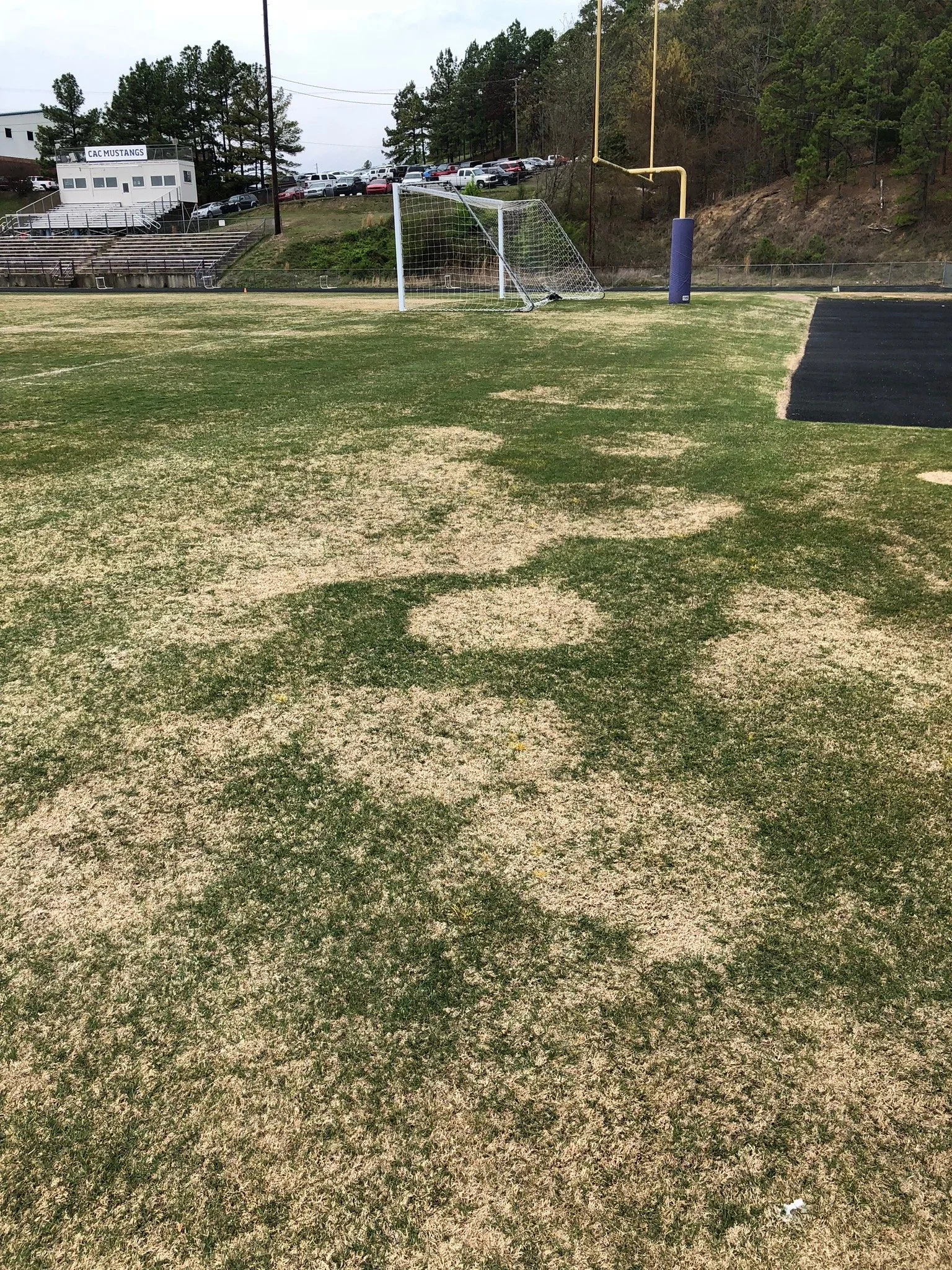
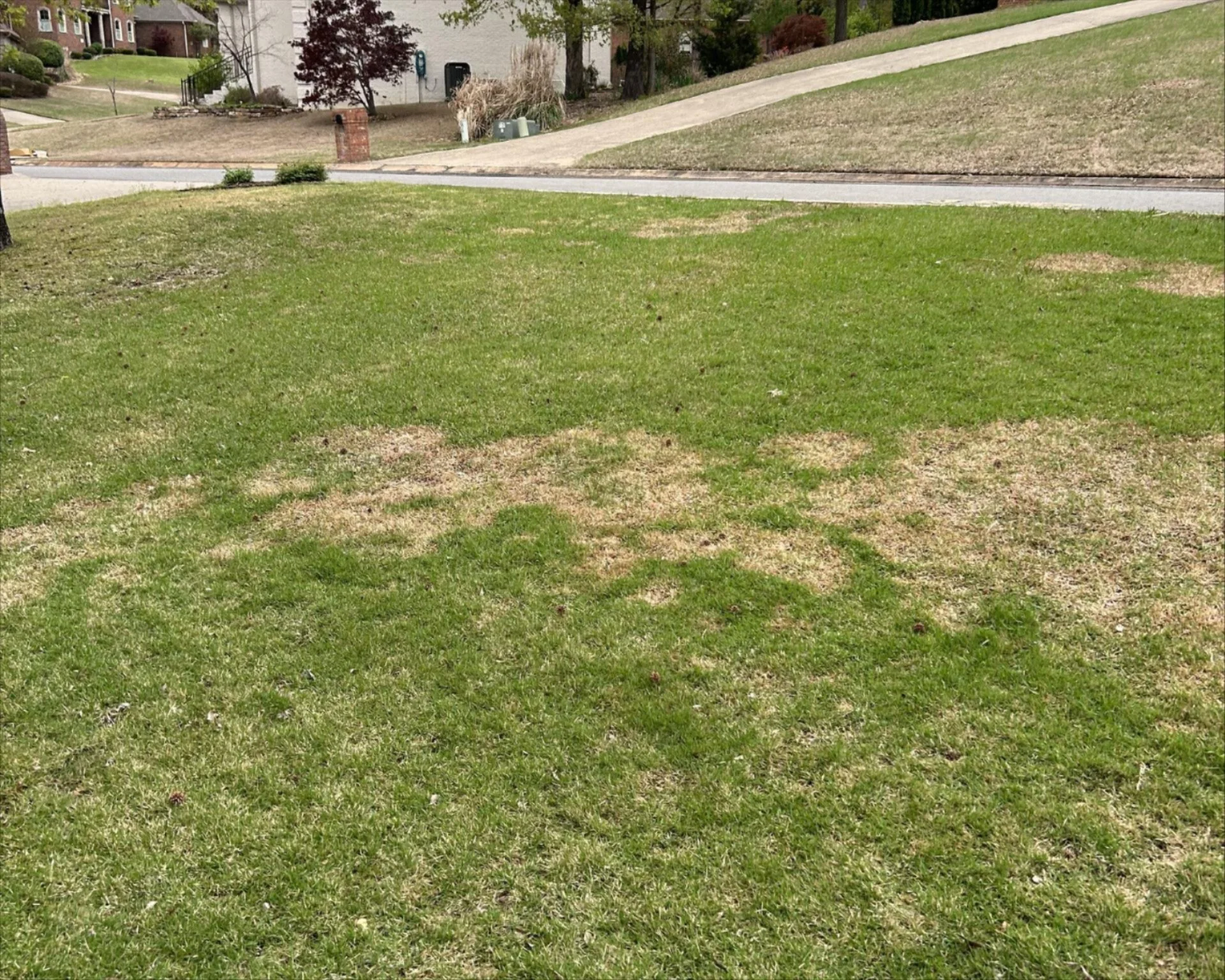
It shows up as circular patches, from about 6 inches to several feet across, of dead, bleached grass that stays dormant while the rest of the lawn greens up around it. The infection develops during cool, wet fall and winter weather, quietly damaging the roots and crown, and by the time spring arrives, there's simply nothing left in that spot to green up.
-
Spring Dead Spot mainly affects manicured Bermuda, especially closely mowed lawns and playing fields, and Centipede.
-
Look for circular patches remaining dormant and brown while the surrounding turf greens up normally.
In more advanced cases, affected areas can look sunken from root and crown decay, the roots themselves are dark and rotted, and weeds move in quickly to fill the thinned turf.
A lawn recovering from Spring Dead Spot is also more vulnerable to winter injury and drought stress the following year, since its root system is already compromised.
-
Cool, wet fall and winter conditions, excessive thatch, compacted soil, and heavy late-season nitrogen all raise your risk.
At Natural State Horticare, the last dose of nitrogen is applied in August. Our late-season focus shifts to winter weed prevention, soil-building organics, and pH correction.
-
Like all fungal issues in lawns, there is no cure. Management is entirely about reducing severity year over year.
That means:
Our Fungal Agronomics program reduces the likelihood and severity of SDS.
Liquid Aeration, to relieve compaction and improve drainage, since waterlogged soil is a primary risk factor.
Regular dethatching, since excess thatch traps the moisture this fungus needs.
-
Complete control in a single season is uncommon. It typically takes two to four years of consistent cultural management, alongside properly timed fungicide, before you see real, lasting control. Once that control is established, a lighter, maintenance level program can usually take over.