
The Problem With “Eco-Friendly” Lawn Alternatives
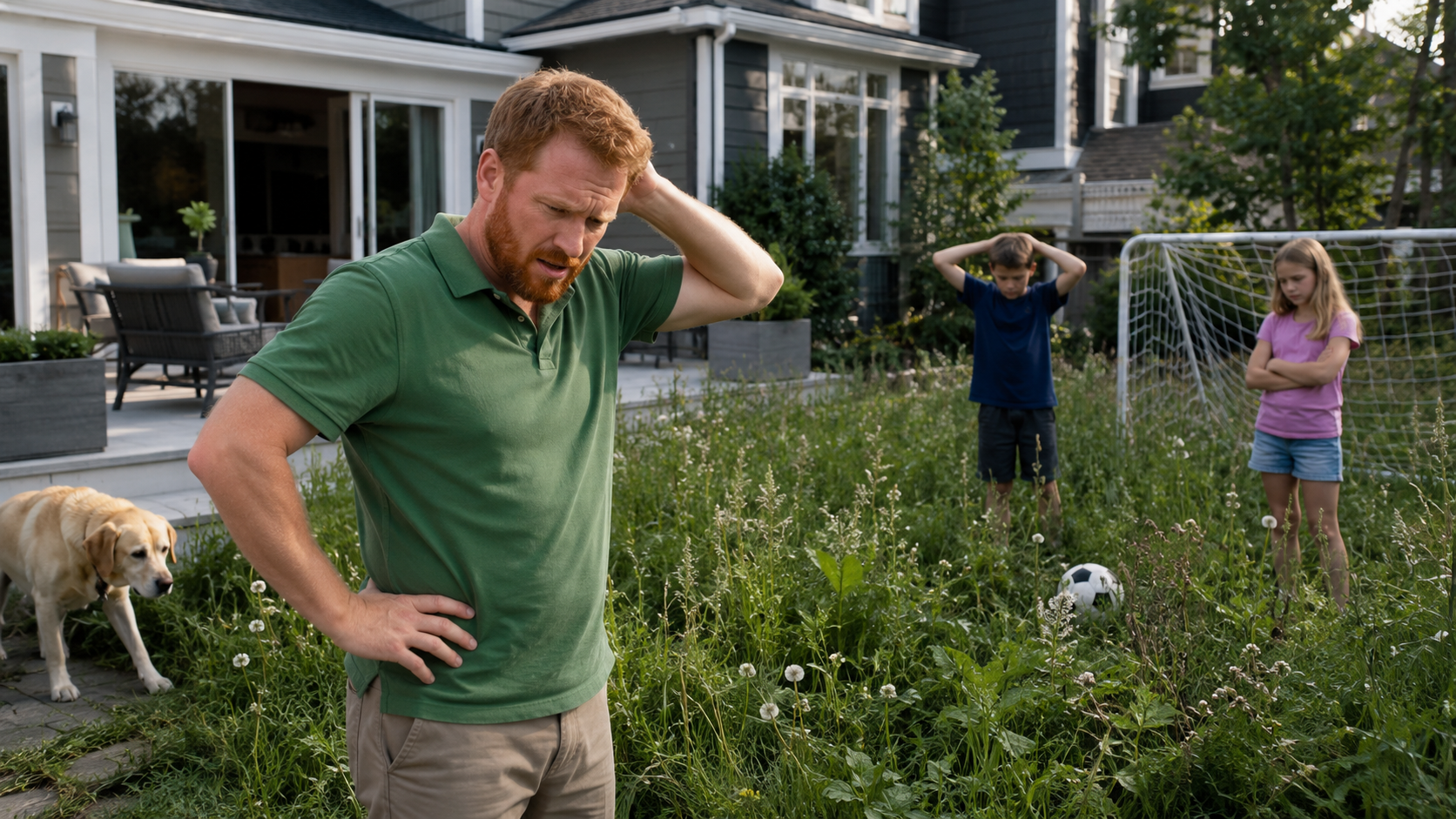
There is a growing trend telling homeowners to replace their lawns with clover, weeds, wildflowers, “no-mow” seed mixes, and other so-called eco-friendly lawn alternatives.
Less mowing. Less fertilizer. Fewer chemicals. More pollinators. A more natural yard.
In theory, that all sounds wonderful, but there are serious downsides to consider.
Not every square foot of every property needs to be perfect turfgrass. We are big believers in thriving ecosystems, healthier soil, reducing chemicals, and having a pollinator-friendly property.
However, turning your lawn into a patchy mix of clover, weeds, stickers, and overgrown vegetation is not the environmental win it is made out to be.
-
Before we talk about clover, weeds, or pollinators, we need to establish what a lawn is supposed to do.
A lawn is not just “green space.” A good lawn is a usable space.
It is where kids and pets play. It is where families throw a football, kick a soccer ball, host birthday parties, sit around a fire pit, etc.
A lawn should invite use. It should be enjoyed and to do so it needs to be safe, clear of debris, consistent, and comfortable underfoot.
That is where many lawn alternatives fail.
Clover and other mixed “eco” lawns are not built to handle play, pet traffic, heat, etc. They thin and die out when used.
Weeds grow tall in a matter of days making play practically impossible and potentially even dangours.Once a lawn stops being useful, you lose one of the primary benefits of owning a home and having a yard in the first place.
-
The Pros
Clover flowers can attract bees.
Clover does produce flowers that bees and other pollinators may visit.Some flowering weeds can provide nectar.
Certain broadleaf weeds can offer a food source for pollinators when they are allowed to bloom.Pollinator lawns can have ecological value in the right setting.
When intentionally designed, properly managed, and allowed to flower, a pollinator lawn can provide some environmental benefit.Untreated lawns may support pollinators when mowing is reduced.
The key phrase is “when mowing is reduced.” Pollinator value depends heavily on allowing plants to flower.
The Cons
The flowers have to actually flower.
If you mow regularly, you remove the flowers, which removes the main pollinator benefit.
If you do not mow, the lawn quickly becomes overgrown, making it harder to walk through, play on, or enjoy.
Overgrown areas can attract unwanted pests.
Tall, unmanaged vegetation can create better habitat for snakes, ticks, fleas, and other issues most homeowners do not want near the house.Weeds are harder to mow than turfgrass.
Many weeds grow faster, taller, and more unevenly than grass. They can bog down mowers, increase maintenance time, and make the lawn look messy again within days.
If you do not water, the pollinator benefit is strongly diminished.
Drought-stressed plants produce fewer flowers, which means less nectar for pollinators.
Dry, thin areas can erode quickly.
Once weak areas die out, bare soil, rocks, and dust become exposed. Mowing a rocky dust bowl is rough on equipment and not fun for anyone.Stickers!!!
Spurweed, stickerweed, burweed, or whatever name you use for them, these painful weeds thrive in thin, weak, bare areas and make the lawn miserable for kids, pets, and bare feet.
A “pollinator lawn” only works as pollinator habitat when it is managed more like habitat and less like a lawn. But the more you manage it like habitat, the less it functions like a lawn.
-
If your goal is to support bees, butterflies, and beneficial insects, there are much better ways to do it than letting your lawn turn into a weed nightmare.
Plant pollinator-friendly landscape beds.
Use native flowering plants.
Add butterfly bushes, coneflowers, black-eyed Susans, milkweed, salvia, bee balm, lantana, verbena, and other plants that provide intentional, season-long color and nectar.
Create dedicated pollinator spaces in areas where they make sense: along fences, around patios, near property edges, in landscape beds, or in places that are not needed for play and daily use.
In other words, keep the lawn usable and make the landscape more ecological.
-
Another myth is that clover lawns and weed lawns are low-maintenance.
Clover and other “eco-lawn alternatives” may not require fertility treatments but watering is still necessary unless if you want dry dusty dead areas were only sticker weed can survive (not to mention grow flowers for pollinators).
Also, mowing a weedy lawn is far more difficult than well maintained grass.
Weeds grow much faster than grass looking unkept within days of mowing. They also bog down mowing equipment causing every mow to take much longer.
Even worse, bare areas eroded exposing rocks and dust that quickly become airborne when mowing.
-
The choice is not between a chemical-soaked lawn and a weed-filled “eco lawn.”
That is a false choice.
A well-managed Bermuda or Zoysia lawn can be dense, beautiful, functional, and maintained with far fewer chemical inputs than most people realize.
At Natural State Horticare, our approach is built around that idea. We focus on soil health, spoon-fed fertility, organics, micronutrients, and spot-spray-only weed control instead of blanket spraying unnecessary herbicides across the entire lawn. Our program is designed to reduce herbicide use dramatically while still maintaining the standard our clients expect.
A thick, healthy lawn naturally suppresses weeds. It cools the area around the home, reduces erosion, filters runoff, and sequesters carbon.
We believe a healthy lush lawn creates a safe usable space for families to enjoy and create memories.