
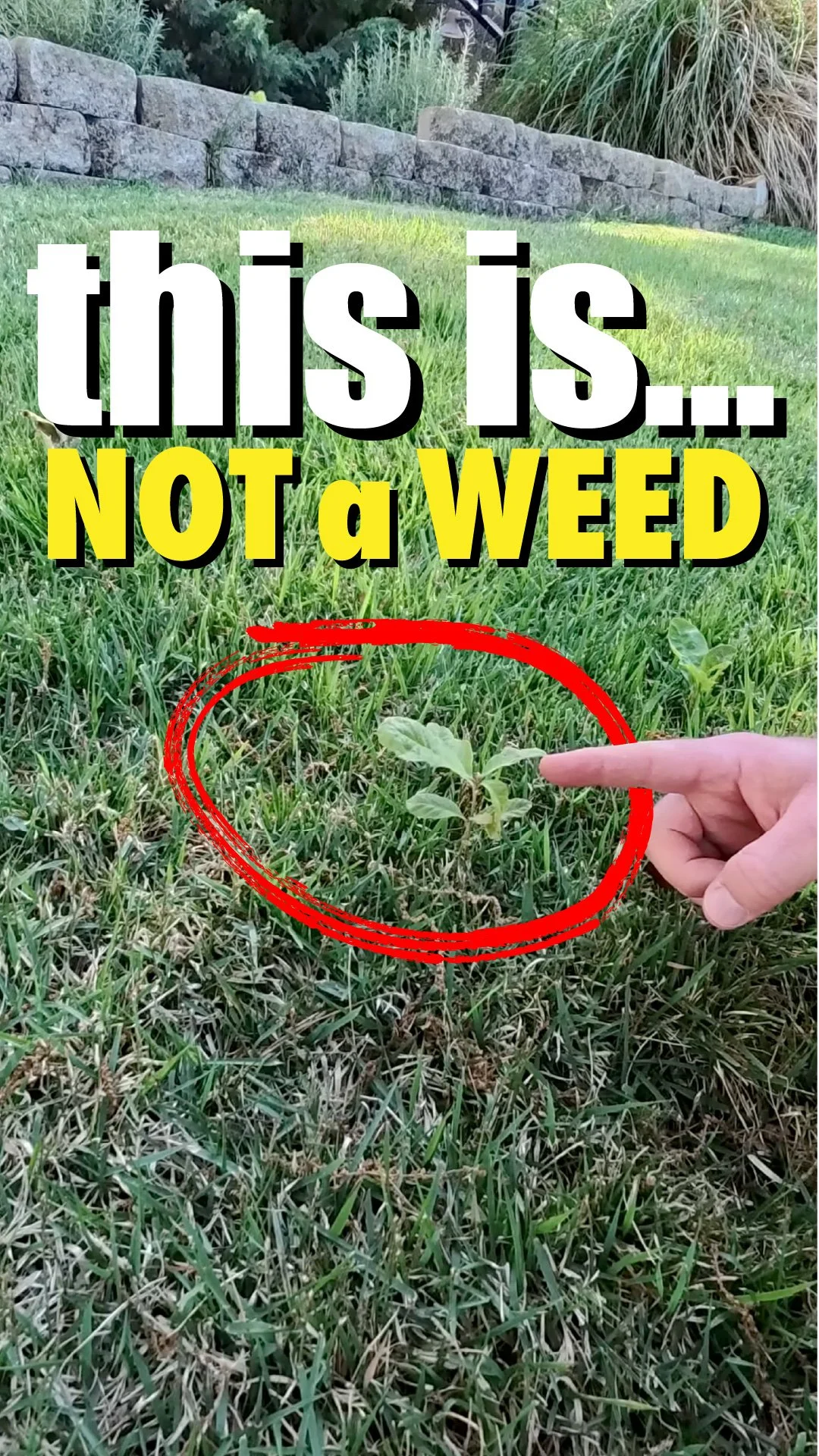
Those are trees, NOT WEEDS
Every spring, we get call-backs from clients asking us to "come kill these weeds.”
At first glance, they look like weeds, and it is easy to assume they should be controlled by a lawn treatment.
But in most cases, they are not weeds at all.
They are baby trees.
Why Baby Trees Show Up in the Lawn
Large oak trees drop acorns in the fall. Some of those acorns get cleaned up, eaten by wildlife, or chopped up by mowing. Others settle into the soil and sit there through winter.
Then spring arrives.
As soil temperatures warm up and moisture increases, those acorns begin to germinate. When that happens, tiny oak seedlings start popping up in the lawn, usually directly underneath or near the drip line of a mature oak tree.
If you pull one up, you will often see the young seedling still attached to the acorn.
Is This a Sign Your Lawn Program Is Failing?
No, this is where things can be confusing, but it comes down to chemistry.
Modern systemic herbicides work by attacking very specific genetic traits of a target plant. Thus killing the weed and not the grass. That same logic applies to trees, vines, and other woody ornamentals, as they don’t share these targeted genetic traits.
Do Pre-Emergent Products Prevent Baby Trees From Germinating?
NO, baby trees grow from acorns, and sprout deep in the soil below the protective barrier that prevents most weed seeds from germinating.
Are There Products Designed to Kill Woody Plants, Vines, Shrubs, etc.?
Yes, but they come with very real risks.
Unfortunately, products like Triclopyr can also damage the surrounding turf. Even more importantly, some of these products are soil mobile, meaning they can move through the soil and potentially affect the mature oak tree.
3 Ways to Minimize The Baby Trees in Your Lawn
1. Clean Up Acorns Before They Germinate
The best time to control baby oaks is before they become baby oaks.
If you have a large oak tree, cleaning up acorns in the fall and winter can make a big difference. The fewer acorns that settle into the soil, the fewer seedlings you will see in spring.
This is not always easy, especially under mature trees that drop heavily, but it is the most effective prevention method.
2. Pull Them When the Soil Is Moist
If the seedlings have already germinated, hand-pulling is a good option, though time-consuming and tedious.
Pull them after rain or irrigation when the soil is soft. They will come up much easier, and you are more likely to remove the acorn and young root system with the seedling.
If the soil is dry and hard, they are more likely to snap off at the surface.
3. Keep Mowing
This is the simplest and most practical option for most lawns.
Baby oak trees cannot survive repeated mowing. They need leaves to capture sunlight and build energy. Once those leaves are cut off repeatedly, the seedlings eventually run out of stored energy and die naturally.
So if you are seeing baby oaks across the lawn, don’t panic.
Keep mowing.
After a few cuts, most of them will fade away on their own.
The Bigger Picture
When clients see something growing in the lawn, it is natural to think, “Why didn’t my lawn treatment stop this?”
But not everything growing in the lawn is the same.
Some plants are true weeds. Some are unwanted grasses. Some are sedges. Some are tree seedlings. Each one responds differently, and the safest solution is not always the strongest herbicide.
Baby oaks are a perfect example.
They may be annoying for a few weeks in spring, but they are usually temporary. With a little cleanup, some hand-pulling, and consistent mowing, they will naturally disappear without risking damage to your lawn or your mature oak tree.
Final Takeaway
If you see tiny “weeds” popping up under your oak tree this spring, pull one up and take a closer look.
If it is attached to an acorn, it is not a weed.
It is a baby oak.
And the best solution is simple: clean up what you can, pull them when the soil is moist, and keep mowing.