
Japanese Beetles in Central Arkansas:
Small Beetle, Big Appetite
Japanese beetles are one of those pests that can make a healthy landscape look rough in a hurry. They are small, shiny, metallic green beetles with copper-colored wings, but don’t let the size fool you. When they show up in groups, they can shred some of the most loved ornamental plants in Central Arkansas.
The good news? Most Japanese beetle damage looks worse than it actually is, especially on healthy, established plants. With smart timing, careful monitoring, and a targeted treatment approach, we can usually keep the damage from getting out of hand without decimating beneficial insects by blindly spraying the entire landscape.
Japanese beetles are scarab beetles that cause problems in two different life stages:
As adults, they feed on ornamental leaves, flowers, and fruit.
As grubs, they live in the soil and feed on grass roots.
In Arkansas, adults are most active during the summer, typically from June through August, with activity lasting around 4 to 6 weeks after emergence. The University of Arkansas notes that Japanese beetles were first detected in Arkansas in 1997, and roses are one of their preferred hosts.
What Their Damage Looks Like
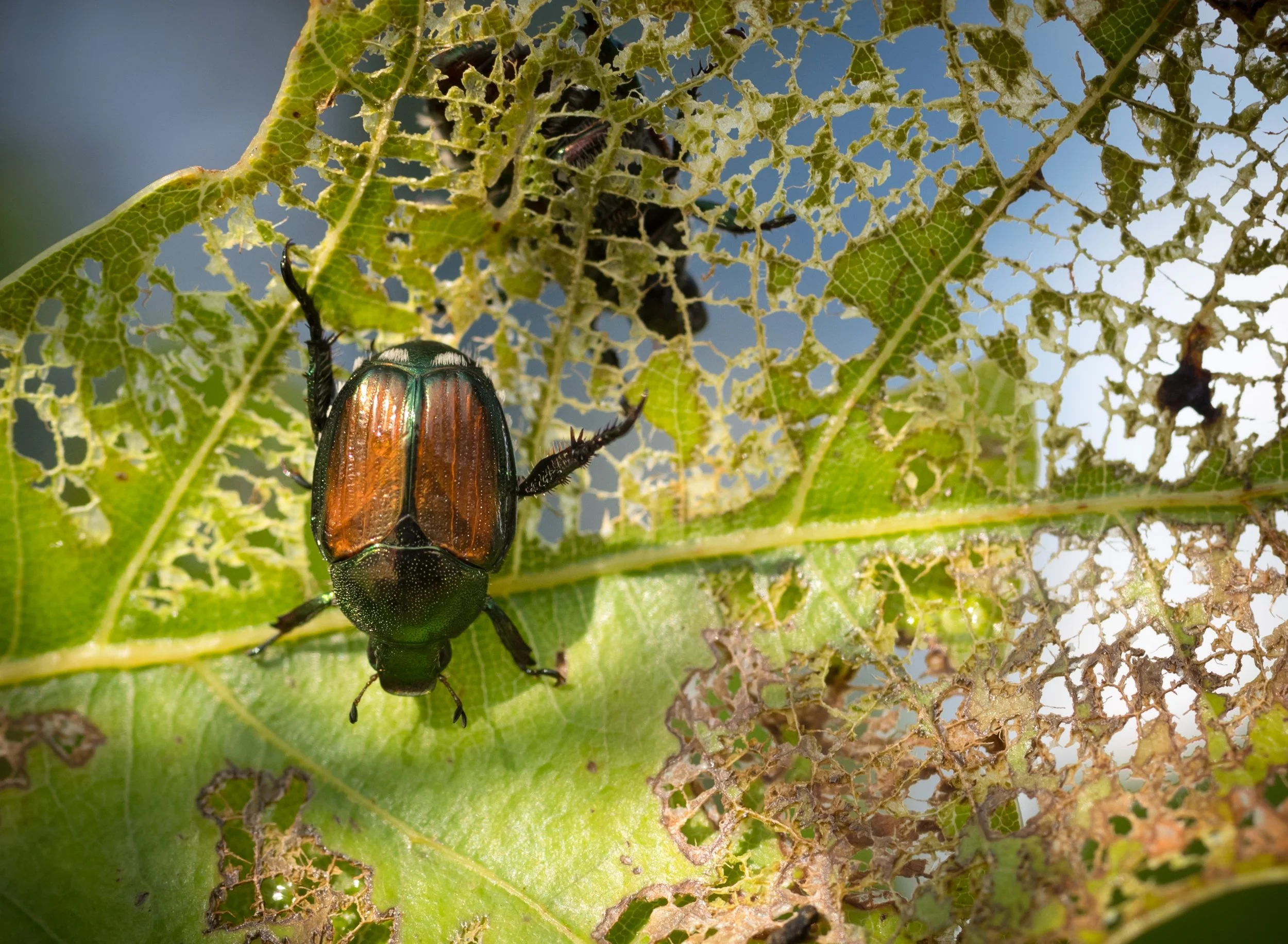
The most recognizable damage is called skeletonizing
Instead of chewing the whole leaf, Japanese beetles eat the soft tissue between the veins. This leaves behind a thin, lace-like leaf that looks scorched, shredded, or transparent. USDA APHIS describes this as large, irregular holes between the leaf veins, giving leaves a lace-like appearance.
You may also notice:
Ragged flower petals
Clusters of beetles feeding together
Leaves that turn brown after being skeletonized
Damage concentrated on the sunny upper portions of the plant
One plant heavily damaged, while another nearby plant looks untouched
That last point surprises many clients. Japanese beetles do not always spread evenly. They tend to gather in groups because feeding beetles release odors that attract more beetles to the same plant.
Commonly Attacked Arkansas Ornamentals
Japanese beetles can feed on hundreds of plant species, but in our area, the ones clients are most likely to notice include:
Roses - This is the big one. Roses are a preferred host, and white or yellow-flowered varieties may be somewhat more attractive than darker cultivars.
Crape Myrtles - While not always the first plant attacked, crape myrtles are common in Central Arkansas landscapes and can show noticeable leaf and bloom damage during heavy beetle pressure.
Japanese Maples - Tender foliage can be chewed and skeletonized, which is especially frustrating because these are often high-value ornamental trees.
Fruit-Bearing Ornamentals - Japanese beetles are attracted to foliage, flowers, and ripe or overripe fruit. APHIS notes adults feed on more than 300 ornamental and agricultural plants.
Hollyhocks, Hibiscus, Grapes, and Other Soft-Leaved Plants - These can become magnets during peak activity, especially in sunny areas.
Are Japanese Beetles Killing My Plants?
Usually, no.
That’s important. Japanese beetle damage can look dramatic, but most healthy ornamental plants can tolerate some leaf loss. The bigger concern is when damage happens repeatedly, when the plant is already stressed, or when the plant is young, newly installed, drought-stressed, or highly valuable.
In other words, a few beetles on a mature crape myrtle may not be a crisis. A swarm stripping a young Japanese maple or rose bed is a different story.
What Homeowners Can Do
For light pressure, simple steps can help:
Hand remove them early in the morning - Japanese beetles are slower when it is cooler. Shake them into a bucket of soapy water before the heat of the day.
Scout roses and high-value plants often - Roses are one of the first places to check.
Avoid overreacting to minor damage - A few chewed leaves do not always justify treatment.
Keep plants healthy - A stressed plant is less capable of tolerating insect feeding. Proper watering, mulch, fertility, and pruning all matter.
Should You Use Traps?
Japanese beetle traps are popular, but we HIGHLY recommend limiting the number of traps in your landscaped spaces.
The University of Arkansas warns that using more than one (two max) baited trap in a single garden may attract more beetles than the traps can control.
That means your trap can accidentally turn your yard into the neighborhood buffet line. If traps are used at all, they should be part of a larger area-wide strategy and placed far away from the plants you are trying to protect.
When Treatment Makes Sense
Chemical treatment is not always necessary, but it can be appropriate when beetles are actively damaging valuable or highly visible ornamentals.
This is where we believe in being careful. Japanese beetles often feed on flowering plants, and flowering plants attract pollinators. The University of Arkansas specifically cautions that pollinator hazards should be considered when choosing insecticides for Japanese beetle control on flowering plants.
The Natural State Horticare Approach
At Natural State Horticare, protecting pollinators is a top priority. However, our technicians are constantly monitoring for key pests such as Japanese Beetles and will treat them with appropriate products when necessary.
Standard or “Traditional” tree and shrub programs sacrifice pollinators in the name of controlling Japanese Beetles by using Neonicotinoids, Organophosphates, and Pyrethroids, all of which are devastating to beneficial insects. Serious harm is inevitable when utilizing these products because Japanese Beetles are active during peak pollinator season, and you can’t spray one without the other.
Our approach is different.
First, we limit the amount of insecticides by utilizing a targeted application method (not just blanket applications).
Second, we utilize the latest and safest products on the market. For control of Japanese Beetles specifically, we utilize Chlorantraniliprole, which provides season-long control of Japanese Beetles, bagworms, and many other insects while carrying the highest possible safety rating. It is completely inert to mammals and practically harmless to pollinators, targeting very specific genetic traits of very specific insects.
Final Thought
Japanese beetles are frustrating, especially when they find your roses, Japanese maples, or other high-value ornamentals. But they are also manageable. The key is catching them early, understanding when damage is cosmetic versus concerning, and using a targeted approach that protects the landscape without creating unnecessary risk for pollinators.
If you are seeing shiny green beetles or lace-like leaf damage on your ornamental plants, send us a photo or ask your technician to take a closer look during your next visit. We can help determine whether it needs treatment or just a little monitoring.