
Canker Disease
What Central Arkansas Homeowners Need to Know
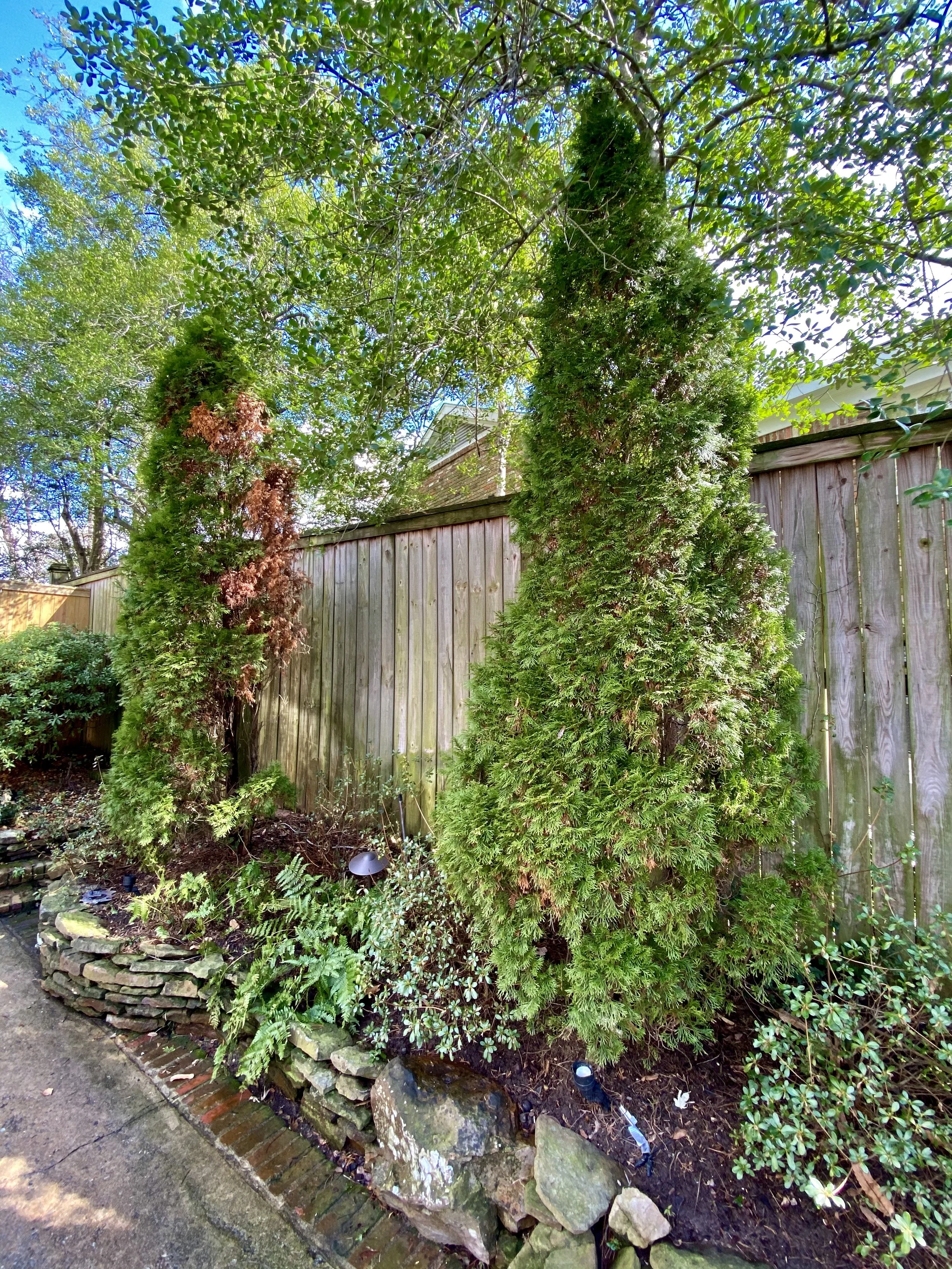
A branch on your favorite Japanese maple suddenly wilts. Part of a Leyland cypress turns brown while the rest remains green. An established shrub develops cracked, sunken bark and begins dying back one stem at a time.
These symptoms are often blamed on insects, drought, or “fungus.” However, the underlying problem may be canker disease.
Canker diseases affect the stems, branches, and trunks of woody ornamental plants. They can disfigure valuable landscaping, kill individual branches, and, in severe cases, lead to the loss of the entire plant.
Unfortunately, canker is not a single disease with a simple treatment. It is a broad category of plant problems caused by various fungal and bacterial pathogens, as well as environmental injuries that damage bark and woody tissue.
Understanding what canker is, why it develops, and what can realistically be done about it is essential for protecting ornamental plants in Central Arkansas.
What Does Canker Look Like?
Oozing Sap or Resin
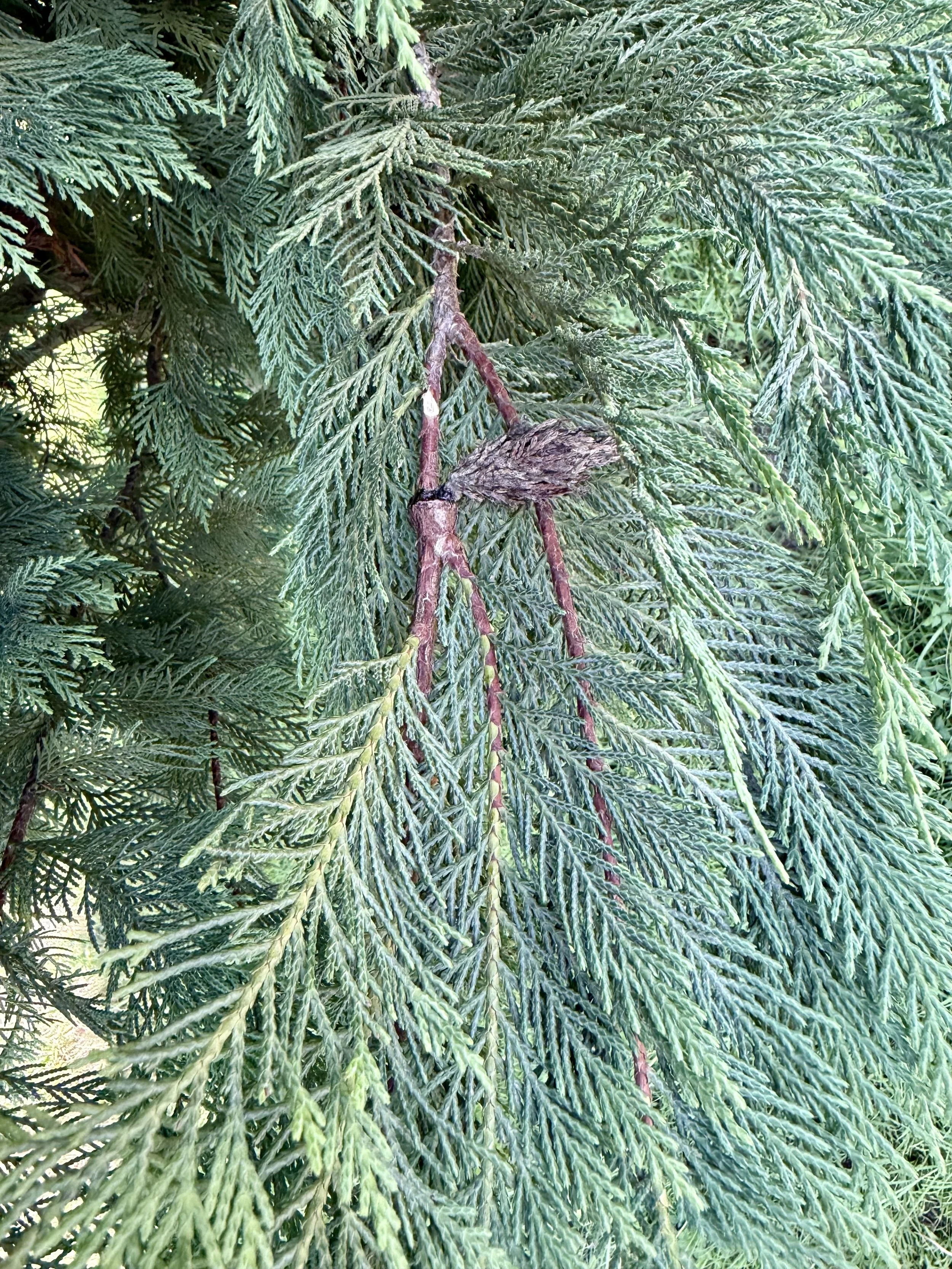
Some plants produce sap or resin near the affected area. This is common on conifers but may also occur on deciduous trees.
Wilted but Attached
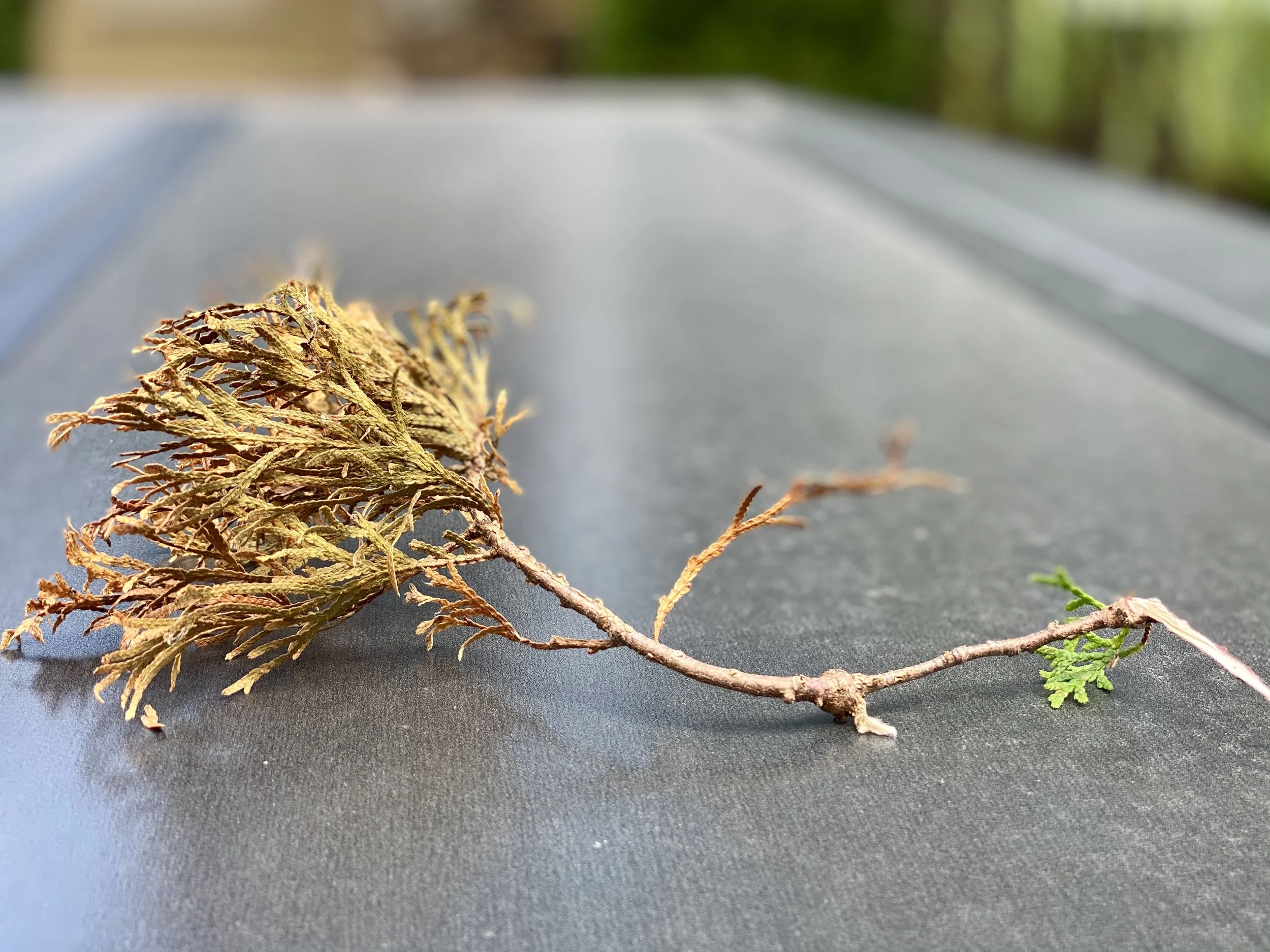
When a branch becomes girdled quickly, its leaves may wilt, turn brown, and remain attached rather than dropping immediately.
Dead Tissue Beneath the Bark
Carefully scraping a very small section of bark may reveal brown or black tissue instead of healthy green tissue.
Random Branch Dieback
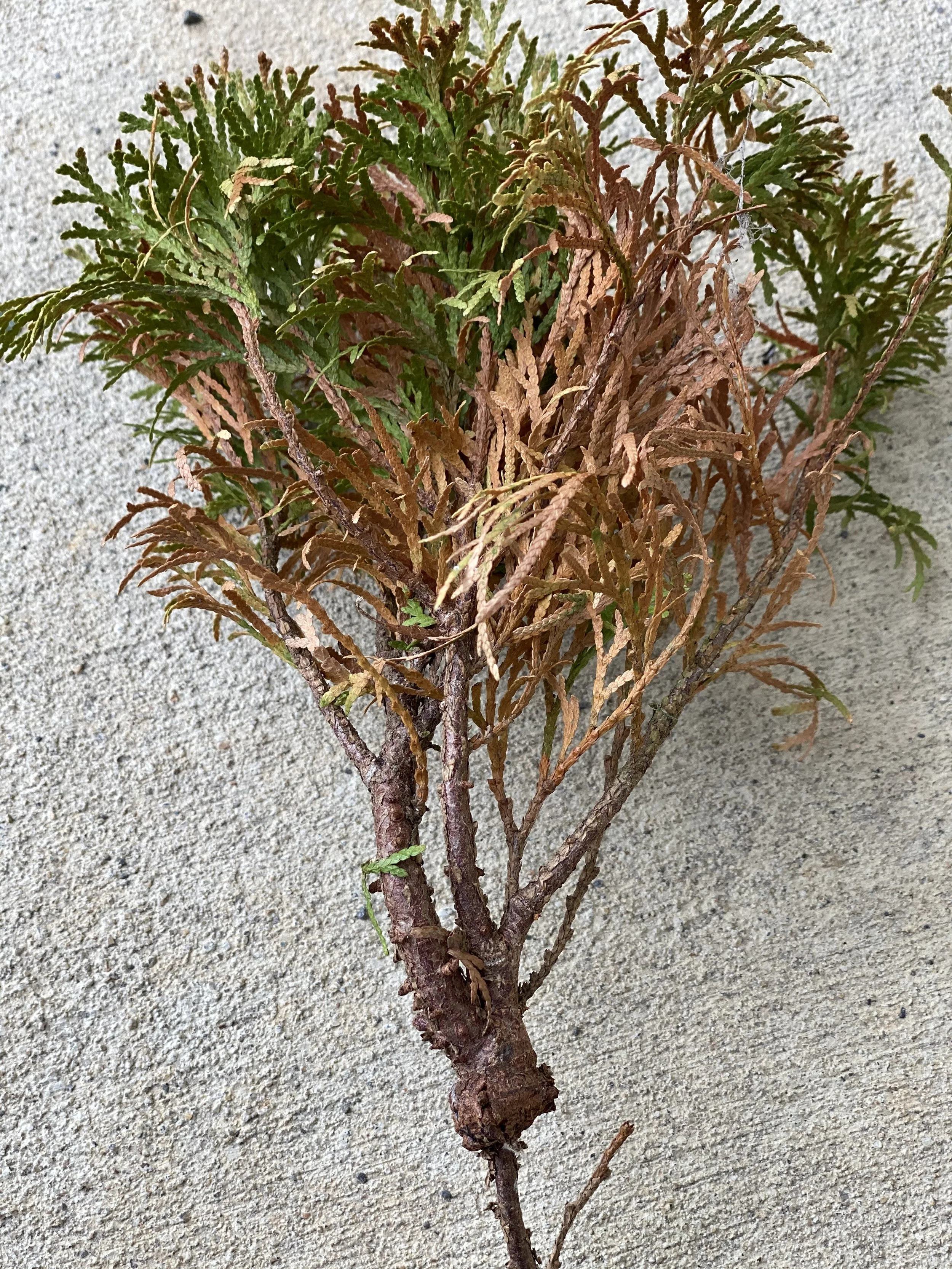
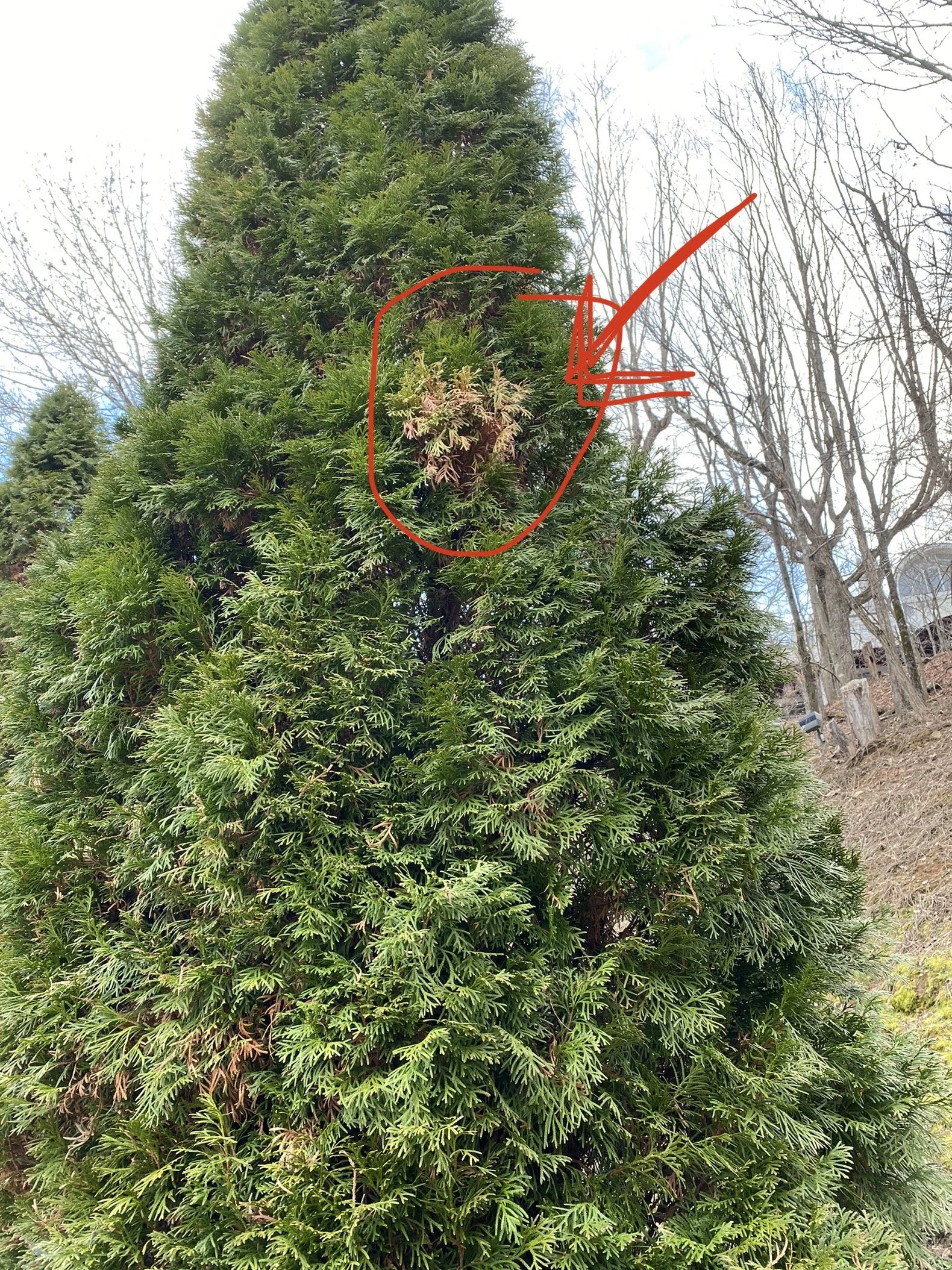
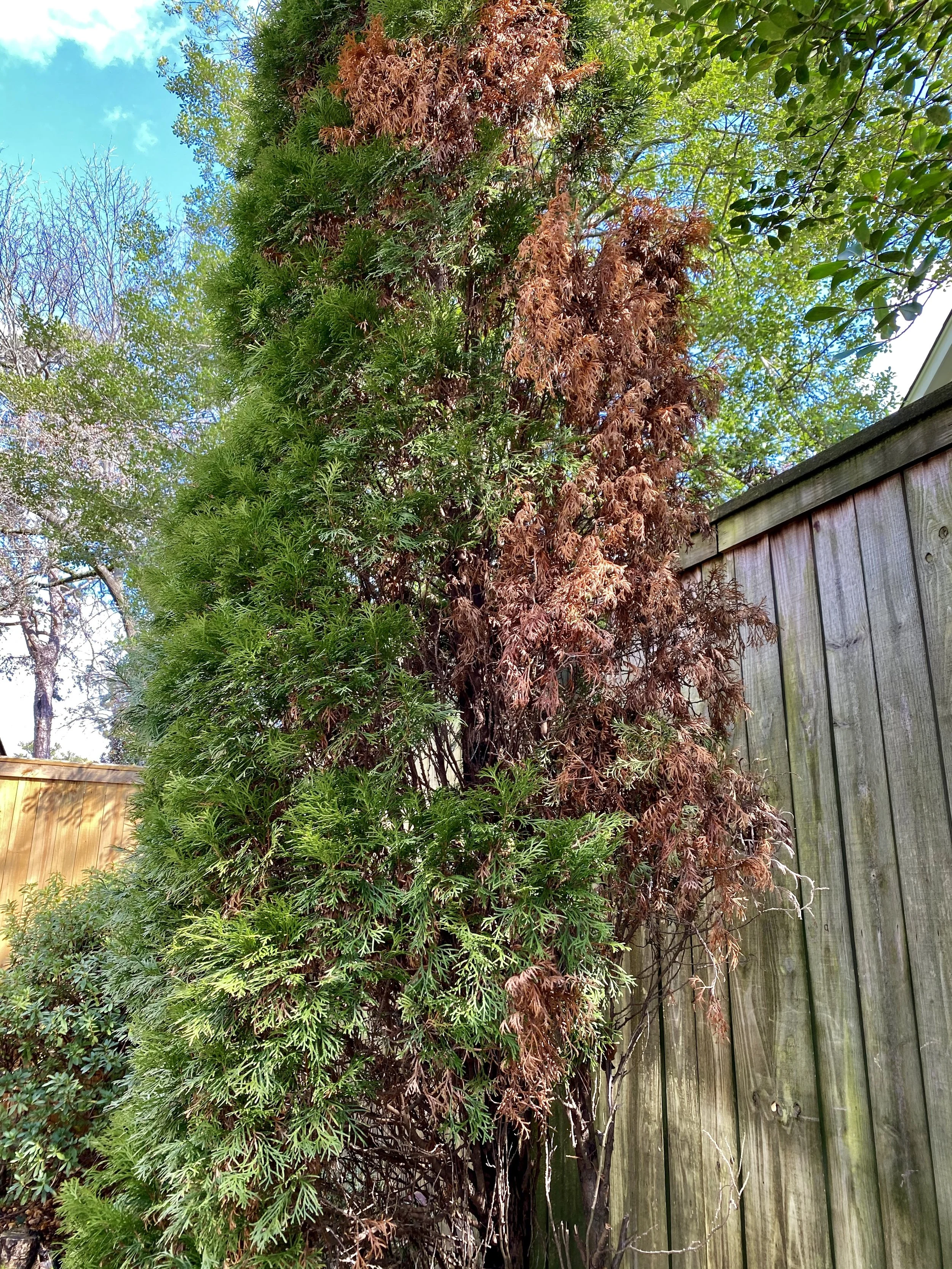
One branch may suddenly turn brown while surrounding branches remain healthy. This scattered pattern is especially common with Botryosphaeria and Seiridium cankers.
Sunken or Discolored Bark
The infected area may appear darker, lighter, cracked, flattened, or slightly sunken compared with healthy bark.
Bark Splitting or Peeling
As tissue dies, the bark may split, loosen, or fall away from the underlying wood.
Learn More About Canker Disease
-
A canker is a localized area of dead or damaged tissue on a plant’s stem, branch, or trunk.
Healthy bark protects the living vascular tissue underneath it. This vascular system transports water and nutrients between the roots and foliage. When a canker damages enough of that tissue, the flow of water and nutrients becomes restricted.
If the canker completely encircles a branch, everything beyond that point may wilt and die.
Cankers can be caused by fungi, bacteria, pruning injuries, freeze damage, sunscald, hail, equipment damage, or other environmental stress. In many cases, a fungal pathogen enters through an existing wound and expands after the plant becomes weakened.
Canker is less about a highly aggressive pathogen attacking a perfectly healthy plant and more about a stressed plant becoming vulnerable to an opportunistic disease.
-
Usually, no.
Once woody tissue has been killed by a canker, it cannot be restored. Fungicides do not bring dead bark, vascular tissue, or branches back to life.
For most established cankers, the primary treatment is to:
Remove infected branches.
Cut back into healthy wood.
Reduce the stress that allowed the disease to develop.
Protect the remaining plant from additional injury.
Extension guidance is clear that chemical controls are unavailable or ineffective once cankers become established. Removal of affected branches and improvement of overall plant health are the most important management tools.
Fungicides may help protect susceptible plants from certain secondary diseases or infections, but they should not be presented as a cure for existing cankered wood.
-
Sometimes, but only when the plant, pathogen, timing, and environmental conditions justify it.
Preventative fungicides can help manage certain ornamental diseases, especially foliar diseases, blights, rusts, and mildews. However, canker management is different. Because infections often enter through wounds or remain latent inside stressed tissue, fungicides cannot always be timed effectively.
A responsible plant-health program should never rely on blindly spraying every ornamental plant with broad-spectrum fungicides.
Natural State Horticare’s ornamental programs combine fertility, plant-health inspections, targeted pest and disease management, and organic-first soil support. Fungicides and insecticides are used selectively when plants actually need intervention rather than indiscriminately covering the entire landscape.
That approach is especially important with canker because the underlying cause is often cultural or environmental, not simply a lack of fungicide. -
Central Arkansas can be extremely hard on ornamental plants.
Within a single year, plants may experience:
Heavy spring rainfall
Poorly drained soil
High humidity
Prolonged summer heat
Flash drought conditions
Sudden winter temperature swings
Late spring freezes
Soil compaction
Improper irrigation
Mechanical injuries from mowers, trimmers, or pruning
These stressors weaken plant defenses and create openings through which disease-causing organisms can enter.
Heat, drought, winter injury, pruning wounds, and damaged bark can all increase susceptibility to Botryosphaeria and other canker diseases.
In our experience, canker is especially common when a plant has been struggling for months or years before visible branch death finally appears. The disease may be the final blow, but poor root health, improper watering, planting depth, drainage, or repeated environmental stress often created the opportunity.
-
Branch dieback does not automatically mean canker.
Similar symptoms can be caused by:
Root rot
Drought stress
Excessive soil moisture
Freeze injury
Herbicide damage
Borer insects
Scale infestations
Vascular wilt diseases
Improper planting depth
Girdling roots
Trunk or stem injuries
This is one reason diagnosis matters. Applying an insecticide to a fungal problem will not help. Applying fungicide to a plant suffering from root rot, drought, or mechanical injury will not correct the underlying cause either.
How to Prune Canker-Infected Branches
-
The fungus may extend beyond the obvious discolored bark. Make the cut several inches below the visibly affected area and confirm that the remaining wood appears healthy.
-
Rain and overhead irrigation can spread spores and increase infection risk. Whenever possible, prune during a dry period.
-
Disinfect pruning tools between affected plants and, when disease pressure is severe, between major cuts.
To disinfect pruning tools, first scrub off caked-on dirt and sap using warm soapy water and a stiff brush. Then, sanitize the blades by wiping or dipping them in 70% isopropyl alcohol.
Finally, apply a thin layer of natural oil or “clipper oil” to the blades and moving parts to keep them lubricated and rust-free.
-
Do not leave long stubs, and do not cut flush against the trunk. Preserve the branch collar so the plant can seal the wound as efficiently as possible.
-
Do not leave infected branches piled beneath the plant. Remove and dispose of them appropriately.
Avoid shaking affected branches during removal as this can spread fungal spores.
Other Canker Management Techniques
-
Because many canker pathogens attack weakened plants, improving plant health is more effective than repeatedly applying fungicides.
-
Avoid allowing plants to cycle repeatedly between saturated soil and severe drought.
Newly planted trees and shrubs require careful watering while their roots become established. Older plants may also need supplemental irrigation during prolonged summer drought.
Click Here to learn more about proper watering techniques. -
Constantly wet soil reduces oxygen around the roots and can lead to root decline. A plant with a compromised root system cannot defend itself effectively against opportunistic pathogens.
-
Damage from string trimmers, mower decks, vehicles, staking materials, and careless pruning can create direct entry points for disease.
-
Apply mulch over the root zone, but do not pile it against the trunk or stems. Excessive “mulch volcanoes” trap moisture against bark and may encourage decay, girdling roots, and pest activity.
-
A plant installed in the wrong soil, sunlight, moisture level, or spacing will remain under chronic stress.
No spray program can fully overcome the wrong plant in the wrong place.
-
Removal may be the most practical option when:
The main trunk is girdled
When a tree's trunk is "girdled," it means the bark and vital nutrient-transporting layers (phloem) just beneath it have been severed or chewed away in a continuous ring around the entire trunk.
Multiple major stems are affected
Dieback continues despite corrective care
The plant has lost most of its ornamental value
A large branch or trunk has become structurally unsafe
The plant is poorly suited to the location
Replacement would be more practical than continued treatment
Removing a plant is never our first recommendation, especially when it is mature, valuable, or sentimental. However, pouring money into repeated treatments for a plant that has no realistic path to recovery does not help the client.
Sometimes the most honest recommendation is replacement with a better-suited species.
Types of Canker Diseases in Arkansas Landscapes
Several fungi can cause canker and branch dieback in Central Arkansas landscapes. The exact pathogen may differ, but the symptoms, contributing factors, and management are often very similar.
-
These fungal pathogens commonly attack woody plants that have already been weakened by drought, extreme heat, freeze injury, poor drainage, root damage, pruning wounds, or other environmental stress.
Typical symptoms include:
Individual branches suddenly turning brown
Dead foliage remaining attached to affected stems
Sunken, cracked, or discolored bark
Sap or resin forming around damaged areas
Dieback beginning on scattered branches and gradually spreading
Cankers enlarging until they girdle the affected stem
The plant species involved can provide clues about the likely pathogen.
Botryosphaeria canker affects a wide range of ornamental trees and shrubs, including azaleas, rhododendrons, redbuds, dogwoods, hollies, and many other woody plants. It commonly causes scattered dying branches on an otherwise healthy-looking plant.
Seiridium canker is most strongly associated with Leyland, Juniper, and Arborvitea related species. It often produces random brown branches, sunken lesions, and resin around infected areas. In Arkansas, Seiridium and Botryosphaeria may both contribute to the branch dieback commonly called cypress canker.
Cytospora canker is especially common on stressed spruce trees. Dieback often begins on lower branches and gradually progresses upward. Resin may collect around infected areas and dry into a pale or bluish-white crust.
Although identifying the exact fungus may require laboratory testing, the practical response is usually the same: remove infected branches, reduce plant stress, correct irrigation or drainage problems, and protect the remaining plant from additional wounds.
-
Biscogniauxia dieback is particularly associated with trees weakened by drought, root injury, construction damage, soil compaction, or other chronic stress. Arkansas Extension identifies it as a common disease of oaks in the state, although sycamores, elms, and other hardwoods can also be affected.
Advanced symptoms may include:
Rapid thinning of the canopy
Large dead limbs
Sections of bark falling away
Tan, gray, brown, or black fungal material beneath the bark
Significant trunk or branch dieback
Once these fungal structures become visible, the affected portion of the tree is usually already dead. There is no fungicide capable of restoring that tissue.
For mature trees, an evaluation by a qualified arborist may be necessary because large cankers can weaken branches or trunks and increase the possibility of failure.