
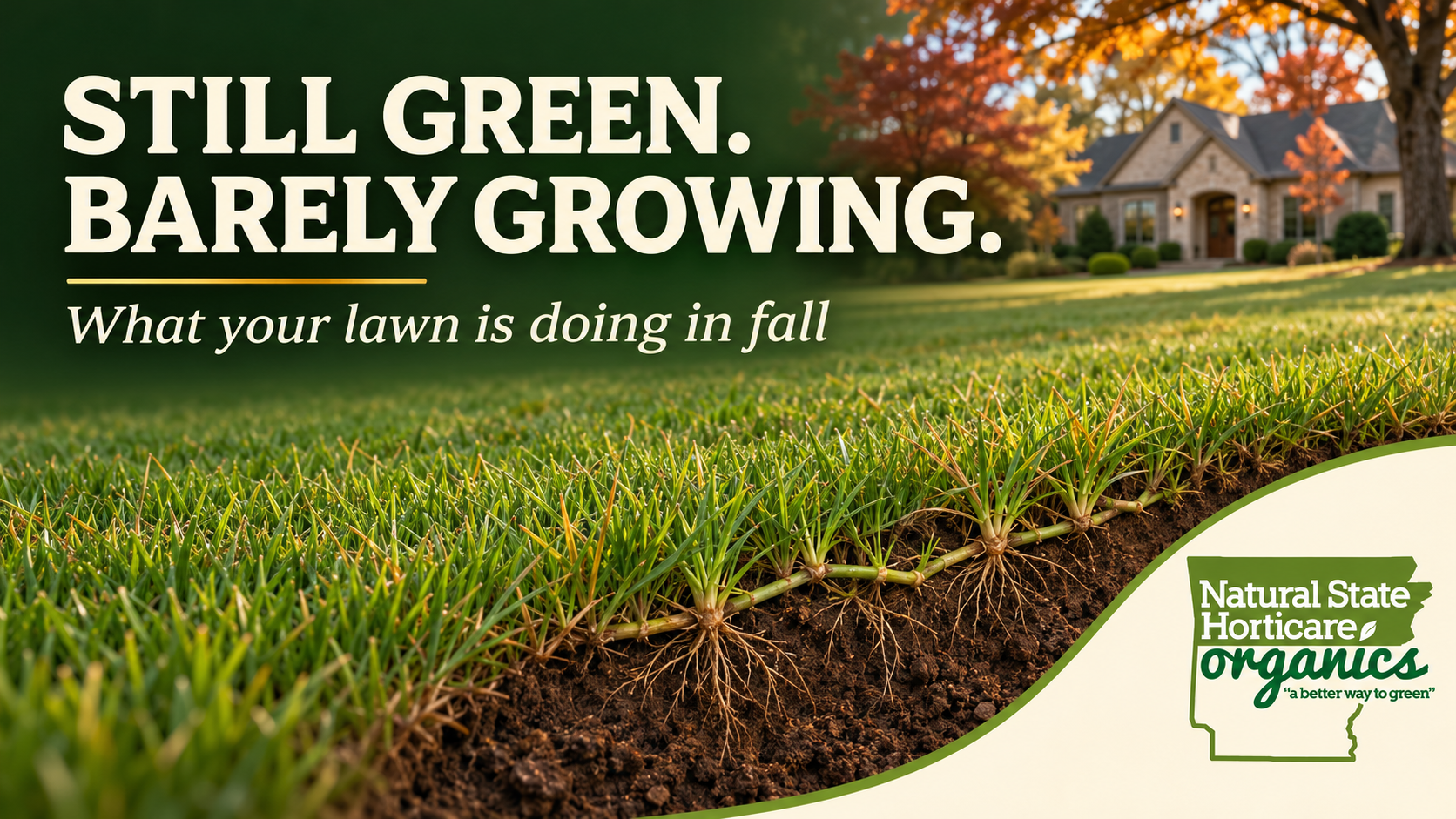
As days get shorter and temperatures fall, you may notice your lawn is still green but barely growing.
The Fall transition into dormancy is widely misunderstood by most property owners.
In this blog, we’ll cover what happens to your grass from a biological perspective, key pests and disease issues, and other ways to protect your lawn as it enters the next phase of growth.
Dormancy isn’t the finish line; it is just the next phase in your lawn's life cycle. What you do over the next 2-3 months will have a massive impact on next season's results.
What should my lawn look like right now?
Simply put, it should be green, with hints of diminishing color and approaching dormancy. Green grass doesn’t automatically mean your lawn is fully prepared for winter, but it is a good sign you're on the right track.
Start by looking around at your neighbors’ lawns. Find “That Lawn” in the neighborhood that always looks better than most. If it is still green and healthy, let that be your barometer for what your lawn should look like in the best-case scenario. There are obviously nuances and caveats here, like shade and grass type, but it is a good place to start.
If your lawn is brown while others remain green, your lawn didn’t just decide to go dormant early- SOMETHING’S WRONG!
Before we jump into why your lawn might not be prepared for winter, we need to understand what our grass is going through.
What is happening to the grass?
A few weeks before dormancy, your grass should enter a phase where it remains green but stops growing. During this time, your grass transitions from its primary growth phase into winter survival mode.
Keeping your lawn healthy during this process is critical, as it gives your grass time to prepare and acclimate to the extreme shift in conditions.
Imagine flying from a Hawaiian vacation to the base of Mt. Everest and immediately beginning your ascent in your swimsuit and sandals. CRAZY! Such a sudden transition without time to physically prepare, gather supplies, gear up, and acclimate would mean certain death. Your lawn is not different.
In peak growing season between June and August (if properly irrigated), food and resources are abundant.
Using photosynthesis (C4), the grass converts sunlight, carbon dioxide (CO2), and water into sugar, which fuels growth. This summer surplus allows your lawn not only to survive but also to recover from damage and spread.
As days get shorter and temperatures drop, resources become more limited. Your grass senses these changes and prepares for winter, slowing growth while maintaining food-producing green leaf tissue.
Retaining healthy existing foliage requires fewer resources than producing new leaves and stolons, while still photosynthesizing and producing food.
Think of it like a paycheck. If you keep earning money but spend less, you can save more.
This transitional phase gives your lawn a chance to store fuel for winter and spring as sugars or carbohydrates. These nutrients not only sustain vital root structures during dormancy, but also create cellular insulation against the cold.
What could go wrong?
Beyond the natural reduction of sunlight and warmth, anything that could further restrict resource availability during this critical phase, such as excess leaf coverage, pests, disease, incorrect mowing practices, or heavy foot traffic, drastically reduces your lawn's ability to save fuel and survive winter.
Fall Fungus
Diseases like large patch fungus can remain active during cool, wet weather, especially in zoysia and St. Augustine. Because the lawn's ability to grow and recover is reduced at this time of year, disease damage can be devastating.
Watch for sudden thinning or spreading patches of suppressed growth with orange or warm-colored edges; these issues should not be ignored and deserve a closer look. Don’t assume every fall color change is normal dormancy.
Our Large Patch Guide explains what to watch for.
Pesky Pests
Like disease, pests such as grubs remain active and can cause significant damage to a vulnerable lawn transitioning into dormancy. In fact, grub activity hits its second annual peak at this time of year.
One problem with traditional lawn care is that treatments often end long before the threat of pests and disease has passed. Seasons are staying warmer longer, extending this pest-and-disease window.
Continuous pest and disease monitoring throughout the season is why our Natural State Lawn Program includes 10 treatments per year and why our technicians are always prepared with the right products for immediate, precise control.
Our Grub Control blog explains more about their life cycle and what to watch for.
More ways to support your lawn through Fall and Dormancy:
A few simple habits can protect your lawn:
Don’t stop watering too early! Late-season drought is a very real issue! Water is REQUIRED for nutrients to move from the soil into the plant. Late-season drought stress stops your lawn from preparing for winter, leaving it exposed and vulnerable.
Adjust your watering. Cooler weather usually means you need less water. Check rainfall and soil moisture instead of leaving the controller on its summer schedule. Overwatering can cause or exacerbate disease.
Keep fallen leaves from piling up. Green grass still needs sunlight. Thick leaf cover blocks light and traps moisture.
Mow at the correct height for your grass type. For most lawns, we recommend reducing mowing height by at least one mower setting as dormancy approaches. This is especially important for zoysia, as tall grass tends to lay over and root, especially on slopes or in low spots.
Give worn areas a break. Grass that barely grows cannot quickly repair repeated damage. Avoid heavy foot traffic, especially when wet.
Focus on building soil and correcting pH. The time for traditional nitrogen fertilizer has passed. We recommend shifting your attention to the soil through organic amendments and pH adjustments.
Dormancy is not the finish line. It is just the next step in the life cycle.
For more help with mowing and watering, visit our Zoysia Care Guide.
Your lawn’s fall slowdown is part of its yearly cycle. Proper care now helps protect the living parts it will need when spring arrives.
Seeing changes you’re unsure about? Send our team a few photos or contact Natural State Horticare for an on-site consultation.