
Large Patch Fungus
Large Patch is one of the most common lawn diseases we diagnose in Central Arkansas. It's caused by the fungus Rhizoctonia solani and most often affects Zoysia and St. Augustine, though no warm-season grass is completely resistant to it.
Bermuda can get Large Patch too. It tends to show up less severely because its rapid growth and spread allow it to recover before the damage becomes obvious.
What It Looks Like

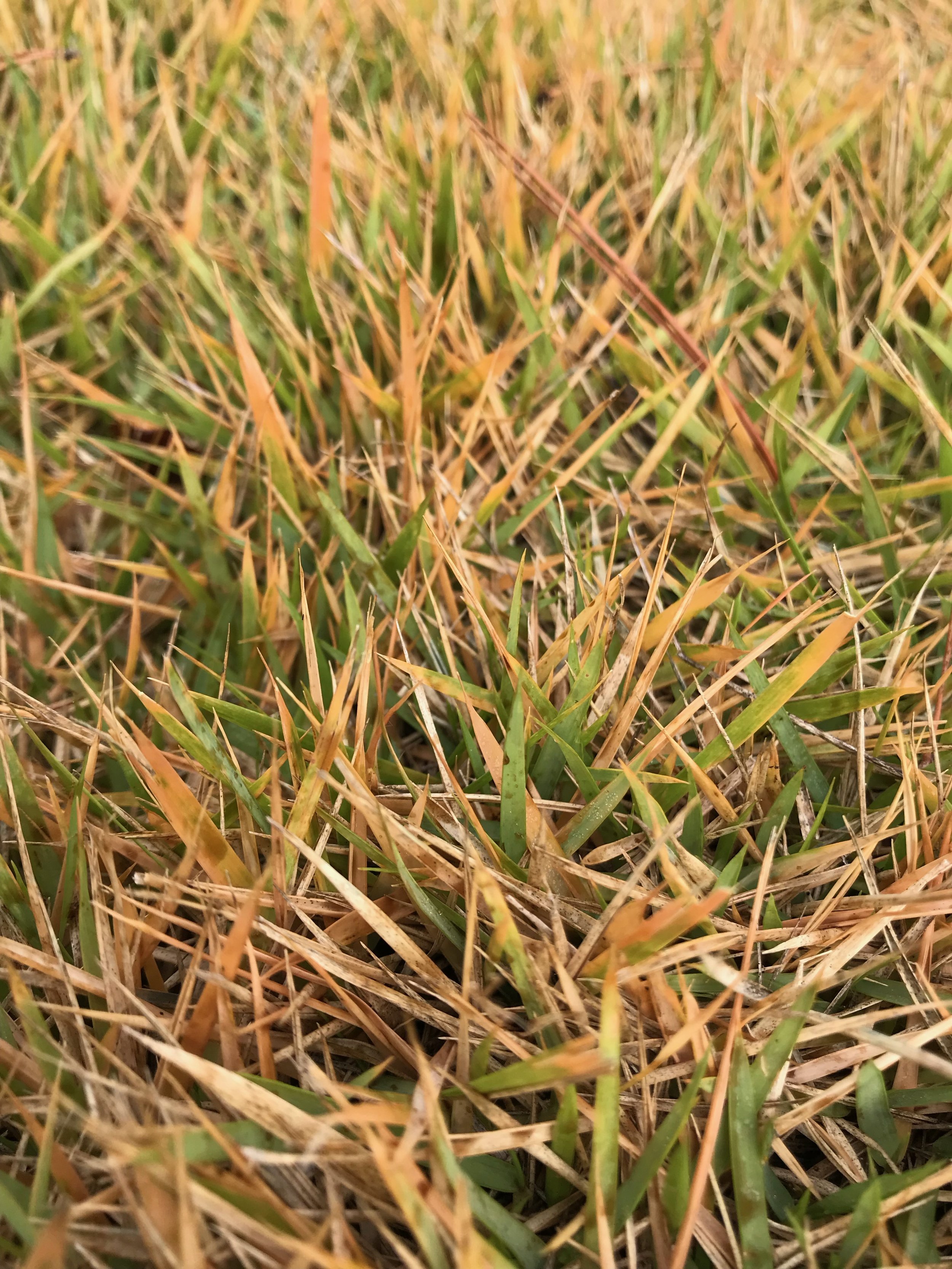
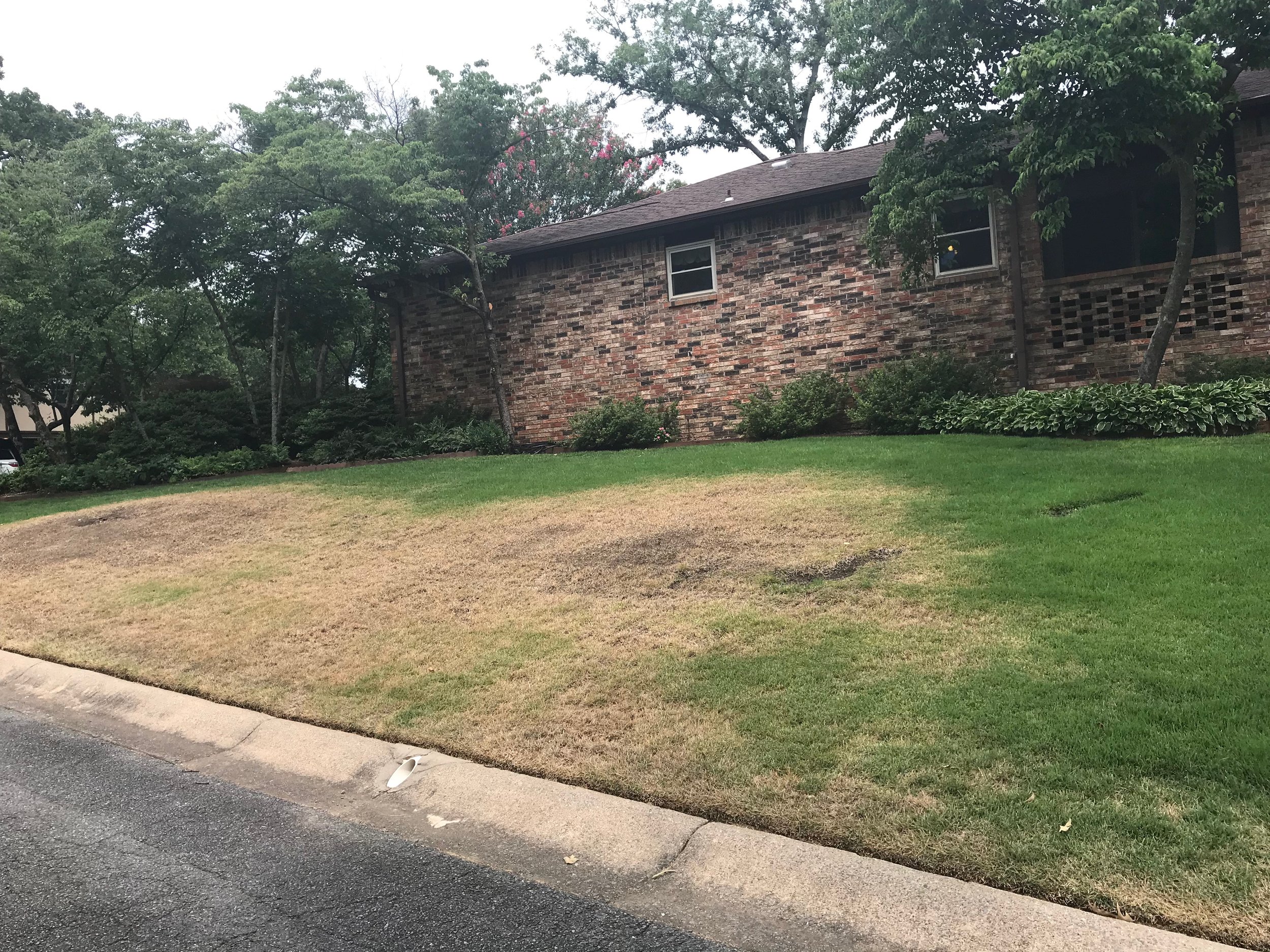
Classic Large Patch appears as circular or arc-shaped patches of yellow-to-brown turf, sometimes several feet across, occasionally with an orange-tinged ring at the active edge. But it doesn't always form a tidy circle. In more severe cases, large sections of the lawn can thin or die without any distinct pattern, and separate patches can merge into larger, irregular areas. Don't rule out Large Patch just because the damage isn't circular.
The clearest way to confirm it is to examine the base of the leaf sheath, which will look rotted, water-soaked, and orange-brown.
-
Large Patch is most active during the spring and fall transitions, when soil is cool and wet and days are still mild. Symptoms are usually most visible during spring green up, since the disease damaged the crown and roots the previous fall. When the plant trys to green up and exit dormancy the damage becomes obvious.
-
Extended leaf wetness and moderate temperatures are the two biggest drivers. Heavy thatch and compacted soil raise the risk too, since both hold moisture right where the fungus needs it.
Nitrogen timing matters as well. At Natural State Horticare, we avoid pushing high nitrogen in mid to late fall or early spring before the lawn has fully greened up. That tender new growth is exactly what this disease exploits, which is why our program uses slow release nitrogen timed to the plant's actual growth stage rather than the calendar.
One mowing note: if warm, humid weather persists while Large Patch is active, bag your clippings becomes more important than ever, so the fungus doesn't spread around the yard on your mower.
-
Our Fungal Agronomic Program applies two preventative fungicide rounds each year, timed to the two windows when Large Patch pressure peaks.
If you're enrolled and a technician spots suspected activity at any time throughout the year, spot treatment with our Specialty Pest & Disease mix is included at no charge under our pre-approval policy.
Because Large Patch damages soil structure along with the plant itself, we also recommend Liquid Aeration alongside your program. It improves water and nutrient movement into damaged soil without the property risk that comes with traditional core aeration, and it speeds the turf's ability to recover.
Another important aspect to management of any fungal disease is adhearing to proper watering practices. You can follow our FREE Irrigation Programming Guide or have our professional staff evaluate and set a custome program for your lawn with our Irrigaition Optimization service.
-
Remove large buried debris such as stumps or old lumber before laying new sod or seed, if you're aware of it on the property.
Dethatch: Keep thatch in check with regular dethatching.
Topdress the damaged areas to quickly return healthy organic matter to the damaged areas.
Address Drainage issues.
Another important aspect to management of any fungal disease is adhearing to proper watering practices.
Start by evaluating your systems functionality.
Follow our FREE Irrigation Programming Guide to ensure you’re always wating the right amount at the correct times.
-
Because Large Patch damages the crown of the plant, recovery isn't instant. Depending on severity, expect several months to a full growing season for turf to fully fill back (per NC State University TurfFiles).
There's NO CURE, only ongoing management season to season.